A Tel Aviv day trip from Jerusalem is the perfect counterpoint to a stay focused on ancient stones and holy sites. The two cities sit only about 60 kilometres apart, and the fast train links them in well under an hour, yet they feel like different worlds: Tel Aviv brings Mediterranean beaches, Bauhaus architecture, an inventive food scene, and a relaxed, modern energy. Put the two together and you get a fuller picture of contemporary Israel in a single trip.
This guide to a Tel Aviv day trip from Jerusalem covers how to get there by train, bus, sherut, or car, what to see in a day, the best beaches and neighbourhoods, where to eat, a ready-made itinerary, and the practical points that trip people up, including the Shabbat timetable. Read it alongside our Day Trips from Jerusalem guide.
Tel Aviv Day Trip at a Glance
| Distance from Jerusalem | About 60 km west |
| Fast train | Around 35–40 minutes to central Tel Aviv |
| Best for | Beaches, food, Bauhaus architecture, Old Jaffa, modern culture |
| Time in the city | 8–10 hours for a full day; 4–5 for a shorter visit |
| Typical cost | Around 180–360 ILS per person for transport, meals, and a few extras |
| Shabbat note | Trains and buses pause Friday afternoon to Saturday evening; sherut taxis still run |
How to Get to Tel Aviv from Jerusalem
Fast Train
The train is the standout option. It runs from Jerusalem’s Yitzhak Navon station, the deep underground terminus beneath the city centre that connects to the Light Rail Red Line, to central Tel Aviv stations such as HaShalom and Savidor Center in around 35 to 40 minutes. A single ticket costs roughly 24 ILS, paid with a Rav-Kav card or contactlessly, and trains run about every half hour on weekdays. The carriages are modern, fast, and comfortable, and the city-centre-to-city-centre convenience is hard to beat. Buy your ticket before boarding and tap in and out at the gates.
Intercity Bus
Egged and other operators run frequent buses, including line 405, between Jerusalem’s Central Bus Station and Tel Aviv’s Central Bus Station, with other lines serving the Arlozorov terminal near Savidor. The journey takes around 60 to 70 minutes depending on traffic, and the fare is similar to the train at roughly 16 to 25 ILS. Buses are a reliable backup if the train timing does not suit you, though they are slower and more affected by congestion on the approach to Tel Aviv.
Sherut (Shared Taxi)
The sherut is a shared minibus that follows fixed routes for a set fare, around 30 ILS, and its great advantage is that it keeps running through Shabbat, when the trains and most buses stop. Sheruts to Tel Aviv leave from near Jerusalem’s Central Bus Station and depart when full rather than to a fixed timetable. For a Friday afternoon or Saturday trip, this is often the most practical public option. Our Tel Aviv to Jerusalem transport guide compares all of these in more detail for the return leg.
Rental Car
Driving takes about 45 to 60 minutes on Highway 1, and it makes sense for a small group or if you want to combine Tel Aviv with another stop. The catch is the destination: parking in central Tel Aviv is scarce and expensive, and the city is far easier to enjoy on foot, by bike, or by scooter. If you do drive, aim for a paid car park near the seafront and leave the car there for the day.
What to See on a Tel Aviv Day Trip
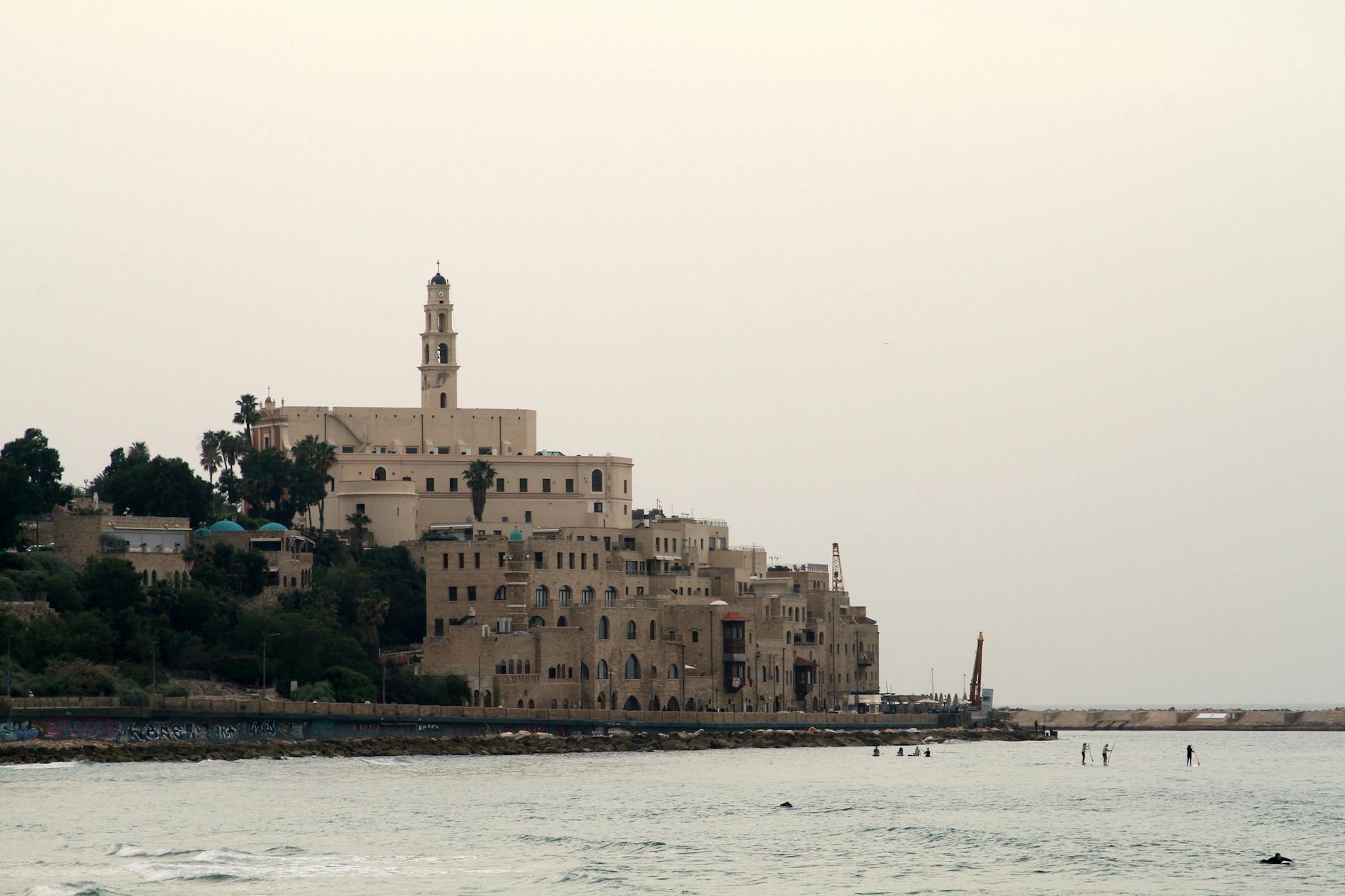
Old Jaffa
Jaffa is the ancient port at the southern end of the seafront, with a history stretching back thousands of years, long before Tel Aviv grew up beside it. Its restored stone lanes climb to a hilltop with sweeping views back along the coast, and along the way you pass art galleries and studios, St. Peter’s Church, the old harbour where fishing boats still tie up, and the sprawling flea market with its antiques, vintage clothing, and street food. Give it two to three hours; it is one of the highlights of any visit.
The Beaches and Promenade
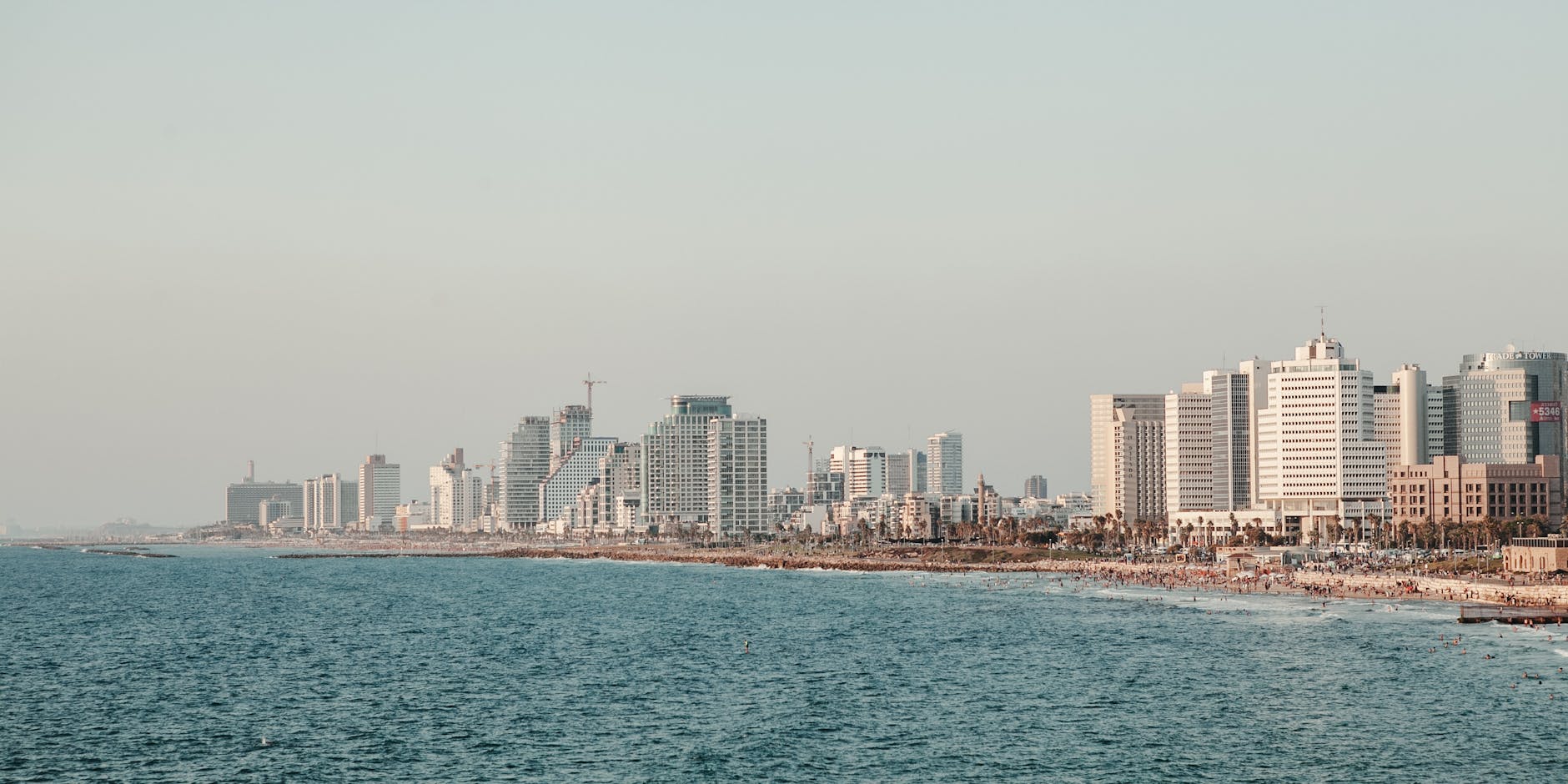
Tel Aviv’s long sandy beaches are free and well equipped, with showers, sunbeds for hire, and lifeguard towers. The paved tayelet promenade runs for kilometres along the water, busy with joggers, cyclists, and walkers, and it is especially lovely at sunset when the whole city seems to drift down to the shore.
- Gordon and Frishman beaches — central, popular, and easy to reach from the city centre, with full facilities.
- Hilton Beach — a relaxed stretch with a dog-friendly area and a section popular with the LGBTQ community.
- Bograshov Beach — handy if you are coming from the Carmel Market direction.
- Jaffa and Charles Clore — at the southern end, with views back to the Tel Aviv skyline.
Carmel Market (Shuk HaCarmel)
The Carmel Market is the city’s largest, a long run of stalls selling produce, spices, cheeses, sweets, and street food, with the surrounding lanes full of cafes and small restaurants. It is smaller than Jerusalem’s Mahane Yehuda but has its own cosmopolitan flavour, and it is a great place to graze your way through a late breakfast or lunch.
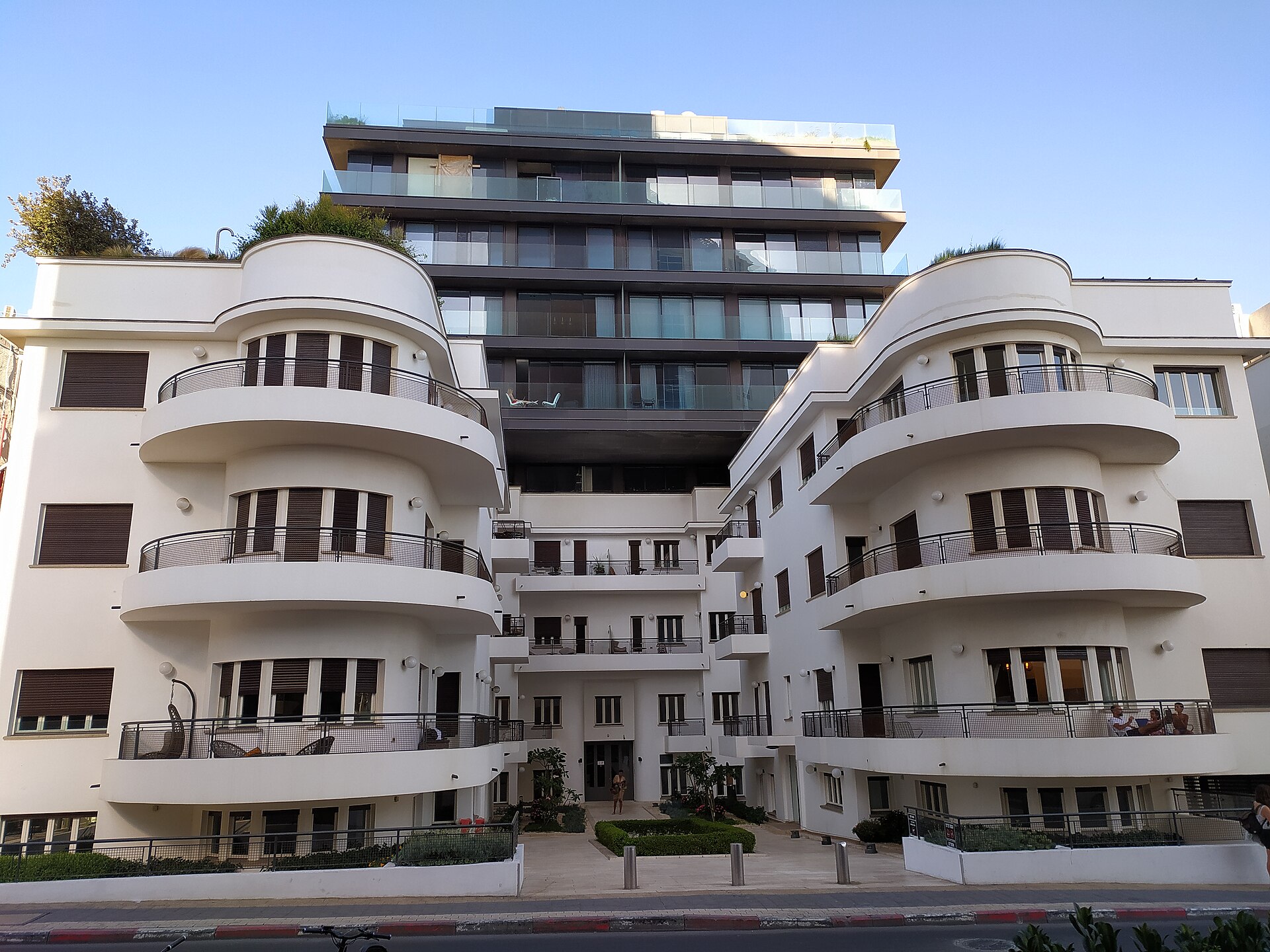
Bauhaus White City
Tel Aviv has one of the world’s largest concentrations of Bauhaus and International Style buildings, a legacy of architects who arrived in the 1930s. The collection earned the city a UNESCO World Heritage listing as the White City, and it is most visible along Rothschild Boulevard and the surrounding streets, where shaded benches and kiosks make for an easy stroll. The Bauhaus Center offers maps and guided walks if you want the background.
Neve Tzedek
Neve Tzedek, founded in 1887, was the first neighbourhood built outside Jaffa and is now one of the prettiest corners of the city, with low restored houses, boutiques, galleries, and cafes along Shabazi Street. It pairs naturally with a walk between the city centre and Jaffa.
Where to Eat
Tel Aviv is one of the best eating cities in the region, strong on everything from street food to seafood. A few reliable names give you a sense of the range.
- Abu Hassan (Ali Karavan) in Jaffa — often cited among the best hummus in the country; it usually sells out by early afternoon.
- HaKosem — a long-standing favourite for falafel and shawarma near the centre.
- Carmel Market stalls — for fresh, cheap, and varied street food.
- Sarona Market — a large indoor food hall with international options, good in any weather.
- Manta Ray — beachfront seafood and mezze near Jaffa, popular for a leisurely lunch.
- Old Jaffa restaurants — for Mediterranean cooking with harbour and sea views.
If food is a priority, our Jerusalem food guide covers the eating scene back in the capital, so you can compare the two cities’ very different culinary characters. Further north, the Arab kitchens of Nazareth in the Galilee are worth a day of their own.
A Sample One-Day Itinerary
- Around 8:00 — take the train from Jerusalem.
- Late morning — start at the Carmel Market for a snack and a wander.
- Mid-morning — stroll Rothschild Boulevard and the Bauhaus streets.
- Lunch — falafel at HaKosem or a sit-down meal at Sarona Market.
- Early afternoon — beach time at Gordon or Frishman.
- Mid-afternoon — walk the promenade south through Neve Tzedek toward Jaffa.
- Late afternoon — explore Old Jaffa’s lanes, harbour, and viewpoints.
- Early evening — hummus at Abu Hassan or dinner with a sunset view, then the train back.
Practical Tips and What to Bring
- Dress casually. Tel Aviv is relaxed and beachy, the opposite of the modest dress expected at Jerusalem’s holy sites.
- Bring a swimsuit and towel if the beach is on your list.
- Use sun protection. The Mediterranean sun is strong, especially in summer.
- Get around on two wheels. The city’s bike-share scheme and rental e-scooters make the flat, compact centre easy to cover.
- Wear comfortable shoes for Jaffa’s cobbles and the long promenade.
- Mind the Shabbat timetable. Trains and buses stop from Friday afternoon to Saturday evening; plan your return on a sherut if you visit then.
For broader logistics such as money, SIM cards, and getting around, our Jerusalem travel tips are a useful companion, and our Jerusalem itinerary guide shows how to slot a Tel Aviv day into a longer trip.
Best Time to Go
Tel Aviv is enjoyable year-round, but the shoulder seasons of spring and autumn are the most pleasant, with warm sea temperatures and comfortable air. Summer is hot and humid, which suits beach days but makes midday walking tours sticky. Winters are mild and sometimes wet, and the sea is cooler but the city stays lively. Whatever the season, a weekday trip gives you the full train timetable, while a Friday or Saturday visit means relying on a sherut and finding that some shops close for Shabbat even though the beaches and many restaurants stay open.
Staying into the Evening
Tel Aviv comes alive after dark, and if your schedule allows it is worth lingering for the evening rather than rushing back. The seafront glows at sunset, the bars and restaurants of Rothschild Boulevard, the port (Namal), and the Florentin district fill up, and the city’s reputation for nightlife is well earned. Just keep one eye on the clock: on weekdays the last convenient trains back to Jerusalem run in the evening, so check the timetable before you settle in, and on Shabbat you will be relying on a sherut for the return. If you would rather keep your late nights in the capital, our guides to Jerusalem nightlife and Jerusalem at night cover the after-dark scene there.
Combining Tel Aviv with Other Stops
Because the train passes close to Ben Gurion Airport, a Tel Aviv day trip can double as a way to use a free day at the start or end of a trip. With an early start you could combine central Tel Aviv with a couple of hours in Jaffa and still be back in Jerusalem for dinner. If you are driving, the coastal towns of Herzliya and the old Roman port of Caesarea lie a little further north and can be added to a longer day. For the sharpest contrast of all, save another day for a float in the Dead Sea, which sits roughly the same short distance east of Jerusalem as Tel Aviv does west. For most visitors, though, the appeal of Tel Aviv is precisely that it asks for nothing more than a train ticket and a willingness to swap stone alleys for sand: it is the simplest, most rewarding contrast to a Jerusalem-based trip, and it needs no special planning beyond watching the timetable.
One day a year this trip becomes a genuinely inspired piece of scheduling. Jerusalem keeps Purim twenty-four hours after the rest of Israel, because it was a walled city in the time of Joshua — so you can spend one day at the Tel Aviv street party and the next at Jerusalem’s Shushan Purim, which is a completely different festival in character. Our guide to Purim in Jerusalem explains the quirk and how to do both.
Photo Credits
The 1935 International Style apartment building at HaYarkon 96, Tel Aviv: HaYarkon 96 by Artem.G, CC BY-SA 4.0, via Wikimedia Commons.