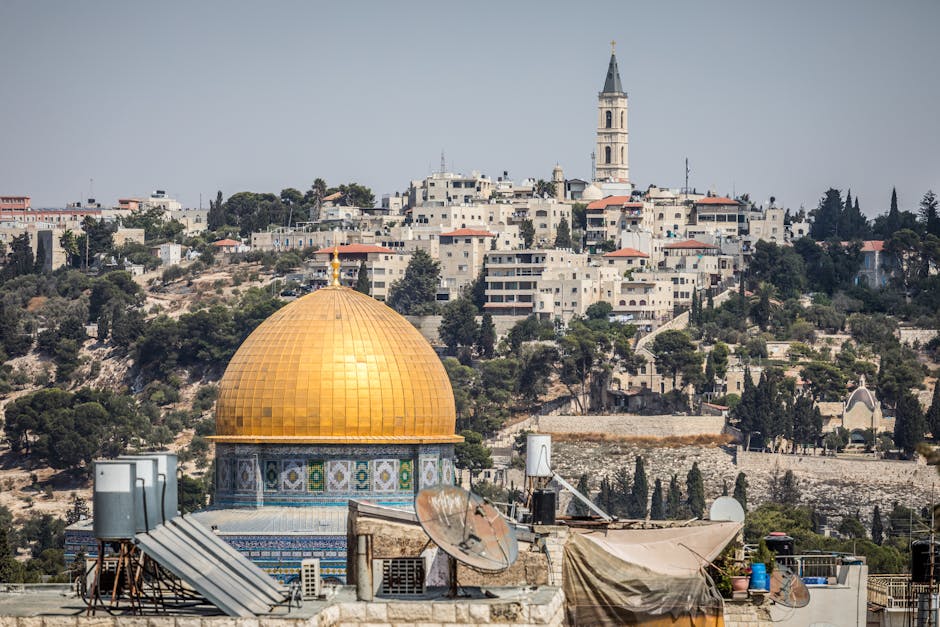
Three days in Jerusalem is the sweet spot — long enough to see all the famous sights without rushing, short enough to fit into a longer Israel itinerary. With three full days you can give the Old City the time it deserves, visit the two great museums (Yad Vashem and the Israel Museum), explore quieter neighborhoods, and have at least one proper Mahane Yehuda lunch plus a Friday-night Shabbat dinner. Most travel writers agree: three days is the ideal first-time Jerusalem visit.
This 3 days in Jerusalem itinerary for 2026 is built on local routing logic — each day clustered around a single area to minimize transit time. Day 1 is the Old City and its surrounding holy sites. Day 2 is museums, Mount Herzl, and Mahane Yehuda. Day 3 is a Dead Sea day trip OR Ein Kerem + outer neighborhoods. Pair this with our complete Jerusalem itinerary guide.

Which Three Days You Arrive On Changes the Order
Three days is where Shabbat sequencing stops being a footnote and starts driving the plan. With one day you work around whatever the calendar hands you. With three, every possible arrival day produces a different optimal order, and getting it wrong costs a whole component — usually the market, sometimes a museum, occasionally the day trip.
The underlying logic never changes: the Old City runs seven days a week, the modern city does not, and day trips need public transport or a coach that will not run on Shabbat. So the Old City is your Saturday, museums are your Friday morning, and the day trip goes wherever a full weekday is free. Here is how that resolves for each starting day.
- Arriving Sunday, Monday or Tuesday — no conflict at all. Run the itinerary exactly as written above: Old City, museums, day trip. This is the reason to book a midweek visit if the flights permit it.
- Arriving Wednesday — Old City Wednesday, museums Thursday, day trip Friday. The Friday day trip is fine if you book a tour that returns by mid-afternoon; a Masada and Dead Sea coach usually does. Get back before public transport stops, which is roughly an hour before sundown.
- Arriving Thursday — Old City Thursday and finish at Mahane Yehuda, which on a Thursday night is the best evening in the city. Museums Friday morning, compressed. Old City again on Saturday for the parts you missed, or a walk on the ramparts and through East Jerusalem. Drop the day trip or move it to your departure day.
- Arriving Friday — the trickiest arrival and a common one. Friday morning is museums and the market, both on short hours. Friday at sundown is the Western Wall for the Shabbat welcome, which is free and is the single most memorable hour many visitors have here. Saturday is the entire Old City, unhurried, when the walled city is at its quietest. Sunday is the day trip, with everything reopened.
- Arriving Saturday — Old City Saturday, museums Sunday, day trip Monday. Clean and easy. Note that you arrive into a city with no trains or buses running, so plan a taxi from the airport and expect weekend rates.
The specific closures that force these choices
- Yad Vashem — open Sunday to Thursday from 09:00, closing somewhere between 16:00 and 17:00 depending on the day, with a much earlier close on Fridays and holiday eves and full closure on Saturdays and Jewish holidays. Entry is free but must be booked, and last admission to the Holocaust History Museum is an hour before closing. Check the official opening hours page before you fix a morning to it.
- The Temple Mount esplanade — non-Muslim visiting hours only, roughly 07:30 to 11:00 and again about 13:30 to 14:30 in summer, both windows around ninety minutes earlier in winter, Sunday to Thursday. Closed to non-Muslims on Fridays, Saturdays and Muslim holidays, and often at short notice. If it matters to you, your Old City day cannot be Saturday.
- Mahane Yehuda — trades hard through Friday morning, shutters mid-afternoon, and stays closed until Saturday night.
- Public transport — Light Rail and Israeli buses stop about an hour before sundown on Friday and resume after dark on Saturday. East Jerusalem buses run every day, and taxis run throughout at weekend rates.
- The Old City churches and souks — largely unaffected. The Church of the Holy Sepulchre keeps long hours all week, broadly 05:00 to 20:45 in summer and 04:00 to 19:00 in winter.
One more constraint worth planning around: if your Old City day is Saturday and the Temple Mount is therefore out, consider adding the Western Wall Tunnels to a different day rather than trying to reshuffle everything. Our guide to Shabbat in the city sets out what stays open hour by hour, and the survey of major holy sites notes which have their own religious calendars on top of the Jewish one.
Day 1: The Old City and Holy Sites
Morning (6:00 AM – 12:30 PM):
- Sunrise at the Mount of Olives Viewpoint.
- Walk down through the Jewish Cemetery, past Garden of Gethsemane and Church of All Nations.
- Enter the Old City through Lions’ Gate.
- Pool of Bethesda & St. Anne’s Church — best acoustics in Jerusalem.
- Temple Mount esplanade (Sun-Thu, 7:30 AM opening).
- Descend to Western Wall plaza.
- Western Wall Tunnels Tour — book in advance!
- Davidson Center Archaeological Park.
A few realities the bullet list hides. The taxi up to the Mount of Olives costs 35–40 ILS and beats the 40-minute uphill slog every time; the walk back down to Gethsemane takes 20–25 minutes on smooth, steep stone. Security at the Mughrabi ramp (the only Temple Mount entrance for non-Muslims) backs up badly after 9:00 AM, so be in line by 8:30. And the Western Wall Tunnels tour sells out one to three weeks ahead in spring and fall — book it before you book your restaurants. Tickets run about 38 ILS, and the underground walk along the full length of the Wall is, for our money, the single best guided experience in the city.
Lunch (12:30 PM): Hummus Lina or Abu Shukri in the Christian Quarter — 25–35 ILS a bowl, cash, ten minutes’ walk from the Wall. If the lines defeat you, the falafel stands on Khan al-Zeit charge 15–20 ILS and take five minutes.
Afternoon (2:00 PM – 6:00 PM):
- Walk the Via Dolorosa from Lions’ Gate area back through the Old City.
- Stations I–IX in the Muslim/Christian Quarters, then Stations X–XIV inside the Church of the Holy Sepulchre.
- Spend 45+ minutes at the Holy Sepulchre.
- Lutheran Church of the Redeemer bell tower (178 steps, ~15 NIS) for a 360° aerial view.
- Coffee & strudel at Austrian Hospice rooftop.
Walking the stations takes about 90 minutes at a contemplative pace — our Via Dolorosa guide maps each one, because several are easy to walk straight past in the souk crush. Inside the Holy Sepulchre, the queue for the Aedicule swings between 15 minutes and over an hour; if it looks grim, do Golgotha and the Chapel of Saint Helena first and check back. The bell tower climb is the sleeper hit of the afternoon — 15 ILS for the best aerial view of the rooftops, and almost nobody bothers.
Evening (6:00 PM onward):
- Walk to the Cardo Rooftop for sunset over the Old City.
- Dinner: Machneyuda or Rooftop at Mamilla Hotel (reserve 2 weeks ahead).
- Night walk through the floodlit Old City alleys (Christian Quarter is safest after dark).
Day 2: Museums, Memorials, and the Market
Morning (9:00 AM – 1:00 PM):
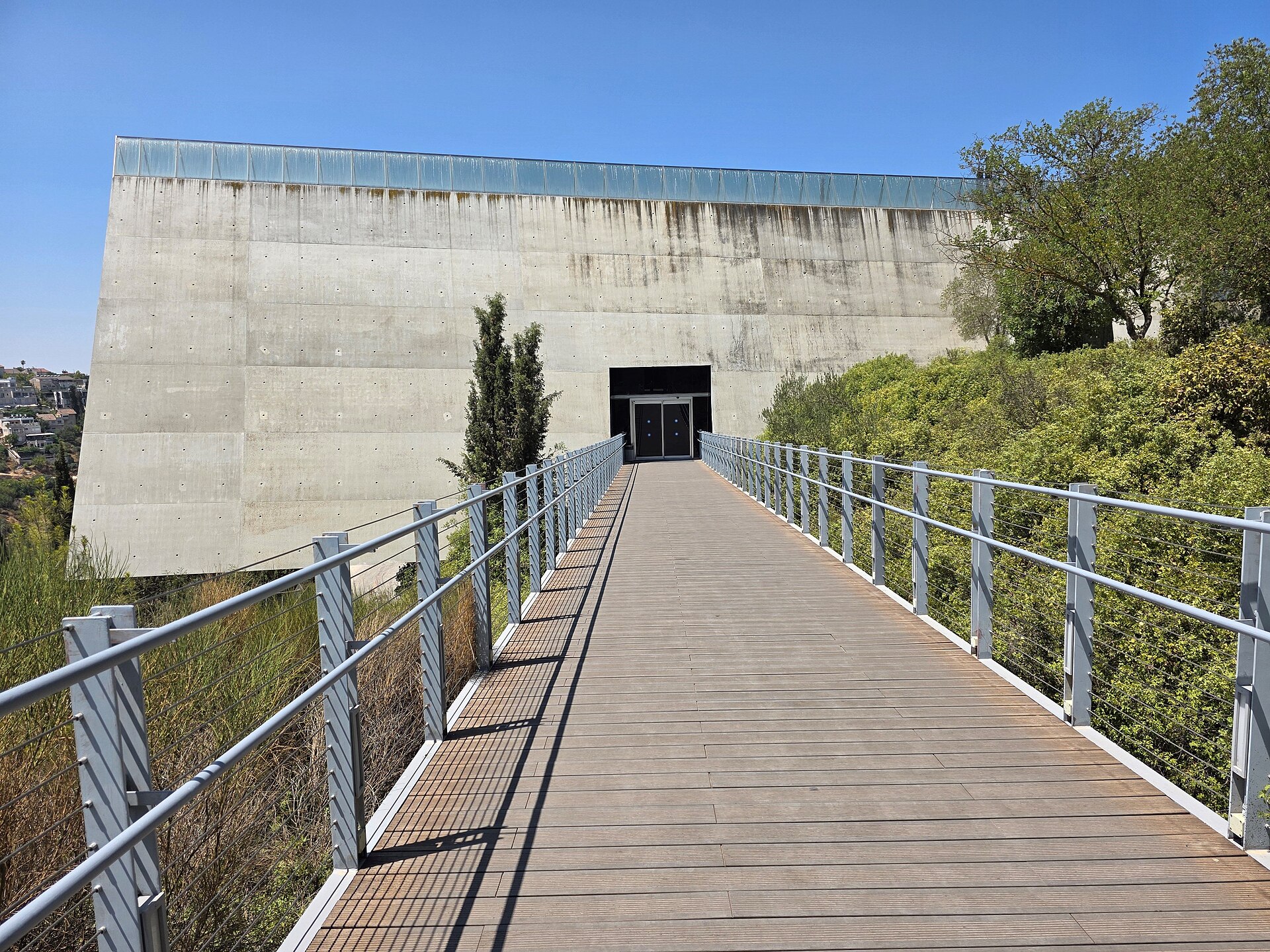
- Yad Vashem World Holocaust Remembrance Center — 3-4 hours. Free entry. Children under 10 not admitted to main museum. Closed Saturdays.
- Optional: Mount Herzl military and presidential cemetery nearby.
Getting there is easy: the Light Rail runs from the city center to Mount Herzl station in about 25 minutes, and a free shuttle (or a 10-minute walk) covers the last stretch to Yad Vashem. Reserve a free timed-entry slot online — walk-ups wait on busy mornings. Pace yourself inside; the prism-shaped main museum is built as one continuous route, and most visitors underestimate how draining the final third is. The Children’s Memorial and the Hall of Names are the parts people carry home.
Lunch (1:00 PM): Café at Yad Vashem (functional, 50–70 ILS) or quick taxi to Mahane Yehuda Market for falafel or sabich at 18–25 ILS. We’d take the market: a sabich from Aricha on Agripas, eaten standing up, resets the mood for the afternoon.
Afternoon (2:30 PM – 6:00 PM):
- Israel Museum — 2-3 hours. Don’t miss the Shrine of the Book (Dead Sea Scrolls) and the 1:50 scale Second Temple Model outdoors.
- Optional: Bible Lands Museum next door.
Israel Museum admission is around 59 ILS. With limited hours, do the Shrine of the Book first, the outdoor Second Temple Model second (best light after 3 PM), and the archaeology wing third; the fine-art wings are world-class but the first two are the reason you came.
Evening (6:00 PM onward):
- Mahane Yehuda Market at peak energy. Sample halva, fresh bread, dates, juice. Stay through 8 PM as the market transitions to its bar district.
- Dinner: choose from Mahane Yehuda options — Pasta Basta, Hamarakia, or Azura.
- Drinks: Casino de Paris, Beer Bazaar, or any Solomon Souza shutter bar.
Azura deserves a note: it’s a 1950s-era Kurdish-Jerusalemite institution in the Iraqi section of the market, famous for slow-cooked sofrito and stuffed vegetables at 50–70 ILS a plate — but it closes around 4–5 PM, so it’s a late-lunch move, not dinner. Our Mahane Yehuda food guide breaks down what to eat stall by stall.
Day 3: Day Trip OR Outer Jerusalem
How to choose: take Option A if this is your only Israel trip and you want the desert icons; Option B if you’d rather go deeper into Jerusalem itself and keep the day cheap; Option C if the trip has a pilgrimage purpose. A guided Masada–Dead Sea coach day runs $90–130 per person; Option B costs almost nothing beyond entry fees; a Bethlehem half-day tour runs $60–80.
Option A: Dead Sea + Masada Day Trip
- 5:00 AM departure for Masada sunrise hike or cable car.
- 2 hours exploring the ancient fortress.
- Ein Gedi Nature Reserve — short hike to waterfalls.
- Dead Sea float at Ein Bokek or Kalia Beach.
- Return to Jerusalem by 6-7 PM.
- See our Day Trips from Jerusalem guide.
Option B: Outer Jerusalem & Quieter Neighborhoods
- Ein Kerem village — Mary’s Spring, Church of the Visitation, Church of St. John the Baptist, long lunch at Karma or Mala.
- Sataf Springs hike in the Jerusalem Forest (2 hours).
- Afternoon: City of David archaeological park + Hezekiah’s Tunnel (wade through 2,700-year-old water tunnel).
- Evening: Hallelujah Night Show at the City of David OR Tower of David Night Spectacular.
Practicalities for Option B: bus 28 reaches Ein Kerem from Mount Herzl in 15 minutes; a long lunch on Karma’s terrace runs 80–120 ILS per person. Hezekiah’s Tunnel means 40 minutes of knee-deep spring water in the dark — bring water shoes and a phone torch, and take the dry Canaanite tunnel instead if that sounds like misery.
Option C: Bethlehem Half-Day + Mount Zion
- Morning: Half-day Bethlehem tour — Church of the Nativity, Manger Square, Shepherds’ Field.
- Afternoon: Mount Zion — King David’s Tomb, Last Supper Room, Dormition Abbey, Schindler’s Grave.
- Evening: Yemin Moshe and Bloomfield Garden for sunset, dinner at Anna Italian or Eucalyptus.

Realistic Timings for Each Day
The bullet lists above give you the shape. Here is what the days actually take, including the transitions, because transitions are where three-day itineraries quietly lose an hour a day.
Day one: the Old City, roughly 9 to 12 km on foot
- Taxi to the Mount of Olives viewpoint — 12 to 15 minutes from the city center, 35–40 ILS.
- Viewpoint down through the cemetery to Gethsemane — 20 to 25 minutes on steep polished stone. This is the most-underestimated walk of the three days.
- Gethsemane up to Lions’ Gate — 10 minutes, uphill.
- Lions’ Gate to St. Anne’s — 2 minutes; the church itself takes 30 rather than the 15 people allow, because everyone sings in it.
- Across the Muslim Quarter to the Mughrabi Bridge for the Temple Mount — 15 minutes, plus 20 to 45 minutes of security queue after 09:00.
- Temple Mount esplanade — 45 minutes is plenty; you cannot enter the buildings.
- Down to the Western Wall plaza — 5 minutes.
- Western Wall Tunnels — the guided walk runs a little over an hour, and you should be at the meeting point 15 minutes early.
- Via Dolorosa, all fourteen stations at a contemplative pace — 90 minutes.
- Church of the Holy Sepulchre — 45 minutes without the Aedicule queue, 75 to 105 with it. The queue is worst between 14:00 and 16:00.
Add those honestly and day one is a twelve-hour day. It works because it is almost entirely contiguous — you never leave the walls between 08:00 and 18:00 — but it is the day people finish on sore feet, and it is the reason day two is a museum day rather than another walking day.
Day two: museums, roughly 4 to 6 km, most of it on hard museum floors
The Light Rail from the city center to Mount Herzl takes about 25 minutes, and Yad Vashem is a short walk or free shuttle beyond that. Allow three hours inside the Holocaust History Museum and know that most people underestimate the final third. Getting from Yad Vashem to the Israel Museum is 15 to 20 minutes by taxi and rather longer by rail; allow two to three hours inside, with the Shrine of the Book at 45 minutes and the outdoor Second Temple Model at 30. Mahane Yehuda is 15 minutes back into the center. Two major museums in one day is a lot, and the honest advice is that if your energy is flagging by 15:00, the Shrine of the Book alone is a better visit than a forced march through the whole Israel Museum.
Day three: the day trip, and why it starts absurdly early
A Masada sunrise departure leaves Jerusalem around 03:30 to 05:00 depending on the season, reaches the fortress for first light, and gets you back between 18:00 and 19:00 — fourteen hours door to door for about $90–130 per person. Masada without the sunrise leaves closer to 07:00 and returns mid-afternoon. Bethlehem as a half-day is 30 to 45 minutes each way through the checkpoint plus two to three hours on the ground. Ein Kerem is 15 minutes on bus 28 from Mount Herzl and can absorb as much of a day as you give it. The full range is compared in our rundown of excursions from the city.
The three-day structure works because it alternates load: a very long walking day, a long but seated day, then a long but bus-borne day. Two consecutive walking days is where most people break, which is why swapping days one and two around is usually a mistake even when jet lag makes it tempting.
Where to Base Yourself for Three Days
With only three days, location beats luxury. Stay within a 15-minute walk of Jaffa Gate — Mamilla, the city center triangle, or Nahalat Shiva — and you’ll bank an hour a day against any hotel out by the Knesset. The Mamilla Hotel is the obvious splurge (from about $500), Arthur and Harmony are reliable mid-range boutiques around $250, and Abraham Hostel sits right on the Light Rail at $30–40 a bed. Full neighborhood-by-neighborhood reasoning in our where to stay in Jerusalem guide.
What to Book in Advance, and How Far Ahead
Three days is enough time to absorb a missed booking, but not enough to absorb two. This is the full list in order of how badly it hurts to get wrong.
- Western Wall Tunnels — three weeks ahead in spring and autumn. Guided-only, timed, and the single most likely thing on this itinerary to be sold out when you try to walk up. Adult tickets are about 38 ILS through the Western Wall Heritage Foundation as of August 2026, with a reduced rate around 25 ILS for children, students, seniors and visitors with disabilities. The tour runs a little over an hour and groups are capped at around 35 people. Details of the route are in our guide to the tunnels beneath the Wall.
- Yad Vashem — a week ahead, or the day before at a pinch. Entry is free but all visits must be reserved online. Walk-ups get turned away on busy mornings. Note that children under ten are not admitted to the Holocaust History Museum at all, and strollers are not permitted.
- Your day-trip tour — one to two weeks. Masada sunrise departures fill first because there are fewer of them. Bethlehem half-days are easier to get at short notice.
- Dinner at the two or three restaurants you actually care about — two weeks. Saturday night is the busiest restaurant night of the week in Jerusalem, because the city has been shut all day. If a Saturday falls in your three days, that is the reservation to make first.
- A licensed guide for the Old City morning — three to four weeks in high season. Good guides book out further than any ticket. Options are compared in our overview of guided options.
- Tower of David, Israel Museum, City of David — same week or same day. Timed slots online cost the same as the window and save you a queue, but none of them sell out.
The Temple Mount is the exception that catches everyone: there is nothing to book, because access is controlled purely by a narrow daily window rather than by tickets. You cannot reserve, cannot skip the queue and cannot buy your way in. The only lever you have is arriving at the Mughrabi Bridge before 08:30 on a day that is not Friday or Saturday.
What needs no booking whatsoever: the Western Wall plaza, every church including the Holy Sepulchre, Gethsemane, St. Anne’s, the Cardo rooftop, the Austrian Hospice terrace, Mahane Yehuda and every viewpoint in the city. Roughly two-thirds of what makes this trip memorable is walk-up and free.
If Shabbat Falls Inside Your Three Days
Friday-to-Sunday visitors need to reorder the plan. Public transport stops about an hour before sundown Friday and resumes after dark Saturday; Mahane Yehuda closes Friday mid-afternoon and stays shut through Saturday; Yad Vashem and the Israel Museum keep short Friday hours and Yad Vashem closes Saturday entirely. So: museums and market on Friday morning, Western Wall at sundown for the Shabbat welcome (free, and genuinely moving), Old City and Mount of Olives on Saturday when nothing else is open anyway, day trip on Sunday. Saturday-night dinner reservations matter — it’s the busiest restaurant night of the week.
Three Days Shaped Around Why You Came
The itinerary above is the best general answer for a first visit. If your trip has a specific purpose, the geography stays the same and the weighting changes. Each version below still fits inside three days.
Christian pilgrimage
Give the Via Dolorosa a full morning on day one rather than an afternoon slot, starting at Lions’ Gate so the stations run in order, and get to the Holy Sepulchre before noon when the Aedicule queue is at its shortest. Add Mount Zion in the afternoon — the Upper Room, Dormition Abbey and the Church of St. Peter in Gallicantu, all within twenty minutes of Jaffa Gate. On day two, swap the Israel Museum for the Garden Tomb and the Ecce Homo convent, and keep Yad Vashem only if it belongs in your trip; many pilgrimage groups do not include it. Day three is Bethlehem for the Church of the Nativity and Shepherds’ Field, which our guide to the Holy Sepulchre and the broader holy sites overview between them place in context. Bring your passport for the crossing.
Jewish heritage
Book the tunnels for day one and treat the Jewish Quarter as a half-day rather than a walk-through: the Hurva Synagogue, the Broad Wall, the Burnt House, the Herodian Quarter and the Davidson Center on the southern excavations. Day two keeps Yad Vashem and replaces the Israel Museum with Mount Herzl, which is a ten-minute walk away and completes the same narrative. Day three goes to the City of David and Hezekiah’s Tunnel rather than the Dead Sea, with the evening at Mahane Yehuda. If a Friday falls in your three days, being at the Western Wall as Shabbat comes in is worth restructuring the whole itinerary around.
First-time visitor with no particular agenda
Follow the plan as written and resist adding anything. The most common three-day mistake is not missing a site but stacking so many that none of them register. Protect the two panoramas — Mount of Olives at dawn on day one, and a sunset somewhere on day two or three — because those are the images people describe years later and both are free. If you find yourself with a spare afternoon, walk the German Colony or Yemin Moshe rather than adding a fourth museum; the contrast with the Old City is half of what makes the city make sense. Our briefing for first-time visitors covers the dress, security and Shabbat mechanics that otherwise get learned the hard way.
Limited walking or a mobility aid
Three days is the shortest length at which an accessible Jerusalem trip stops feeling like a series of compromises, because you can spread the Old City across two half-days instead of one long one. Split day one: Jaffa Gate and the Tower of David in the morning, then a taxi round to the Dung Gate for the Western Wall plaza, which is level, ramped and the most accessible major site inside the walls. Do the Christian Quarter and the Holy Sepulchre on a separate morning, and skip the Via Dolorosa, the Cardo rooftop and the Austrian Hospice terrace, which are all steps. Day two is the easy one — Yad Vashem and the Israel Museum are both fully accessible with step-free routes and wheelchairs to borrow, and the Mount of Olives panorama can be taken at the taxi drop without walking down the hill. For day three, Ein Kerem’s lower village is manageable and the Dead Sea beaches at Ein Bokek have accessible boardwalks; Masada is doable via the cable car but the fortress plateau itself is rough ground.
With children
Move the physical, tactile things to the front of each day and the reflective things to the back. Day one works well for children over about seven if you start at 08:00 from Jaffa Gate rather than at sunrise, and the ramparts walk is the reliable winner — an hour on top of the city walls beats any church for a nine-year-old. Day two is the problem: children under ten are not admitted to the Holocaust History Museum at Yad Vashem at all, so either split the party or substitute the Bible Lands Museum and the Biblical Zoo. Day three, choose Ein Kerem and Hezekiah’s Tunnel over Masada — a four-hour coach ride each way is a hard sell, while wading through 500 meters of knee-deep spring water in the dark is the thing they will talk about at school. Bring water shoes and a torch, and note there is no exit halfway. Our family guide to Jerusalem has the full list of what holds attention.
Suggested Three Day Budget
- Budget: Hostel (Abraham/The Post) $30/night + falafel/hummus meals + free attractions = ~$80-100/day.
- Mid-range: Boutique hotel (Arthur/Harmony) $250/night + sit-down meals + Tower of David ticket = ~$300/day.
- Luxury: Mamilla/Waldorf $600/night + Machneyuda dinner + private guide = ~$900/day.
In shekel terms, the fixed costs are modest: Western Wall Tunnels ~38 ILS, Israel Museum ~59 ILS, Tower of David ~50 ILS, City of David ~32 ILS, Light Rail rides ~6 ILS each. The two line items that actually move the total are your hotel and whether Day 3 is a guided coach tour ($90–130) or a bus-and-entry-fees day (under 100 ILS). Yad Vashem, the Wall itself, every church, and both rooftop viewpoints cost nothing.
Where to Eat Along Each Day’s Route
Jerusalem punishes the improviser. Several of its best-loved places are lunch operations that close by late afternoon, most of West Jerusalem shuts from Friday afternoon until Saturday night, and the Old City empties of food options after dark. These are the meals that fall naturally where you will already be.
Day one, inside the walls
- Pre-dawn — nothing is open. Take coffee and something from your hotel or a 24-hour stand near Jaffa Gate, and eat properly at 09:00.
- Mid-morning — the Austrian Hospice rooftop on the Via Dolorosa, open to everyone, roughly 35 ILS for Viennese coffee and strudel and the best terrace in the Muslim Quarter.
- Lunch, 12:30 — hummus in the Christian Quarter at 25–35 ILS a bowl, cash preferred and shared tables at peak. Falafel from the stands on Khan al-Zeit is 15–20 ILS and takes five minutes if the queues have defeated you.
- Late afternoon — fresh pomegranate juice or knafeh in the souk, which is the correct amount of sugar before a long evening.
- Dinner — book something in the city center or on a rooftop. The Old City itself largely closes after dark, and wandering out of Jaffa Gate at 20:00 hoping for inspiration is how people end up eating badly on their best day.
Day two, out west
- Breakfast — eat before you leave. There is nothing at Yad Vashem except the on-site cafe, which is functional at 50–70 ILS.
- Lunch, 13:00 — take the Light Rail to Mahane Yehuda instead. Sabich or falafel at 18–25 ILS, eaten standing up, does more to reset the mood after the Holocaust History Museum than any sit-down meal. Note that the market’s most famous Kurdish-Jerusalemite kitchens are lunch places that close around 16:00 or 17:00, so a late lunch is your only shot at them.
- Afternoon — the Israel Museum cafe is the only realistic option in that part of the city.
- Dinner — stay at Mahane Yehuda as it turns into the bar district after 20:00. The market restaurants run 70–130 ILS for a main.
Day three, wherever you have gone
- Masada and the Dead Sea — organized tours include or stop for lunch, usually at a buffet at Ein Bokek. It is unremarkable and unavoidable. Take more water than you think.
- Ein Kerem — this is the day to eat well. The terrace restaurants in the village run 80–120 ILS a head for a long lunch, and the setting is the point.
- Bethlehem — eat on Manger Square or nearby; Palestinian mezze at 60–90 ILS a head is better value than anything of comparable quality inside Jerusalem.
- Back in the city — the German Colony’s Emek Refaim is the best street in Jerusalem for an unplanned dinner, and it is fifteen minutes by taxi from the center.
One practical rule that applies across all three days: carry small cash. Souk stalls, falafel counters and many taxis will not take cards under 50 ILS, and the moment you need it is always the moment you have not got it.
What to Skip When Energy Runs Out
Three days at this pace is 8–12 km of walking a day, and somebody in your party will hit a wall around Day 2 afternoon. Cut in this order: the Davidson Center (interesting, not essential), the Bible Lands Museum, Mount Herzl, then the Lutheran bell tower. Don’t cut the Western Wall Tunnels, the Holy Sepulchre, or the Mahane Yehuda evening — those three carry the trip. If you’re down to a single day because flights changed, our one day in Jerusalem itinerary is the triage plan. With two days to work with, the 48-hour version of this trip keeps the Old City day intact and drops only the third-day extras.
Arrival and Departure Times, and Falling Behind
Three days on paper is rarely three days in practice. A late-afternoon landing and a morning flight out turn seventy-two hours into something closer to fifty, and the plan has to be built for the hours you actually have.
If you arrive in the afternoon or evening
Do not attempt anything ticketed on the arrival day. The things that work on a jet-lagged evening are the ramparts walk from Jaffa Gate, Mamilla, and the Western Wall plaza after dark, which is genuinely better in the evening than in the middle of the day. Then start day one properly the next morning. If the arrival evening happens to be a Thursday, go straight to Mahane Yehuda instead — it is the city’s best night and it costs you nothing from the following days.
If you leave on the third day
A morning departure means you have two and a half days, not three, so the day trip is out — a Masada coach returns at 18:00 or later and Bethlehem needs half a day plus a checkpoint. Rebuild instead as: Old City, museums, then a final morning that fits your transport. The Israel Museum opens at 10:00 and the Shrine of the Book takes 45 minutes, which is the highest-value final morning in the city. Allow 45 to 60 minutes to Ben Gurion plus three hours before departure, and remember that trains do not run at all from Friday afternoon until Saturday night.
If you fall behind on the clock
Running late within a day is a different problem from running out of energy across a trip, and it wants different fixes. When the morning has gone and it is already 11:30, buy time back with transport rather than by deleting sites. A taxi from the Mount of Olives viewpoint straight to Lions’ Gate saves 45 minutes and a steep descent. A taxi rather than the Light Rail from the center to Yad Vashem saves 15. Eating standing up in the souk instead of sitting down saves 40.
The one thing that cannot be recovered with money is a closing time. Yad Vashem stops admitting to the main museum an hour before it closes; the Temple Mount window shuts at 11:00 and does not reopen until the early afternoon; a Masada coach leaves without you. Protect those three against slippage and let the flexible items absorb it — the Western Wall is open around the clock and the Holy Sepulchre keeps long hours, so both can move later in the day at no cost. That is the whole trick: move what is open all day, never the things with a hard edge.
And if the trip shrinks further, the two-day plan keeps the Old City day whole and drops only the excursions, while the single-day route is the pure triage version. In the other direction, five days in the city is where the Galilee, a second desert day and the quieter neighborhoods all become possible, and our comparison of trip lengths weighs each option. The master Jerusalem itinerary planner ties them together, and the neighborhood guide covers where to base yourself for each.
When You Should Extend Beyond 3 Days
Three days lets you see Jerusalem itself comfortably and one day trip. If you want a more relaxed pace, additional day trips (Galilee, Petra, multiple Dead Sea stops), or a chance to revisit favorites at sunset, consider:
Still on the fence about trip length? Our how many days in Jerusalem guide weighs every option from a layover to a sabbatical.
Final Word: The Goldilocks Length
Three days in Jerusalem hits the sweet spot — enough to feel the city without exhaustion, enough for one good day trip, and a strong base for deciding if you want to come back for more. Pair this with our complete Jerusalem itinerary guide, Attractions Map, and Things to Do guide.
Photo Credits
The entrance to the Holocaust History Museum at Yad Vashem: 134594 the holocaust history museum yad vashem PikiWiki Israel by ברוך ניב, CC BY 2.5, via Wikimedia Commons.
{"@context": "https://schema.org", "@type": "FAQPage", "mainEntity": [{"@type": "Question", "name": "Is 3 days in Jerusalem enough?", "acceptedAnswer": {"@type": "Answer", "text": "Yes — 3 days is the most-recommended duration for first-time visitors. Enough to cover the Old City, both major museums, Mahane Yehuda Market, plus one day trip."}}, {"@type": "Question", "name": "What's the best order for a 3-day itinerary?", "acceptedAnswer": {"@type": "Answer", "text": "Day 1 Old City (most jet-lagged-friendly), Day 2 museums (recovery day), Day 3 day trip (most active). Adjust if Shabbat falls during your visit — Old City stays open Saturday; modern city largely closes."}}, {"@type": "Question", "name": "Can I do 3 days in Jerusalem with kids?", "acceptedAnswer": {"@type": "Answer", "text": "Yes. Day 1 works well for active kids. Day 2 substitute the Bible Lands Museum's children's exhibits or the Tisch Family Biblical Zoo for Yad Vashem. Day 3 do Ein Kerem (kid-friendly hiking) rather than Masada (long bus ride)."}}, {"@type": "Question", "name": "Do I need a guide for 3 days?", "acceptedAnswer": {"@type": "Answer", "text": "Hire a guide for half of Day 1 (Old City). After that, self-guided exploration works fine with our walking tour routes. See Best Jerusalem Tours."}}, {"@type": "Question", "name": "What about Shabbat in a 3-day itinerary?", "acceptedAnswer": {"@type": "Answer", "text": "If Shabbat falls during your 3 days, plan modern city activities for Friday morning, Old City for Saturday, day trips for Sunday. Friday-evening Shabbat at the Western Wall is the moment most visitors remember longest."}}, {"@type": "Question", "name": "Which three days of the week are best?", "acceptedAnswer": {"@type": "Answer", "text": "Sunday to Tuesday, or any run that avoids having Friday and Saturday as two of your three. Midweek means every museum is open, the Temple Mount esplanade admits non-Muslim visitors, public transport runs and the day trip can go on any of the three days rather than being forced to one."}}, {"@type": "Question", "name": "How much walking is a three-day Jerusalem itinerary?", "acceptedAnswer": {"@type": "Answer", "text": "Roughly 9 to 12 km on the Old City day, 4 to 6 km on the museum day, and anywhere from 2 to 10 km on the day trip depending on whether you climb Masada. Day one is by far the hardest, because most of it is on uneven stone with steps and slopes."}}, {"@type": "Question", "name": "What should I book before I arrive?", "acceptedAnswer": {"@type": "Answer", "text": "The Western Wall Tunnels three weeks ahead in peak season, a free timed slot at Yad Vashem a week ahead, your day-trip tour one to two weeks ahead, and any restaurant you genuinely care about two weeks ahead. The Temple Mount cannot be booked at all — access depends purely on arriving inside a narrow daily window."}}, {"@type": "Question", "name": "Can I see the Temple Mount on a three-day trip?", "acceptedAnswer": {"@type": "Answer", "text": "Yes, provided at least one of your three days falls Sunday to Thursday and you are at the Mughrabi Bridge early. Non-Muslim hours are approximately 07:30 to 11:00 and 13:30 to 14:30 in summer, about ninety minutes earlier in winter, and the esplanade is closed to non-Muslim visitors on Fridays, Saturdays and Muslim holidays."}}, {"@type": "Question", "name": "Where should I eat if my trip includes a Saturday?", "acceptedAnswer": {"@type": "Answer", "text": "Hotel dining rooms, the Christian Quarter and East Jerusalem, all of which trade normally, plus a handful of non-kosher restaurants in the city center. Most of West Jerusalem, including Mahane Yehuda, is closed from Friday afternoon until after dark on Saturday. Book Saturday-night dinner in advance — it is the busiest restaurant night of the week."}}]}