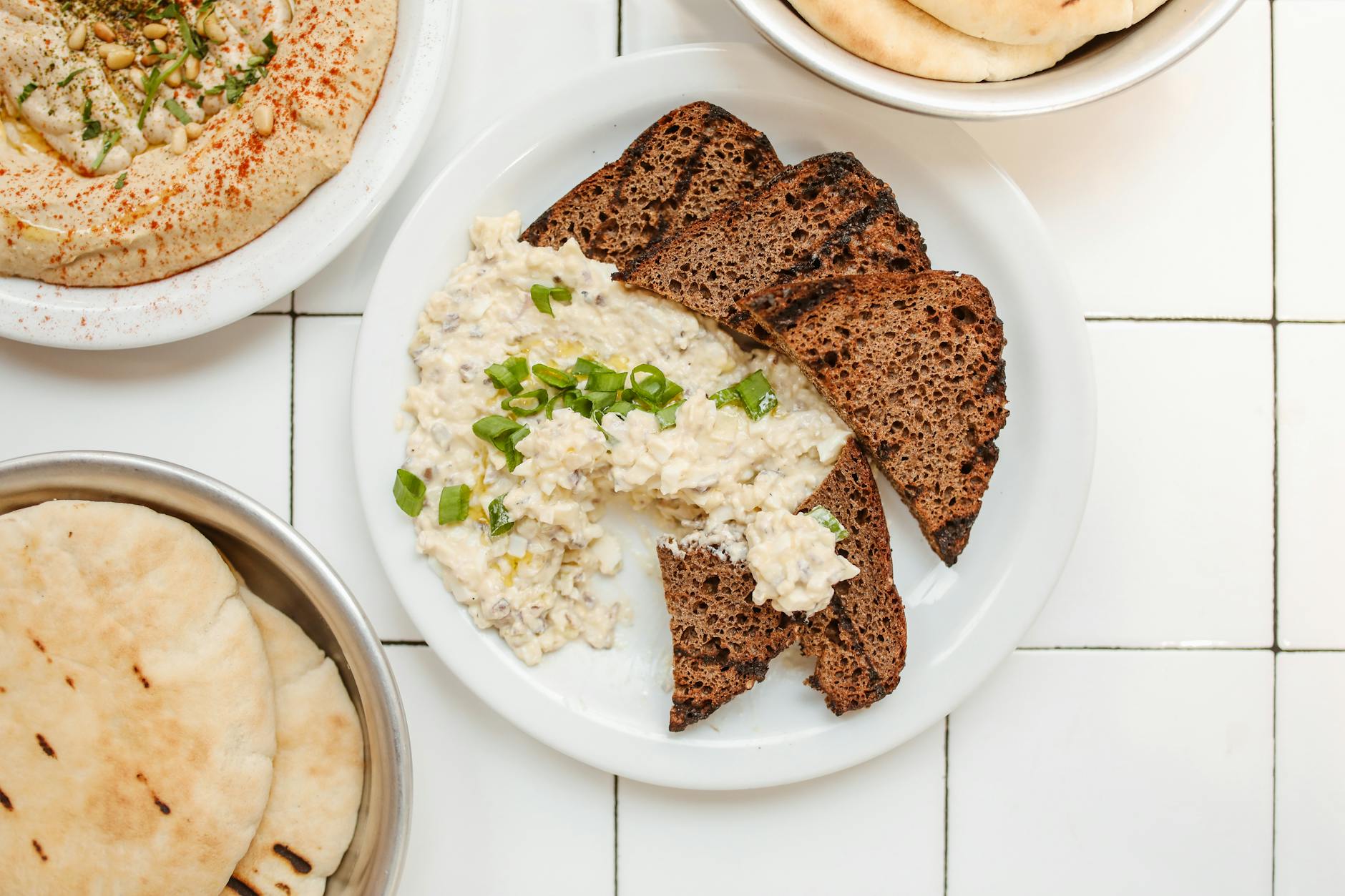
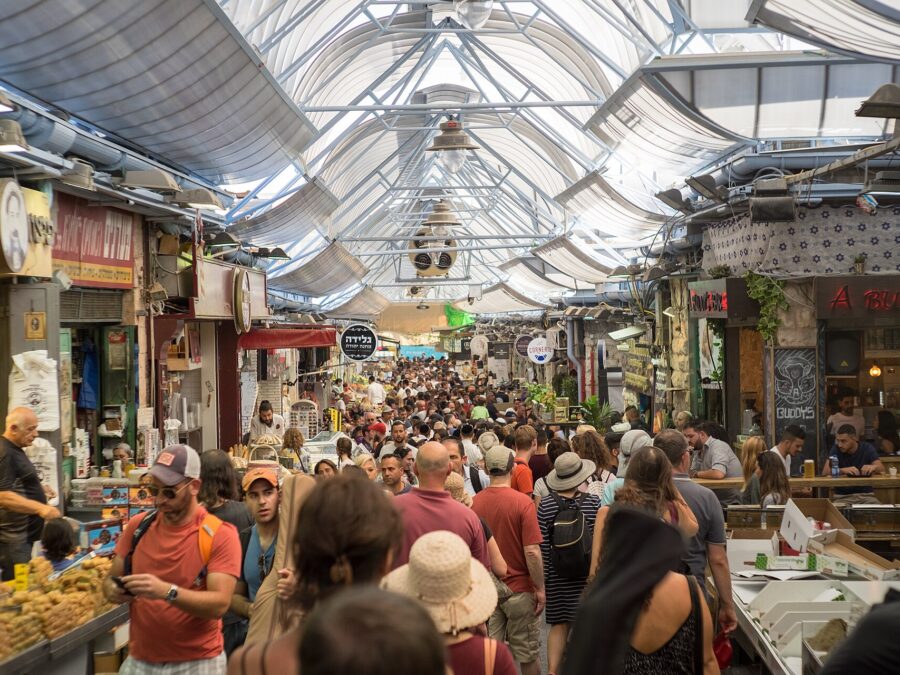
Jerusalem’s restaurant scene has quietly become one of the most exciting in the Mediterranean. Decades of immigration from Yemen, Iraq, Morocco, Russia, Ethiopia, Georgia, and India have layered on top of native Levantine, Palestinian, and Sephardic cooking, and a new generation of chefs is fusing these traditions with modern technique. The result is a city where you can have a Michelin-quality tasting menu, a $5 falafel from a stall older than your grandparents, and a Georgian khachapuri at midnight — all within a 15-minute walk.
This guide ranks the best restaurants in Jerusalem for 2026 — both the iconic destination spots and the local favorites that win on flavor without the hype. We cover fine dining, mid-budget standouts, the legendary Mahane Yehuda Market eateries, kosher fine dining, vegan-friendly options, and the city’s most authentic Palestinian and Arab restaurants. Each entry includes price ranges, reservation difficulty, and what to order. Pair this with our complete Jerusalem food guide and the Jerusalem at Night guide.
How to Eat Well in Jerusalem
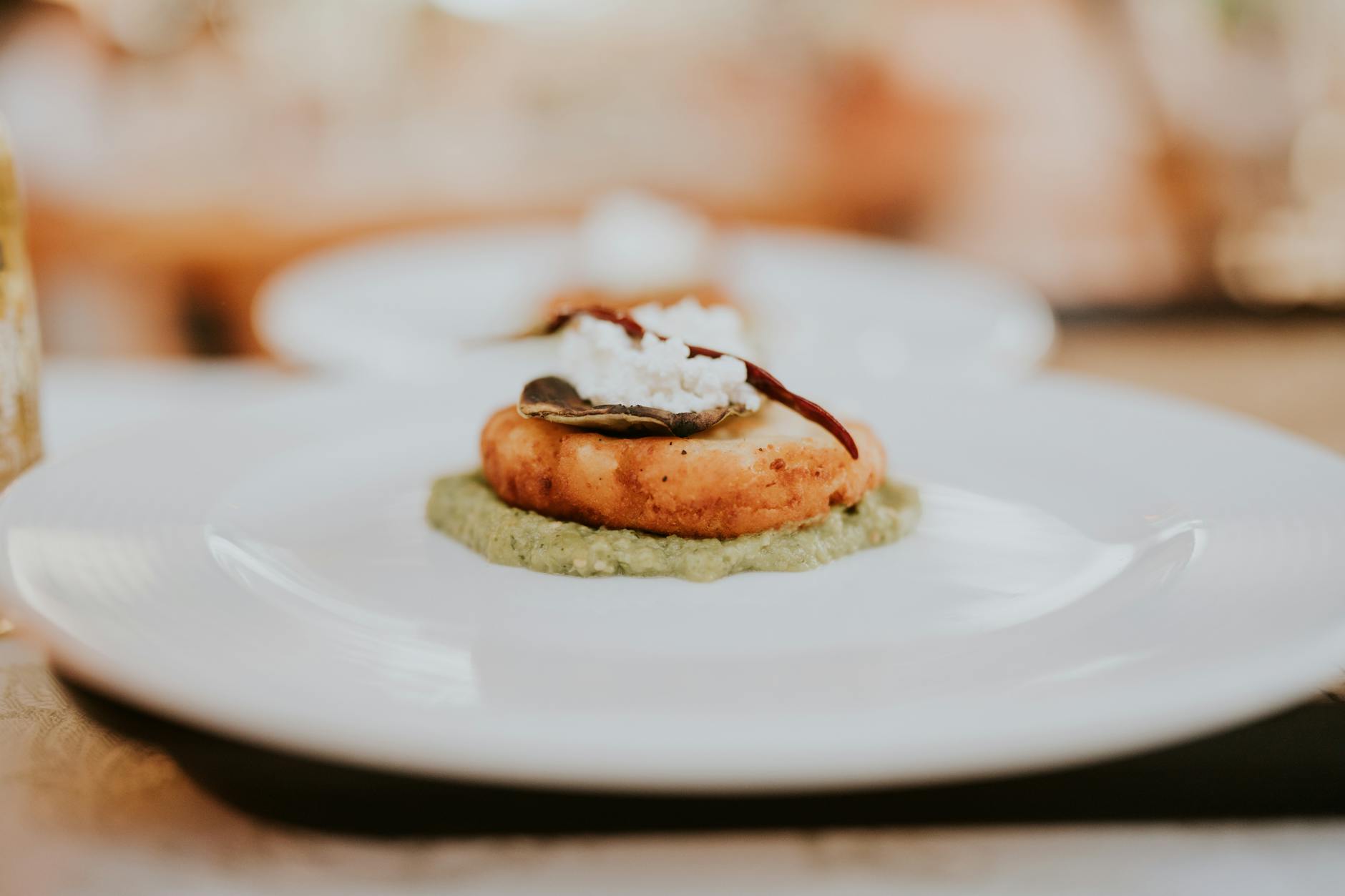
A few rules for navigating Jerusalem dining:
- Reserve. The hot restaurants book out 1–2 weeks ahead, especially Machneyuda, Anna, and any rooftop.
- Dinner happens late. Israelis dine 8–10 PM. Most restaurants don’t fill until 8:30.
- Mahane Yehuda after dark is a different city — the market shutters close and the bars/restaurants open.
- Kosher matters. Most Jewish-run restaurants are kosher; meat and dairy not mixed; no shellfish or pork. Confirms what’s available Friday afternoon to Saturday sunset (usually nothing).
- Service charges are not always added; tip 10–15% in cash if not.
- Israeli wine from the Judean Hills is excellent and underrated — ask for it.
Fine Dining Standouts
1. Machneyuda — Jerusalem’s Most Famous Restaurant
Cuisine: Modern Mediterranean / Israeli market-to-table.
Address: 10 Beit Ya’akov, inside Mahane Yehuda Market.
Price: $80–$120 per person with wine.
Why book it: The most acclaimed restaurant in Jerusalem. Three chefs (Yossi “Papi” Elad, Asaf Granit, Uri Navon) work an open kitchen turning out seasonal, market-driven dishes. The atmosphere is loud, joyous, and famously involves chefs dancing on tables. Ingredients sourced from the next-door market.
Reservations: 2–3 weeks ahead minimum. Bar seating available walk-in.
2. Anna Italian Café — The Hidden Garden
Cuisine: Italian.
Address: Ticho House courtyard, downtown.
Price: $50–$80 per person.
Why book it: Tucked into the gorgeous Ticho House garden, Anna is the city’s most romantic restaurant. House-made pasta, exceptional wine list, candlelit garden seating in summer. Reservation essential.
3. Rooftop at Mamilla
Cuisine: Modern Mediterranean.
Address: Mamilla Hotel, 8th floor.
Price: $80–$130 per person with wine.
Why book it: Views of the floodlit Old City walls plus a serious kitchen. Live jazz on summer evenings. Date-night perfection. Kosher.
4. The Palace Restaurant (Waldorf Astoria)
Cuisine: Modern Israeli / international.
Price: $100–$150 per person.
Why book it: Old World grandeur, polished service, exceptional wine list. Special occasion staple.
Mahane Yehuda Market Eateries
5. Azura — The Sephardic Lunch Standard
Cuisine: Iraqi / Sephardic Jewish.
Price: $20–$35 per person.
Why book it: Open since 1952. Slow-cooked stuffed eggplant, kubbeh soup, and the legendary stuffed onions are not to be missed. Lunch only. No reservations.
6. Chachapuria — Georgian in the Market
Cuisine: Georgian.
Price: $25–$40 per person.
Why book it: The best khachapuri (cheese-stuffed bread) in Israel — made fresh on the spot. Dumplings, stews, and a fun, casual atmosphere.
7. Pasta Basta
Cuisine: Italian.
Price: $15–$25 per person.
Why book it: Pasta made fresh every morning in front of customers, sauces prepared on the spot. Quick lunch staple.
8. Hamarakia — Soup & Stew Specialist
Cuisine: Israeli / Levantine soup.
Price: $15–$25 per person.
Why book it: Hamarakia means “the soup pot” — and that’s what they do. 8–10 different rotating soups daily, plus market-fresh salads. Cozy, casual, perfect for cold winter days.
9. Pinati
Cuisine: Israeli classics — hummus, falafel, mixed grill.
Price: $10–$20 per person.
Why book it: Local institution since 1972. The hummus is among Jerusalem’s best. Open late.
Best Hummus in Jerusalem
10. Hummus Lina (Old City)
Address: Christian Quarter, Old City.
Price: $5–$10.
Why book it: Many Jerusalem locals’ choice for the best hummus in the city. Tiny, no-frills, authentic.
11. Abu Shukri
Address: Khan al-Zeit Street, Old City.
Price: $5–$10.
Why book it: Christian-quarter institution. Hummus with whole chickpeas, fava, and tahini. Falafel and shawarma also excellent.
Palestinian and Arab Restaurants
12. Askadinya — Modern Palestinian
Cuisine: Modern Palestinian.
Address: Sheikh Jarrah, East Jerusalem.
Price: $25–$50 per person.
Why book it: Updated Palestinian cuisine in a beautiful courtyard setting. Try the maqluba (upside-down rice with vegetables) and the lamb mansaf.
13. Armenian Tavern
Cuisine: Armenian.
Address: Armenian Quarter, Old City.
Price: $25–$45 per person.
Why book it: Atmospheric stone-vaulted dining room. Stuffed grape leaves, lahmajun, and Armenian wine.
Vegetarian and Vegan Standouts
14. Topolino
Cuisine: Italian vegetarian.
Price: $30–$50 per person.
Why book it: Cozy, casual, with an excellent vegan tasting menu and gluten-free pasta options.
15. Cordoba
Cuisine: Vegetarian / vegan Mediterranean.
Price: $25–$45 per person.
Why book it: Modern vegetarian dishes that satisfy meat-eaters. Excellent salads and grain bowls.
Bakeries and Cafés Worth a Detour
16. Café Kadosh
Cuisine: French-style pâtisserie.
Address: 6 Shlomtzion HaMalka Street.
Price: $5–$15.
Why book it: Best pastries in the city. Famous for the chocolate croissant and the millefeuille. Open since 1967.
17. Marzipan Bakery
Cuisine: Bakery — chocolate rugelach.
Address: Mahane Yehuda.
Price: $5 per pound.
Why book it: The legendary chocolate rugelach are warm and gooey straight from the oven. Try Friday morning before Shabbat shopping crowds.
18. Caffit
Cuisine: Israeli café fare.
Address: Multiple locations including German Colony.
Price: $15–$25 per person.
Why book it: Beloved local café for breakfast and brunch. Shakshuka, salads, and Israeli pastries.
Late-Night Dining
19. HaTzot Steakhouse
Cuisine: Jerusalem mixed grill.
Hours: Open until 4 AM weekends.
Why book it: Classic Jerusalem mixed grill (me’orav Yerushalmi) — chicken hearts, livers, lamb cuts, onions, spices, all on warm pita. Late-night institution.
20. Falafel HaSadeh / Mihbar Lou
Late-night street stalls along Jaffa Road and around Davidka Square.
Kosher Fine Dining
21. La Régence (King David Hotel)
Cuisine: French-Israeli kosher fine dining.
Price: $90–$150 per person (330–550 ILS).
Why book it: Classic kosher fine dining. Refined service, formal atmosphere. For the full certified landscape — certificates explained, more names — see our kosher restaurants in Jerusalem guide and the fine dining in Jerusalem guide.
22. Sofia (Inbal Hotel)
Cuisine: Mediterranean kosher.
Price: $60–$100 per person.
Why book it: Less formal than La Régence but excellent execution.
23. Adom
Cuisine: Mediterranean / Israeli, non-kosher.
Address: First Station.
Price: $50–$80 per person.
Why book it: A long-running favorite for Mediterranean cuisine. Excellent wine list. Open late.
What Eating Out Costs in Jerusalem (2026)
Restaurant prices in shekels, so you can sanity-check menus on the spot:
- Street meal (falafel, sabich, hummus plate): 18–40 ILS — see our breakdown of what street food actually costs.
- Market sit-down lunch (Azura, Pasta Basta, Hamarakia): 50–90 ILS.
- Mid-range dinner: mains 78–130 ILS; a full meal with a drink runs 150–200 ILS per person.
- Fine dining (Machneyuda, La Régence, the rooftops): 300–450 ILS per person with wine; tasting menus more.
- Wine: Judean Hills bottles run 120–180 ILS in restaurants — far better value than the imported list.
- Business lunch deals: many serious kitchens offer fixed-price weekday lunches at 60–70% of dinner prices. Ask.
Where meals fit into a full trip budget — hotels, transport, the lot — is covered in our guide to how much a trip to Jerusalem costs.
Where to Eat by Neighborhood
City center and Nahalat Shiv’a. The densest restaurant cluster: Anna in the Ticho House garden, Hadar and the Nahalat Shiv’a lanes, Pinati on King George. Walkable from most hotels, and the only area where you’ll find much open late on weeknights.
Mahane Yehuda. Lunch at the market stalls, dinner at Machneyuda or Chachapuria, then bars until late. Our Mahane Yehuda Market food guide covers the day scene stall by stall.
German Colony and First Station. Emek Refaim Street is café country — Caffit, neighborhood Italian, weekend brunch queues. First Station, the converted Ottoman rail terminal, adds family-friendly restaurants with terrace seating, including Adom. Quieter and greener than downtown.
Old City and East Jerusalem. Daytime territory: hummus at Lina or Abu Shukri — ranked properly in our best hummus in Jerusalem guide — kunafeh on Khan al-Zeit, mezze at Askadinya or the Armenian Tavern. Note that most Old City spots close by early evening; plan dinners on the west side.
Israeli Breakfast: The Meal Worth Waking Up For
One meal here genuinely embarrasses the rest of the world: breakfast. The standard Israeli breakfast — eggs to order, six small salads, cheeses, olives, tahini, fresh bread, juice, and coffee — costs 45–70 ILS at cafés like Caffit or Café Rimon and keeps you full past 2 PM. Hotel versions are even more lavish; the buffets at the King David and Mamilla are events in their own right. Shakshuka, the Tunisian-Jewish skillet of eggs in spiced tomato, is the dish to order at least once (38–55 ILS). Weekend brunch peaks Friday morning, when half of West Jerusalem eats out before Shabbat — book or arrive before 10 AM.
Reservation Tips and Booking
- Machneyuda, Anna, Mamilla rooftop: Book 2–3 weeks ahead, longer for weekends.
- Adom, Sofia: 1 week ahead.
- Mahane Yehuda Market eateries: Most don’t take reservations. Arrive at 12:30 PM or 8:30 PM to skip the rush.
- Saturday night reopening after Shabbat is the busiest dining slot of the week — book 1–2 weeks ahead.
- Kosher restaurants close from Friday afternoon to Saturday sunset.
- Online booking via Tabit, Google, OpenTable, and direct restaurant websites.
- Tipping: 10–15% in cash unless service charge already added.
When the Market Becomes a Bar: Mahane Yehuda After Dark
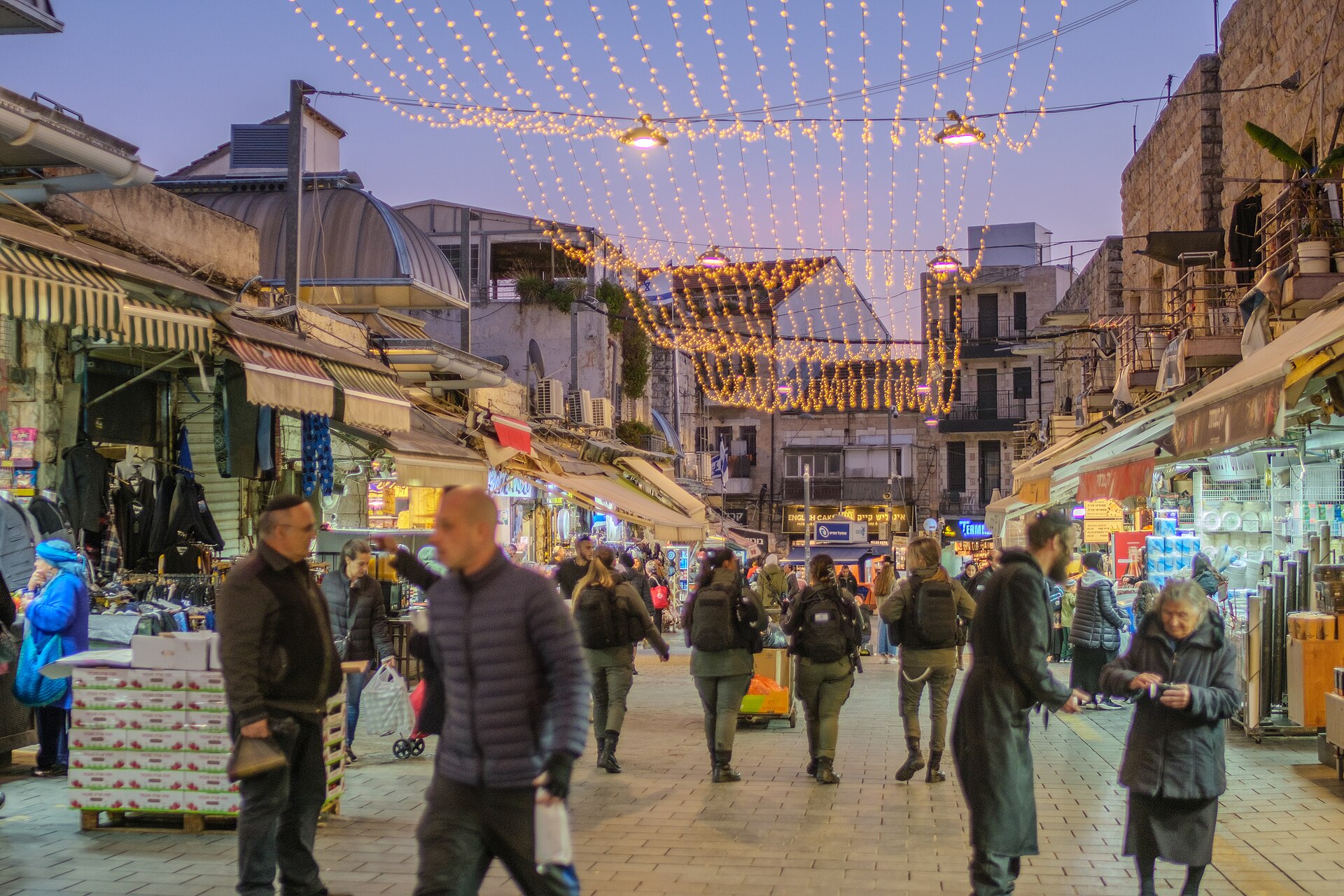
The single most distinctive thing you can do with a Jerusalem evening costs nothing to enter. Around late afternoon, the greengrocers and spice merchants of Mahane Yehuda pull down their metal shutters, and the market you walked through at lunchtime disappears. What is left is a grid of narrow lanes lined with painted steel — the shutters carry huge portraits and murals, invisible during trading hours because they are rolled up above the stalls — and, behind roughly a hundred of those shutters, bars and restaurants that only exist at night.
The rhythm is predictable once you know it. Stalls wind down from about 17:00 and are gone by 19:00. Bars start filling around 20:00, the lanes are properly busy by 21:30, and venues are permitted to serve until 03:00, when the street cleaners arrive and hose everything down for the morning. Thursday is the big night — the Israeli weekend starts Friday, so Thursday functions the way Friday does elsewhere. Saturday night, once Shabbat ends, is a close second.
Practically, you do not book anything and you do not plan a route. There is no cover charge, drinks come in plastic or glass depending on the venue, and the accepted behavior is to carry your drink into the lane and drift. Machneyuda sits in the middle of all this on Beit Ya’akov, which is why a table there feels like the center of the evening rather than a room you were seated in. If you want food rather than drinking, several market kitchens keep serving late, and the shawarma and sabich counters on Agrippas Street at the market’s southern edge run long after the produce has gone.
Two honest warnings. It is loud — genuinely loud, with sound bouncing off stone and steel — so this is not where you take someone for a conversation. And it is a young crowd on peak nights; the market at 23:00 on a Thursday has more in common with a street party than with dinner. If that is the wrong register, the bars in the Nahalat Shiv’a lanes and around Jaffa Street are calmer, and the wider Jerusalem nightlife rundown covers what else is running after midnight. For the daytime version of the same address — who sells what, and where the good halva is — start with our stall-by-stall market eating guide.
Eating on Shabbat: What Closes, and What Reliably Stays Open
This is the logistics question that catches out more visitors than any other, and it is worth understanding properly rather than hoping. Shabbat runs from sunset on Friday to nightfall on Saturday — roughly 16:15 to 17:30 in midwinter, and about 19:15 to 20:30 in high summer. Any restaurant with a kosher certificate must close for that window, and most of them shut their kitchens well before it starts.
What closes, and when
- Kosher restaurants across West Jerusalem — last orders are typically early Friday afternoon, often 14:00 to 15:00. Many simply do not open Friday at all beyond breakfast.
- Mahane Yehuda Market — Friday is the busiest shopping morning of the week and then it empties fast. Assume the market is done by early afternoon and closed all Saturday.
- Hotel dining rooms — kosher hotels keep serving over Shabbat, but on pre-set menus, paid in advance, with no card transactions on the day. Book Friday dinner and Saturday lunch when you check in.
- Machneyuda — not kosher, but closed Friday night and Saturday anyway, per the official city tourism listing. Several of the city’s best-known kitchens make the same choice.
What stays open
Three categories keep running. The first is East Jerusalem and the Old City’s Muslim and Christian Quarters, where Shabbat is simply not the operating calendar — the hummus counters on and around Khan al-Zeit, the kunafeh shops, and the Salah al-Din Street restaurants trade normally on Saturday. Askadinya in Sheikh Jarrah lists daily hours from midday to midnight. The Armenian Tavern in the Armenian Quarter opens daily from midday except Sunday, which makes it one of the few atmospheric Saturday lunches inside the walls.
The second is the small set of non-kosher West Jerusalem restaurants that deliberately trade through the weekend. the city tourism board’s round-up of Saturday openings names Barood in the Feingold Courtyard off Jaffa Street, Focaccia Bar on Rabbi Akiva, Dolphin Yam on Ben Shatach, Mona in the Artists’ House on Shmuel HaNagid, and the wine-and-cheese rooftop at the Notre Dame Center opposite the New Gate. Mona also appears on Ontopo’s Jerusalem Saturday list, alongside Talbiye beneath the Jerusalem Theatre and Giuseppina at the First Station — a live booking system is the best single check, because a restaurant that is taking Saturday reservations today is open on Saturday.
The third is the Christian institutions: guesthouse dining rooms and the Notre Dame rooftop keep normal hours, and they are usually the quietest option of the three.
One thing that does not stay open is the transport. Buses and the light rail stop before sunset Friday and restart Saturday evening, so a Saturday meal means walking, a taxi arranged in advance, or a shared service taxi from Damascus Gate. Budget for that when you pick where to eat, and read our full guide to how the city works over Shabbat before your first Friday.
Restaurants by Occasion
Most people do not arrive wanting “the best restaurant” in the abstract. They want the right room for a specific evening. Here is how the city sorts by occasion.
A proper breakfast
Go to a café, not a hotel, at least once. The full Israeli breakfast — eggs cooked to order, a spread of small salads, cheeses, olives, tahini, bread and coffee — is a sit-down meal of an hour, and it is best in the German Colony and around Emek Refaim, where Caffit has been doing it for decades. Café Kadosh on Shlomtzion HaMalka is the pastry-first version: order the millefeuille and a hafuch and skip the eggs. Friday from about 09:00 is the busiest breakfast slot of the week.
A business lunch
Weekday lunch is when Jerusalem’s serious kitchens are cheapest and quietest. Fixed-price business lunches run at a substantial discount to the same kitchen’s dinner service, they are served briskly between about 12:00 and 15:30, and the rooms are calm enough to talk in. Mona, in the Artists’ House, is the standard choice for a lunch that needs to look considered. Avoid the market at lunchtime for anything resembling a meeting — Azura is wonderful and completely unsuitable for a conversation about a contract.
A special dinner
For an anniversary or a last night, the deciding factor is usually the room rather than the menu. The hotel rooftops facing the Old City walls trade on the view and price accordingly; Mona trades on a nineteenth-century stone building and a short changing menu. Book two to three weeks out for a Friday or Saturday night, and ask for a specific table when you book rather than on arrival. Our look at the top end of the city’s kitchens goes deeper on tasting menus and wine lists.
Eating late
After about 22:30 the choice narrows to three things: the market bars, the mixed-grill counters, and the shawarma and falafel windows on Agrippas Street and around Davidka Square. HaTzot has been the late Jerusalem mixed grill for generations and runs into the early hours at weekends. This is genuinely good eating rather than a fallback — the dishes the city actually invented are mostly grill and pita food.
Eating with kids
The First Station complex is the easy answer: pedestrianized, open air, several kitchens along one platform, and enough space that nobody minds a child leaving the table. Pasta Basta in the market works for the same reason — food arrives in four minutes. Israeli restaurants are broadly relaxed about children, high chairs are normal, and nobody will look at you for arriving at 19:00 rather than 21:00. More options are in our rundown of places that welcome families.
Eating alone
Counter seating is the trick. Hummus places are built for solo eaters and turn over in twenty minutes; the market kitchens seat you at a bar without comment; Machneyuda keeps bar seats back for walk-ins, which is the only reliable way into that room without a reservation. Bring nothing to read — the open kitchens are the entertainment. A guided eating walk is also the least awkward way to eat well alone on a first night, because the introductions are done for you.
Booking a Table When You Don’t Speak Hebrew
You do not need Hebrew to eat well here, but you do need to know which system to use. Israeli restaurants run on two booking platforms and a lot of phone calls.
- Ontopo is the one to start with. It covers most serious Jerusalem restaurants, and it has a full English interface — switch language with the globe icon. You give a name, party size, date, email and phone, and you get a confirmation email. Expect a confirmation call or message on the day.
- Tabit handles the rest, including a lot of hotel and mid-market restaurants. It works, but the interface is largely Hebrew — usable by pattern-matching the date and time fields, awkward otherwise.
- Phone and WhatsApp. Small and family-run places, and most of East Jerusalem and the Old City, take bookings by phone. Staff in tourist-facing restaurants speak English routinely. WhatsApp is normal business practice in Israel — a written message with date, time and party size avoids accents on both sides and gives you something to show at the door.
- Your hotel desk. For the two or three restaurants that matter most on your trip, ask the front desk to call. They will get through to places whose online availability looks closed, and they know which kitchens have quietly stopped opening on which nights.
How far ahead, and which nights
Thursday and Friday nights are the two hard ones. Thursday is the start of the Israeli weekend and fills first; Friday night knocks out every kosher restaurant in the city, which pushes the entire demand for a Friday dinner onto the small number of places that open, so those book out further than anything else in the week. Saturday night after Shabbat ends is the third pressure point — the whole city goes out at once, and 21:00 slots vanish. For the marquee names on any of those three nights, work on two to three weeks. Sunday to Wednesday you can often book a good table the same day.
Two practical points. Deposits or card guarantees are increasingly normal for larger parties and tasting menus, and no-show fees are enforced. And if a restaurant shows nothing online, call anyway — Israeli restaurants hold back bar seats and early slots from the platforms, and 18:30 is almost always available because locals think it is absurdly early.
Eating with Dietary Requirements
Jerusalem is an unusually easy city for restricted diets, for a reason that has nothing to do with fashion: kosher law already forces every kitchen to separate meat from dairy, so the concept of a menu with a hard dividing line down the middle is completely routine here.
Vegetarian and vegan
Israel has one of the highest rates of vegan eating anywhere, and it shows on menus rather than in a separate section at the back. Any dairy-certified restaurant is by definition meat-free, which quietly makes a large share of the city vegetarian by default. The mezze tradition does the rest — hummus, tahini, baba ganoush, fattoush, mujadara, stuffed vegetables and most salatim are vegan as cooked, not as an adaptation. The one thing to check is that a hummus plate has not been finished with meat, and that pastries are not brushed with butter. Our guide to the city’s plant-based kitchens has the dedicated addresses.
Gluten-free
Harder, but manageable. Bread is central to almost everything — pita, laffa, challah, borekas — and shared dips are eaten with it, so cross-contact is the real problem rather than menu availability. Grilled meat and fish, salatim, rice dishes and stews are naturally safe; falafel is usually fine but is often fried alongside battered items. Say “lelo gluten” (without gluten) or “tze’elyaki” (celiac) and you will generally be understood; larger restaurants increasingly stock gluten-free pasta and bread on request. Ask when you book, not when you sit down.
Halal
East Jerusalem, the Old City’s Muslim and Christian Quarters and the Salah al-Din Street area are where halal meat is standard, and no one there will find the question unusual. Elsewhere in the city, kosher meat is not automatically halal and should not be assumed to be — if it matters to you, eat meat on the eastern side and treat West Jerusalem as vegetarian and fish territory. Fish and dairy restaurants are straightforward everywhere. During Ramadan, East Jerusalem kitchens shift almost entirely to evening service and stay busy very late.
Allergies
Sesame is the one to watch. Tahini is in a genuinely enormous proportion of dishes here, including sauces where you would not expect it, and a sesame allergy needs stating explicitly and early. Nuts appear in rice dishes, stuffed vegetables and desserts. Shellfish is absent from every kosher kitchen by law, which makes shellfish allergy one of the few things Jerusalem handles for you automatically.
How to Check a Restaurant Is Still Trading
Be skeptical of any Jerusalem restaurant list, including the parts of this one that age. The last few years have been hard on the city’s kitchens — tourism collapsed and then returned unevenly, staffing was disrupted, and some long-established names have closed after decades. Guidebooks and blog round-ups lag by a year or more, and closed restaurants keep their listings on aggregator sites long after the door is locked.
Three checks, in order of reliability:
- Try to book. If a live reservation system offers you a real table next Tuesday, the place is open. This is the only test that cannot be faked by a stale page.
- Look at the newest reviews, not the best ones. Sort by date. If the most recent review is eight months old for a restaurant in a busy area, something has changed.
- Check the restaurant’s own social account. Israeli restaurants post constantly — daily specials, closures for holidays, staff photos. An account that stopped posting is a strong signal.
It is also worth knowing the seasonal closures that are not closures. Kitchens shut for Passover week or convert to kosher-for-Passover menus, several close for a fortnight in August, and hours move during Ramadan and the autumn festivals. A restaurant that appears shut in early April is usually just observing Pesach. When in doubt, phone — and for the wider picture of how the city eats across the year, our overview of Jerusalem food and drink and the notes on kashrut certificates and what they mean are the places to start.
Final Word: Eat Wide, Eat Often
The best Jerusalem food strategy is to eat wide: a Mahane Yehuda lunch, an Old City hummus stop, a sunset cocktail at a rooftop, a market dinner at Machneyuda, a late-night Jerusalem mixed grill. Three days is a minimum to scratch the surface; a week opens up the city’s full culinary depth. Reserve the marquee names, then leave space for the small spots no guidebook lists.
Pair this with our complete Jerusalem food guide, the Jerusalem at Night guide, and the Things to Do in Jerusalem for trip planning.
Photo Credits
Fairy lights over Mahane Yehuda Street at dusk: שוק מחנה יהודה, ינואר 2024 02 by מקף־עברי, CC BY-SA 4.0, via Wikimedia Commons.
{"@context": "https://schema.org", "@type": "FAQPage", "mainEntity": [{"@type": "Question", "name": "What's the best restaurant in Jerusalem?", "acceptedAnswer": {"@type": "Answer", "text": "Machneyuda is consistently called the best — for its energy, market-driven menu, and influence on Jerusalem dining. Anna is the most romantic."}}, {"@type": "Question", "name": "What's the best hummus in Jerusalem?", "acceptedAnswer": {"@type": "Answer", "text": "Lifelong locals split between Hummus Lina and Abu Shukri in the Old City, and Pinati in the city center."}}, {"@type": "Question", "name": "Are restaurants kosher in Jerusalem?", "acceptedAnswer": {"@type": "Answer", "text": "Most Jewish-run restaurants are kosher. Most Arab/Christian restaurants in East Jerusalem and the Old City are not. Check the kosher certificate (teudat kashrut) at the door if it matters."}}, {"@type": "Question", "name": "Is Machneyuda kosher?", "acceptedAnswer": {"@type": "Answer", "text": "No — Machneyuda is not kosher. The same chefs run kosher restaurants in Tel Aviv."}}, {"@type": "Question", "name": "What's a Jerusalem mixed grill?", "acceptedAnswer": {"@type": "Answer", "text": "Me'orav Yerushalmi — a classic Jerusalem dish of chicken hearts, livers, lamb cuts, and other offal pan-fried with onions, garlic, and spices, then served in pita. HaTzot Steakhouse is the most famous spot."}}, {"@type": "Question", "name": "What about vegan options?", "acceptedAnswer": {"@type": "Answer", "text": "Israel is one of the most vegan-friendly countries in the world. Topolino, Cordoba, Nocturno, and many of the Mahane Yehuda eateries have full vegan menus. Almost all restaurants in Jerusalem can accommodate vegan diets."}}, {"@type": "Question", "name": "What time do restaurants open and close?", "acceptedAnswer": {"@type": "Answer", "text": "Lunch typically 12 PM–4 PM; dinner 6 PM–11 PM weekdays, until midnight Thursday-Saturday. Late-night spots like HaTzot stay open until 3–4 AM weekends."}}, {"@type": "Question", "name": "Do I need to dress up for Jerusalem restaurants?", "acceptedAnswer": {"@type": "Answer", "text": "No. Israeli dining is informal even at the top end — smart casual is fine at Machneyuda and the hotel restaurants. The one exception: dress modestly when eating in religious neighborhoods or the Old City."}}, {"@type": "Question", "name": "How do I book a Jerusalem restaurant if I don’t speak Hebrew?", "acceptedAnswer": {"@type": "Answer", "text": "Use Ontopo, which covers most serious restaurants and has a full English interface; Tabit, the other major platform, is largely Hebrew-only. For small and family-run places, phone or send a WhatsApp message with the date, time and party size — English is spoken in tourist-facing restaurants, and a written message avoids confusion on both sides."}}, {"@type": "Question", "name": "Where can I eat in Jerusalem on Saturday?", "acceptedAnswer": {"@type": "Answer", "text": "East Jerusalem, the Old City’s Muslim and Christian Quarters, Christian guesthouse dining rooms, and a small number of non-kosher West Jerusalem restaurants that deliberately trade through the weekend. Kosher restaurants and Mahane Yehuda are closed from Friday afternoon until after nightfall on Saturday. Check a live booking system for the current Saturday list rather than an article, and remember that buses and the light rail do not run."}}, {"@type": "Question", "name": "How far in advance should I book for a Thursday or Friday night?", "acceptedAnswer": {"@type": "Answer", "text": "Two to three weeks for the well-known restaurants. Thursday is the start of the Israeli weekend and fills first; Friday night is harder still, because every kosher restaurant is closed and the whole city’s demand lands on the few places that open. Saturday night after Shabbat ends is the third pressure point. Sunday to Wednesday you can usually book a good table on the day."}}, {"@type": "Question", "name": "Is there halal food in Jerusalem?", "acceptedAnswer": {"@type": "Answer", "text": "Yes — East Jerusalem, the Salah al-Din Street area, and the Old City’s Muslim and Christian Quarters serve halal meat as standard. Kosher meat elsewhere in the city is not automatically halal and should not be assumed to be, so if it matters to you, eat meat on the eastern side and treat West Jerusalem as fish, dairy and vegetarian territory."}}, {"@type": "Question", "name": "Do Jerusalem restaurants take credit cards?", "acceptedAnswer": {"@type": "Answer", "text": "Almost all sit-down restaurants take cards, and contactless payment is standard. Carry some cash for small Old City counters, market stalls and street food windows, where card minimums or cash-only signs are still common — and for tipping, which is normally left in cash."}}, {"@type": "Question", "name": "Is one restaurant meal enough to understand Jerusalem food?", "acceptedAnswer": {"@type": "Answer", "text": "No, and the city rewards grazing more than it rewards one big dinner. A hummus breakfast, a market lunch, kunafeh in the afternoon and a late mixed grill will tell you more than any single tasting menu. If you have one evening only, eat in Mahane Yehuda, where the market kitchens and the bars are the same few lanes."}}]}