Jerusalem nightlife is quieter and more characterful than Tel Aviv’s, and that is exactly its appeal. After dark the energy concentrates in a handful of walkable pockets: Mahane Yehuda Market (the Shuk), which flips from produce stalls to bar crawl after closing; the lanes around HaTaklit and the downtown “triangle” of King George, Jaffa Road and Ben Yehuda; and the leafier German Colony for slower drinks. Most of the action is secular and on the west side of the city, it runs Sunday through Thursday, and it largely pauses Friday evening through Saturday evening for Shabbat. This guide walks you through where to go, what a round costs in 2026, how to get home, and the etiquette worth knowing before you order.
For the bigger picture of evening culture, pair this with our Jerusalem culture and entertainment guide, our broader Jerusalem at night roundup, and the dedicated live music in Jerusalem page.
Jerusalem After Dark: What to Expect
Set your expectations correctly and you will have a great time. Jerusalem is a mixed religious and secular city, and its drinking-and-dancing scene is centered firmly on the secular west side. You will not find the wall-to-wall megaclubs of Tel Aviv, 45 minutes away by train. What you get instead is a dense cluster of bars where the bartender remembers your name by the second round, craft beer made in Israel, live sets in rooms that hold a hundred people, and a market that becomes a party.
The rhythm of the week matters more here than almost anywhere else. Tuesday, Wednesday and Thursday are the strong nights when locals, students from the Hebrew University and Bezalel, and travelers fill the bars. Sunday and Monday are quiet recovery nights. Friday afternoon the city begins to shut for Shabbat, and most secular bars close from roughly sundown Friday until after dark on Saturday. Then Saturday night detonates: once Shabbat ends, everyone who has been home for 25 hours pours out at once, and the Shuk and downtown are at their busiest of the week. If you only have one big night out, make it Thursday or Saturday.
- Peak nights: Tuesday to Thursday, and Saturday after Shabbat ends.
- Quiet nights: Sunday and Monday.
- Typical bar hours: open around 6 to 8pm, last call 1 to 3am.
- Clubs and big bars: can run to 4 or 5am on weekends.
- Crowd: skews young, secular, and friendly; English is widely spoken.
- Shabbat: most west-side bars closed Friday evening to Saturday evening.
The Best Nightlife Areas
Mahane Yehuda Market (the Shuk) at night
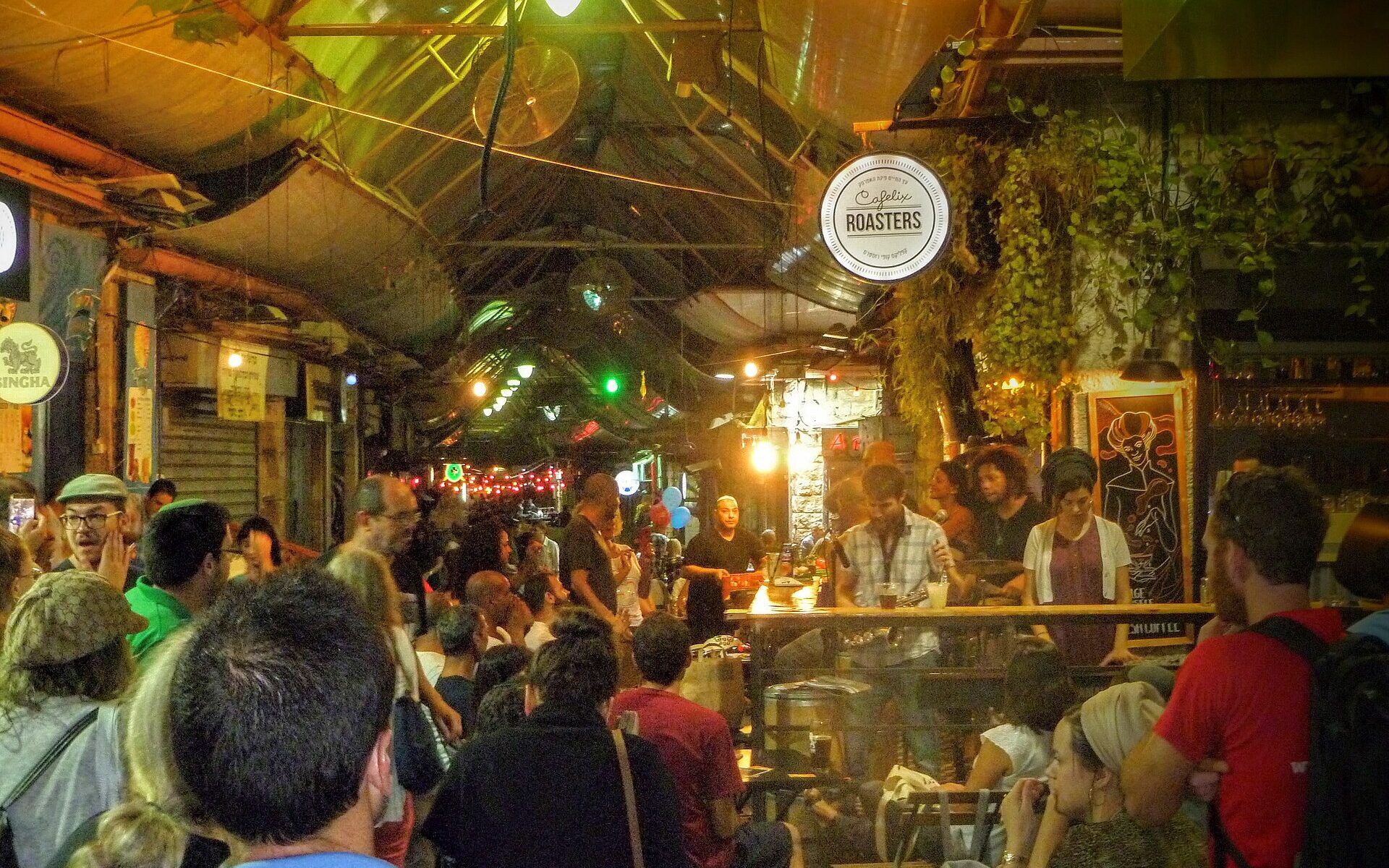
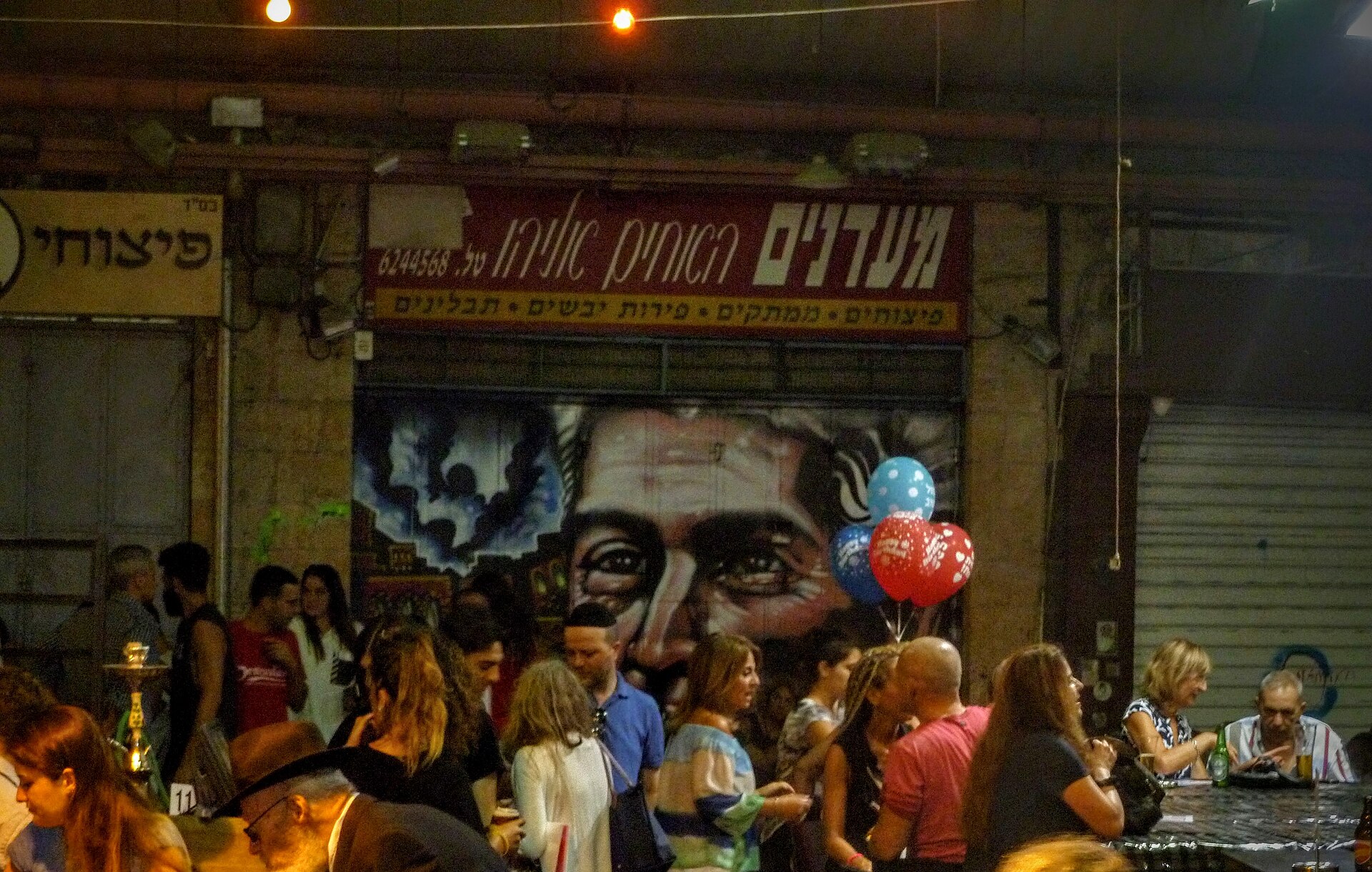
The single most distinctive nightlife experience in the city. By day, Mahane Yehuda is a food market; from late afternoon the shutters roll down to reveal that many of them have been painted with portraits and street art, and the alleys fill with bars, arak counters and small live-music spots. There is no cover, you wander between venues with a drink, and the crowd spills into the lanes. Things get going around 8pm and run to 2 or 3am, later on weekends. Come hungry too: stalls and restaurants stay open late, so you can graze on the way. For the daytime version and stall-by-stall eating, see our Mahane Yehuda Market guide and the market food guide.
Long-running anchors include Beer Bazaar, a craft-beer bar with a deep Israeli tap list; Casino de Paris, a small cocktail spot with vintage styling tucked into the Iraqi market lane; and Bar Hashachar, known for serious cocktails. The market gets tight and loud at peak, so if you want conversation, arrive early or pick a venue with a courtyard.
HaTaklit and the downtown triangle
A short walk from the market, the lanes branching off King George Street and Jaffa Road form the historic downtown nightlife zone. HaTaklit (“the record”) is a small alley-style bar that leans into music, with vinyl on the walls and frequent DJ and live nights, and it gives the lane its nickname. The surrounding triangle of King George, Jaffa and Ben Yehuda is where you will find dive bars, pubs and late cafes within a couple of minutes of each other, which makes it the easiest area for bar-hopping on foot.
German Colony and Emek Refaim
South of the center, the German Colony along Emek Refaim Street trades the market’s noise for a calmer, slightly older scene of wine bars, restaurants with full bars and quieter terraces. It is the area to choose for a relaxed date or a good glass of Israeli wine rather than a raucous night. Plenty of people start the evening here with dinner, and our roundup of the best restaurants in Jerusalem covers the Emek Refaim strip in detail. For the wine angle specifically, our Jerusalem wine bars guide goes deeper.
Mamilla, Yemin Moshe and hotel bars
For a drink with a view rather than a dance floor, head to the Mamilla promenade between the new city and Jaffa Gate, where rooftop and hotel bars look toward the Old City walls. The historic Yemin Moshe quarter nearby is romantic and quiet. These spots are pricier and dressier, but unbeatable for a sunset drink. If you are planning a couple’s evening, our romantic things to do in Jerusalem guide pairs well.
Bars by Style: How to Choose
Craft beer
Israel’s craft scene has matured, and Jerusalem drinks it well. Beer Bazaar in the Shuk is the obvious starting point, pouring dozens of local brews by the glass and flight. Several pubs around downtown keep rotating Israeli taps alongside imports. A pint of local craft typically runs 28 to 45 shekels (roughly 8 to 13 dollars).
Cocktail bars
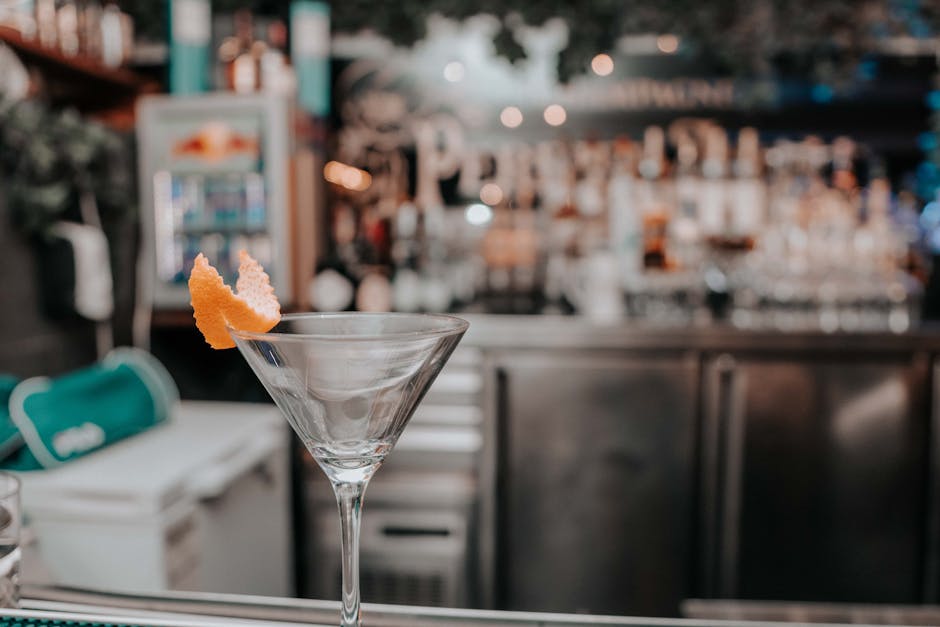
For mixed drinks, the Shuk’s small bars punch above their weight. Casino de Paris and Bar Hashachar are reliable for a well-built cocktail in a room with character. Expect 45 to 70 shekels for a cocktail at a dedicated bar, more at hotel rooftops.
Pubs and casual bars
If you want sports on a screen, bar food and an easy English-speaking crowd, the downtown pubs deliver. Mike’s Place, an American-style bar in the center, is a long-standing favorite for live music, games and a burger, and it draws travelers and English-speaking locals.
Clubs and Dancing
Be honest with yourself about what you want here. Jerusalem has far fewer dedicated dance clubs than Tel Aviv, and the line between “club” and “big bar with a DJ and a dance floor” is blurry. On weekends the larger Shuk bars and a handful of downtown venues turn up the music and clear space to dance, and the Jerusalem Cinematheque occasionally hosts late events and parties. Saturday night is when the dance energy peaks. If electronic clubbing into the early morning is the whole point of your night, take the late train or a taxi to Tel Aviv, where that scene is enormous.
Live Music Venues
Live music is one of the city’s real strengths after dark. Yellow Submarine, a respected music club, programs everything from indie and rock to world and jazz, and it doubles as a hub for emerging Israeli artists. HaTaklit mixes DJ nights with small live sets. Beit Shmuel hosts folk and acoustic evenings, and the Cinematheque and several cultural centers run periodic concerts. Tickets for club shows commonly land in the 60 to 150 shekel range, with bigger names higher. For a full venue-by-venue breakdown and how to buy seats, see our live music in Jerusalem guide; for performing arts and stage shows, the Jerusalem theater guide covers the major halls.
What a Night Out Costs in 2026
Jerusalem is not a cheap drinking city, but happy hours and the no-cover culture help. Many bars run a happy hour roughly between 5 and 8pm with reduced prices, and cover charges are rare outside ticketed live shows. The table below gives realistic 2026 ranges.
| Item | Typical price (ILS) | Approx. USD |
|---|---|---|
| Local craft beer (pint) | 28–45 | $8–13 |
| Cocktail | 45–70 | $13–20 |
| Glass of Israeli wine | 35–60 | $10–17 |
| Shot / spirit | 25–50 | $7–14 |
| Live-show ticket (club) | 60–150 | $17–43 |
| Late-night snack at the Shuk | 20–45 | $6–13 |
Tipping is customary in bars and restaurants at around 10 to 15 percent, often left in cash even when you pay the bill by card. Most venues accept cards, but keep a little cash for tips and for the smallest market stalls.
Dress, Etiquette and Sensitivities
Dress is casual at most bars: jeans, a t-shirt and trainers are fine in the Shuk and downtown. Hotel rooftops and the smarter German Colony spots lean smart-casual, though Jerusalem rarely enforces strict door codes. A practical note: the nightlife zones sit close to religious neighborhoods, and the city as a whole is more conservative than the coast. There is no problem drinking or dressing normally in the secular west-side bars, but it is courteous to avoid loud, drunken behavior on the street near homes and synagogues, and to keep beach-style outfits for the beach. Public drunkenness is uncommon and not part of the local culture.
The legal drinking age in Israel is 18, and buying alcohol in shops is restricted late at night, though bars serve well past that. Some venues check ID, so carry your passport. Alcohol is a normal part of secular Jerusalem social life, but it is largely absent from the Old City’s religious quarters and from observant neighborhoods, which is simply worth knowing as you plan where to base your evening.
Getting Home After Dark
The Light Rail Red Line runs through the heart of the nightlife district, stopping at Mahane Yehuda and along Jaffa Road, but it stops for the night around midnight and does not operate during Shabbat. After it shuts, use taxis or a ride app, both of which are easy to find downtown. Walking between the Shuk, HaTaklit and the downtown triangle is short and generally safe late at night, as these streets stay populated. If you are heading to Tel Aviv for clubbing, note the train schedule carefully, as service also pauses for Shabbat. For the full transit picture, see our Jerusalem transportation guide, and for how the whole city shifts on the seventh day, our Shabbat in Jerusalem guide.
A Sample Night Out
Start around 7pm in the German Colony with a glass of Israeli wine to ease in. Take a taxi or the Red Line toward the center, eat late at a Shuk stall, then settle into Beer Bazaar for a flight of local brews as the market fills up. Drift to Casino de Paris or Bar Hashachar for a proper cocktail, then finish in the HaTaklit lane if there is a live set or DJ you like. On a Saturday night you can keep going until the early hours; mid-week, aim to catch a taxi home before the bars empty all at once.
One summer night the whole scene goes dark. On the eve of Tisha B’Av, in late July or August, Israeli law closes restaurants, bars, clubs and cinemas from sunset, and in West Jerusalem almost everything complies. The closure runs until the next morning, and many kosher places stay shut until the fast ends at nightfall. Check the date in our guide to Tisha B’Av in Jerusalem before you plan a night out.
Photo Credits
Live music and a crowded bar in Mahane Yehuda Market at night: PikiWiki Israel 49786 summer in jerusalem, 2016 by לליב גל, CC BY 2.5, via Wikimedia Commons.
Bar tables in front of a painted shutter in Mahane Yehuda Market at night: PikiWiki Israel 49782 summer in jerusalem, 2016 by לליב גל, CC BY 2.5, via Wikimedia Commons.