Olive wood from Jerusalem and Bethlehem is one of the most meaningful Holy Land souvenirs you can carry home. Hand-carved by Palestinian Christian families over generations, the pieces range from simple crosses and prayer beads to detailed nativity scenes, figures of saints, and everyday kitchen bowls and boards. The wood comes from pruned branches and fallen trees rather than living olives, so the craft is sustainable, and the dense, swirling grain makes every item unique. This guide covers what to buy, realistic 2026 prices in shekels (ILS), where to find authentic work in the Old City and in Bethlehem, how to tell genuine olive wood from stained imitations, and how to get it home.
Because olive wood is widely faked and quality varies enormously, knowing what to look for matters as much as where you shop. Read this with our Jerusalem souvenirs guide and, if you plan to buy at the source, our Bethlehem day trip guide.
The Olive Wood Tradition
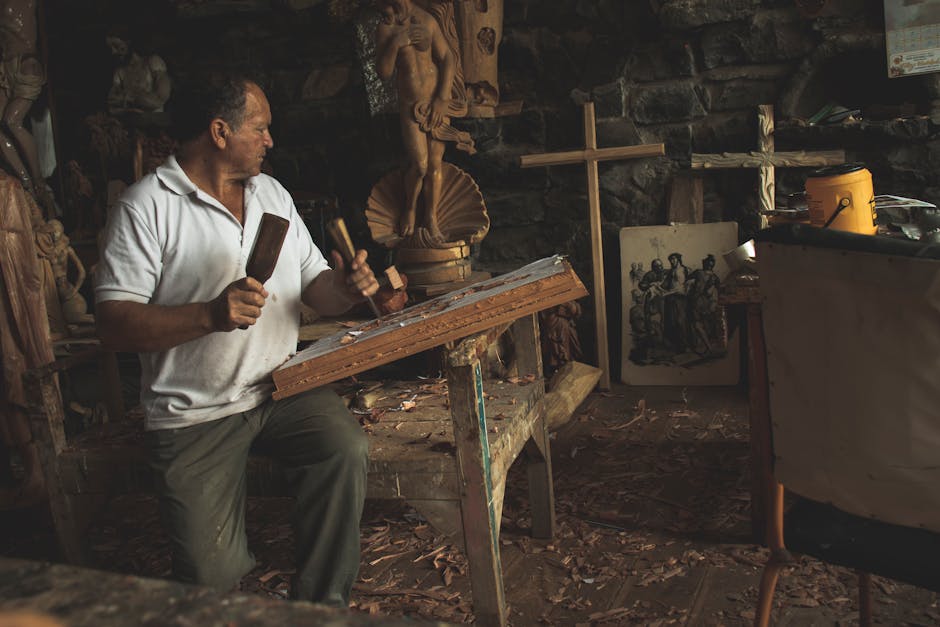
Olive wood carving has been practiced in Bethlehem and the surrounding Christian villages for centuries, with many workshops now in their fourth or fifth generation. The material is itself part of the meaning: olive trees can live for hundreds of years and are a biblical symbol of peace and endurance, and carvers use only the wood from pruning and from trees that have fallen or stopped bearing fruit. Nothing is cut down for souvenirs, so a beautiful object is made from what would otherwise be discarded. That combination of craftsmanship, sustainability, and spiritual resonance is why a small carved cross from here means more than its modest price suggests.
The craft also has a human dimension worth knowing. Carving supports Palestinian Christian families whose community in the Bethlehem area has grown smaller over the years, and buying directly from workshops and cooperatives keeps more of your money with the makers. This is one souvenir where how and where you buy genuinely matters.
What to Buy
There is a piece for every budget and suitcase. The most popular items are nativity scenes, crosses, rosaries and prayer beads, candle holders, statues of the Holy Family and saints, wall plaques with biblical verses, Christmas ornaments, and functional kitchenware such as bowls, spoons, and cutting boards. Small carved crosses and ornaments are easy to pack and start at modest prices, while detailed figures and large nativity sets are the showpiece purchases.
Nativity scenes
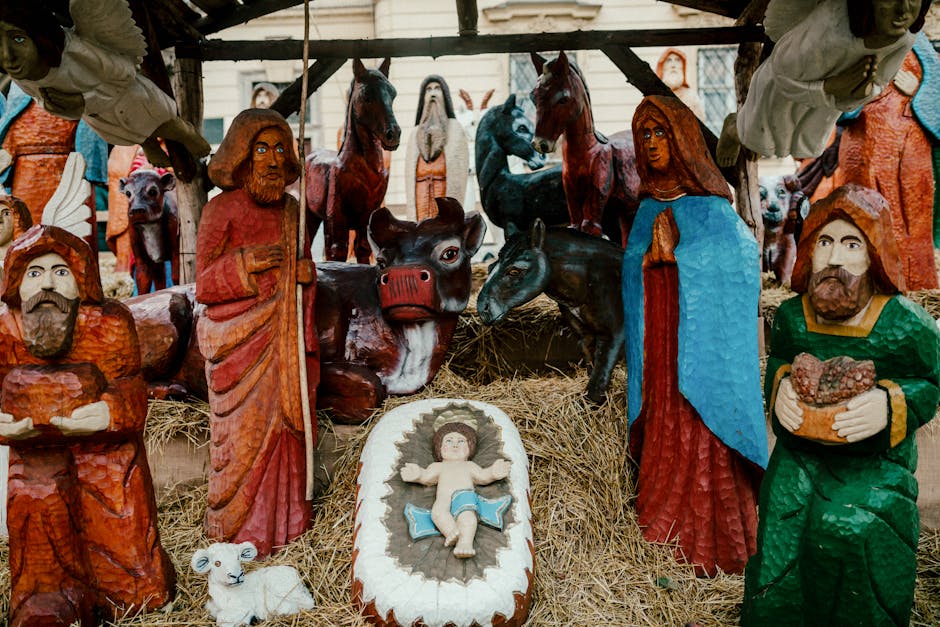
The nativity is the signature olive wood piece, ranging from a three-figure Holy Family to a twelve-piece set with shepherds, the magi, and animals. Figures run from pocket-sized at a few centimeters to display pieces of 30 centimeters or more. A small, simple set typically starts around 200 shekels, while a large, finely detailed set can run 800 to 3,000 shekels or beyond. Quality varies dramatically, so look closely at the carving of faces and hands, which is where skill shows.
Crosses and prayer pieces
Crosses span pocket versions of a few centimeters up to wall crosses of 30 centimeters and more, in styles from plain to carved with vines, a figure of Christ, or small biblical scenes. The distinctive “Jerusalem cross” design carries a large central cross flanked by four smaller ones. A small plain cross can cost as little as 30 shekels, while a large, detailed wall cross runs 200 to 500 shekels. Rosaries and prayer beads are widely available and inexpensive, and many pilgrims have them blessed at a holy site.
| Item | Typical price (ILS) |
|---|---|
| Small plain cross | 30–60 |
| Rosary / prayer beads | 30–80 |
| Christmas ornaments | 30–100 |
| Kitchen bowls, spoons, boards | 50–250 |
| Small nativity set | 200–400 |
| Large detailed nativity / statues | 800–3,000+ |
Where to Buy Authentic Olive Wood
You have two main choices: shop conveniently in Jerusalem’s Old City, or go to the source in Bethlehem for the widest selection and generally better prices. Both can yield excellent pieces if you buy from reputable sellers and check quality.
Christian Quarter, Old City
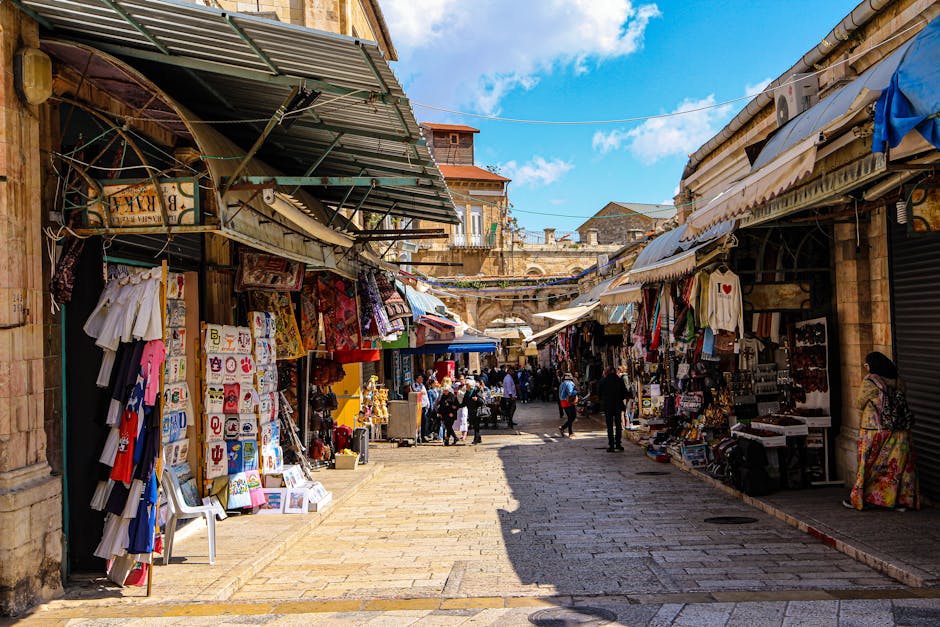
Many shops along and around the Via Dolorosa and near the Church of the Holy Sepulchre sell olive wood, so you can buy without leaving Jerusalem. Quality and price vary, and some bargaining is expected in the souk, so compare a few shops and examine pieces closely before committing. Our Christian Quarter guide maps the area, and the Old City market guide covers the souk more broadly.
Bethlehem, for selection and price
Bethlehem is the historic center of the craft, with workshops and cooperatives clustered around Manger Square and the Church of the Nativity, and prices are often noticeably lower than in Jerusalem. Many workshops welcome visitors to watch the carving, and buying here puts your money closest to the makers. Bethlehem sits in the West Bank, so the day trip involves a short crossing: most visitors go by tour, taxi, or local bus, carry their passport, and pass through a checkpoint, which is usually straightforward. Plan the logistics with our Bethlehem day trip guide, and combine the shopping with a visit to the Church of the Nativity.
Whichever you choose, favor established workshops, cooperatives, and fair-trade shops over generic stalls. Some shops do sell cheap imported carvings as “Holy Land” olive wood, so the authenticity checks below are your best protection.
How to Recognize Genuine Olive Wood
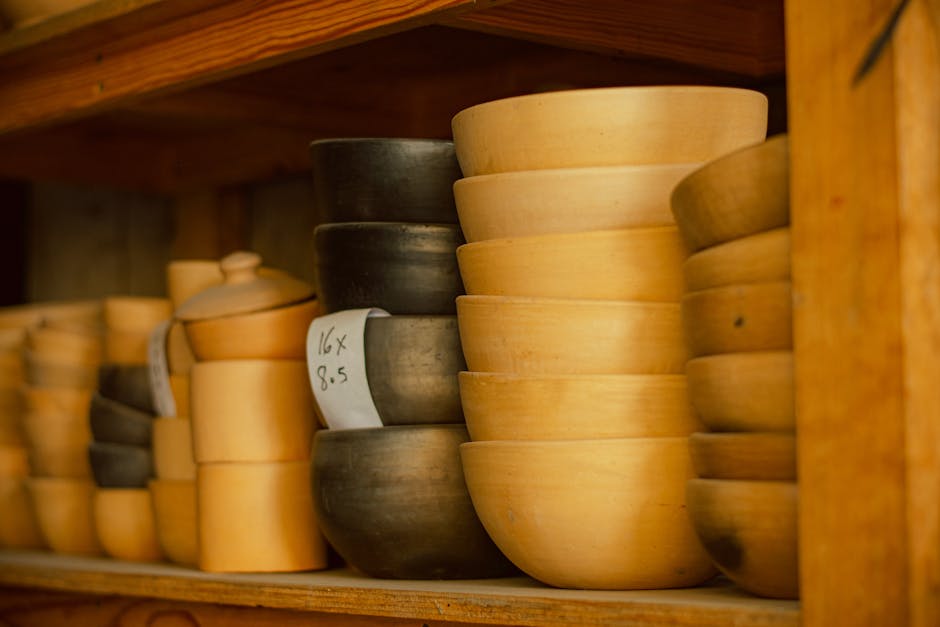
Real olive wood has a look and feel that is hard to fake once you know it. The grain is distinctive: a warm honey-yellow base shot through with darker brown swirls and wavy lines, never plain or evenly colored. The wood is dense and feels heavy for its size, and a well-made piece is sanded to a silky, almost waxy smoothness. If you can discreetly scratch an unfinished underside, genuine olive wood gives off a faint, characteristic olive scent.
The warning signs are just as useful. Be cautious of items that are uniformly pale or evenly colored with no real grain, which may be a cheaper timber stained to imitate olive wood, and of suspiciously low prices on “hand-carved” pieces, which often signal machine production or imports. On figures, study the faces, hands, and fine details: skilled carving shows crisp, confident lines and good proportions, while mass-produced pieces look flat, symmetrical, and characterless.
Caring for Olive Wood
Olive wood lasts for generations with a little care. Never soak it; wash kitchen items quickly by hand with mild soap and dry them straight away rather than leaving them wet or putting them in a dishwasher. Every so often, rub functional pieces with a little food-safe oil, such as olive or mineral oil, to keep the wood nourished and prevent cracking. Keep both decorative and functional pieces out of direct sunlight, which can fade the color, and away from radiators, ovens, and fireplaces, since dry heat can split the wood. An occasional wipe with a soft cloth keeps display pieces looking their best.
Buying That Supports the Makers
Where you spend makes a real difference with this craft. Buying directly from a workshop or a cooperative means more of the price reaches the carvers and their families, and some shops carry fair-trade certification. Watching a piece being made, or at least talking with someone who knows the workshop it came from, is also your best assurance that it is genuine local work rather than a cheap import sold under a “Holy Land” label. Given that the Christian community around Bethlehem has been shrinking, this is a purchase where conscientious shopping has a tangible local benefit.
Judging Craftsmanship
Two olive wood pieces of the same size can differ wildly in quality and value, so it pays to look closely before you choose. The finest carvings show detailed, expressive faces, well-proportioned hands and figures, smooth flowing curves, and clean lines where one form meets another. Mid-range work is pleasant but a little less refined, with simpler features. Mass-produced or partly machine-finished pieces tend to look stiff and overly symmetrical and lack the small variations that mark a hand carved by a skilled artisan. Turn a figure over, hold it to the light, and run a finger over the surface; the difference between a careful carving and a rushed one becomes obvious quickly.
It also helps to decide in advance what the piece is for. A daily-use salad bowl, a wall cross, and a collector-grade nativity are very different commitments, and matching your budget to the intended use keeps you from overspending on detail you will not display or underspending on something you will look at every day. If a particular piece moves you and the price is high, ask the workshop about its maker; a piece with a known carver and a story behind it is the one most worth bringing home.
When to Shop
Timing affects what is open. Christian Quarter shops generally keep daytime hours but can be quieter on Sunday mornings around church services, and the wider Old City souk winds down on Friday afternoon. In Bethlehem, workshops mostly follow regular daytime hours, and a weekday visit avoids the busiest pilgrim crowds at the Church of the Nativity next door. Aim to shop earlier in the day so you have time to compare workshops without rushing, and so that anything you want shipped can be arranged before closing.
Getting Olive Wood Home
Olive wood travels well. Wrap pieces in paper or bubble wrap; small items are fine in carry-on, and larger or more delicate pieces ride safely packed inside soft clothing in checked luggage. For big nativity sets or heavy statues, workshops can usually arrange international shipping, and insurance is worth it for expensive pieces, though shipping cost can be significant. Finished wooden products generally pass customs without trouble as personal souvenirs, but a few countries have agriculture rules on wood, so check your home country’s regulations if you are bringing a large quantity. As with all souvenirs, keep your receipts and never accept paperwork that misstates an item’s value.
A Keepsake That Lasts
Olive wood from Jerusalem and Bethlehem is meaningful, sustainable, and built to last generations. Buy from a workshop or cooperative, check the grain and the carving, and pack it carefully for the trip home. Continue with our Jerusalem souvenirs guide, the Bethlehem day trip guide, our wider shopping guide for Jerusalem, and the bargaining guide for the Old City shops.