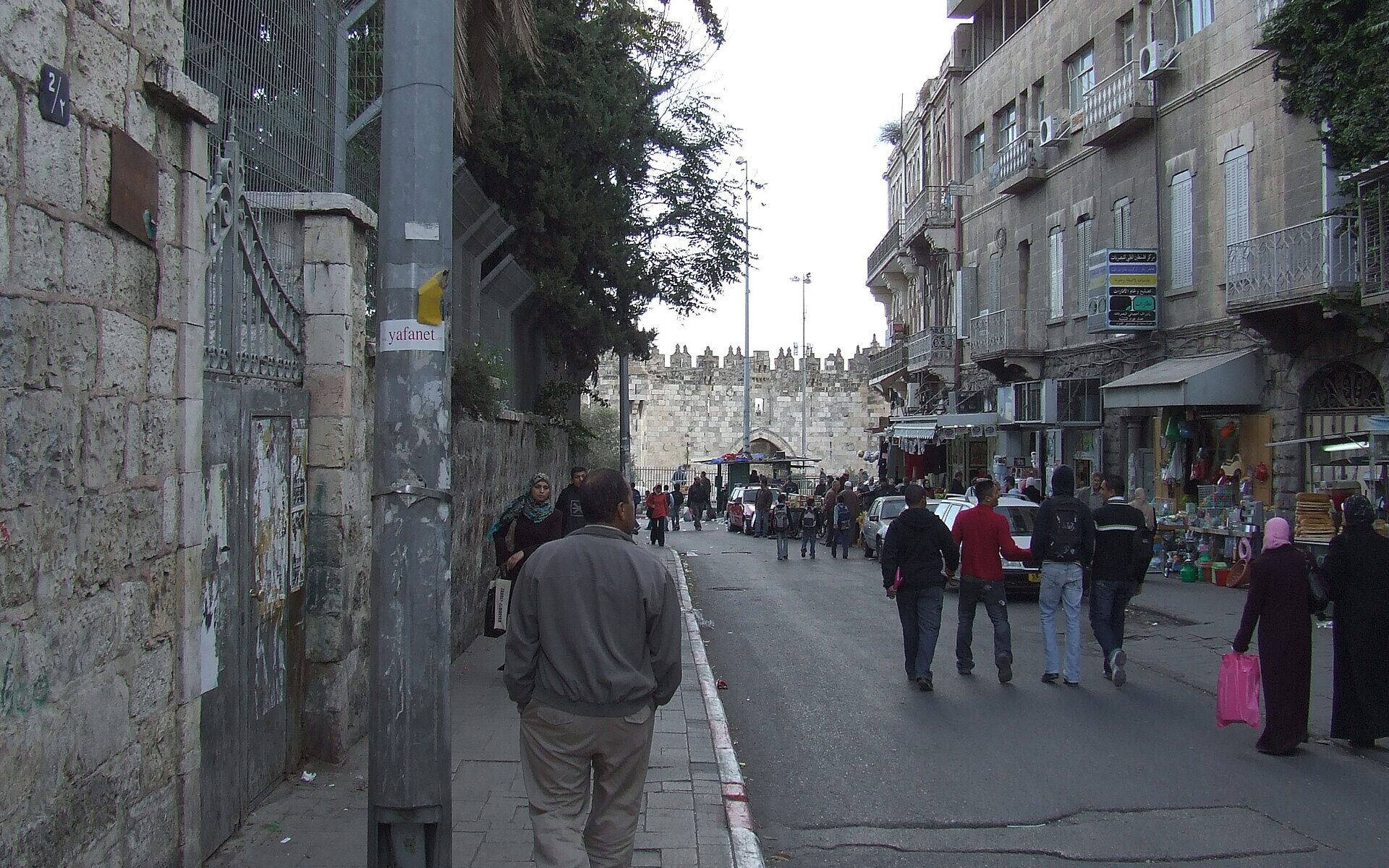
Step out of Damascus Gate on a weekday morning and you’re in a different city from the one ten minutes’ walk away on Jaffa Road. The signs are in Arabic first, the women selling vine leaves and herbs on the steps have come in from villages outside the city, the coffee is cardamom-scented, and the call to prayer carries over the traffic on Sultan Suleiman Street. East Jerusalem is home to most of the city’s Palestinian population, and it holds some of Jerusalem’s best-known sites, starting with the Old City itself. Yet many visitors only ever see it through a coach window.
This guide is for travellers who want to see a little more: what East Jerusalem is and why its status is disputed, what current UK and US travel advice says about it, and the streets, churches, shops and landmarks worth a walk just north and east of the walls, from Damascus Gate and Salah al-Din Street to Nablus Road, the American Colony and the edges of Sheikh Jarrah. Details were checked in November 2026 against the venues’ own sites, gov.uk and the city’s official tourism listings; check opening times before you go, as they change.
East Jerusalem at a Glance
| Details | |
|---|---|
| What it is | The parts of Jerusalem under Jordanian rule from 1949 to 1967, including the Old City and the Palestinian neighbourhoods around it |
| Main areas for visitors | Damascus Gate, Sultan Suleiman Street, Salah al-Din Street, Nablus Road, the American Colony, the Mount of Olives |
| Getting there | Light rail Red Line to Damascus Gate, Shivtei Israel or Shim’on HaTzadik; on foot from the Old City |
| Key sights | Damascus Gate, the Garden Tomb, St George’s Cathedral, Zedekiah’s Cave, the Mount of Olives |
| Currency | Israeli new shekel (₪) |
| Busiest days | Friday, around the midday prayers at Al-Aqsa; evenings during Ramadan |
| Travel advice | Check the UK FCDO and US State Department pages before you go; the FCDO lists East Jerusalem as an exception to its West Bank advice |
What “East Jerusalem” Means
After the 1948 war, Jerusalem was divided along an armistice line. West Jerusalem was held by Israel, and East Jerusalem, including the walled Old City, by Jordan. In the June 1967 war Israel took East Jerusalem, and on 27 June 1967 it extended the city’s municipal boundary to take in East Jerusalem and surrounding land. On 30 July 1980 the Knesset passed the Jerusalem Law declaring “complete and united” Jerusalem the capital of Israel. The UN Security Council, in Resolution 478 of 20 August 1980, censured the law, declared it null and void and called on states with embassies in Jerusalem to withdraw them.
The positions today, briefly and without taking sides:
- Israel regards the whole city, east and west, as its undivided capital.
- The Palestinians seek East Jerusalem as the capital of a future Palestinian state.
- The United States moved its embassy to Jerusalem, opening it on 14 May 2018, and in 2019 merged its former consulate general, which had served Palestinians, into the embassy.
- The United Kingdom says it has withheld recognition of sovereignty over Jerusalem since 1950 pending a final-status agreement, recognises Israel’s de facto authority over West Jerusalem, and regards East Jerusalem as under Israeli occupation. Its mission in the city now operates as the UK Mission, Jerusalem.
- Most other countries keep their embassies to Israel in or near Tel Aviv.
For visitors the practical upshot is simple: East Jerusalem is under Israeli administration, you can move between east and west without a permit or a border crossing, and you pay in shekels. But the dispute is part of daily life here, it shapes how residents see the city, and it is the reason governments write separate travel advice for East Jerusalem. Our page on Jerusalem’s history gives the longer background.
Travel Advice for East Jerusalem
This guide doesn’t tell anyone whether to travel. Governments do, and their advice changes with events, so read it yourself before you go and again while you’re here.
- UK (FCDO): the Foreign, Commonwealth and Development Office’s Israel advice was updated on 27 October 2026 and still current on 10 November 2026. It advises against all but essential travel to most of the West Bank, but East Jerusalem is one of the listed exceptions, along with Bethlehem Governorate, Ramallah Municipality and Jericho Municipality and the areas south of it.
- US (State Department): the US advisory for Israel, the West Bank and Gaza covers East Jerusalem and places restrictions on US government employees’ travel that can change at short notice. In October 2026 it rated Israel at Level 3, Reconsider Travel. Read the current advisory on travel.state.gov, as its scope and wording differ from the UK’s.
Advice from other governments, including Canada and Australia, differs again. Our page on whether Jerusalem is safe to visit summarises the main advisories and what visitors should watch for, such as Fridays after prayers and anniversaries that tend to bring tension.
Damascus Gate and Sultan Suleiman Street
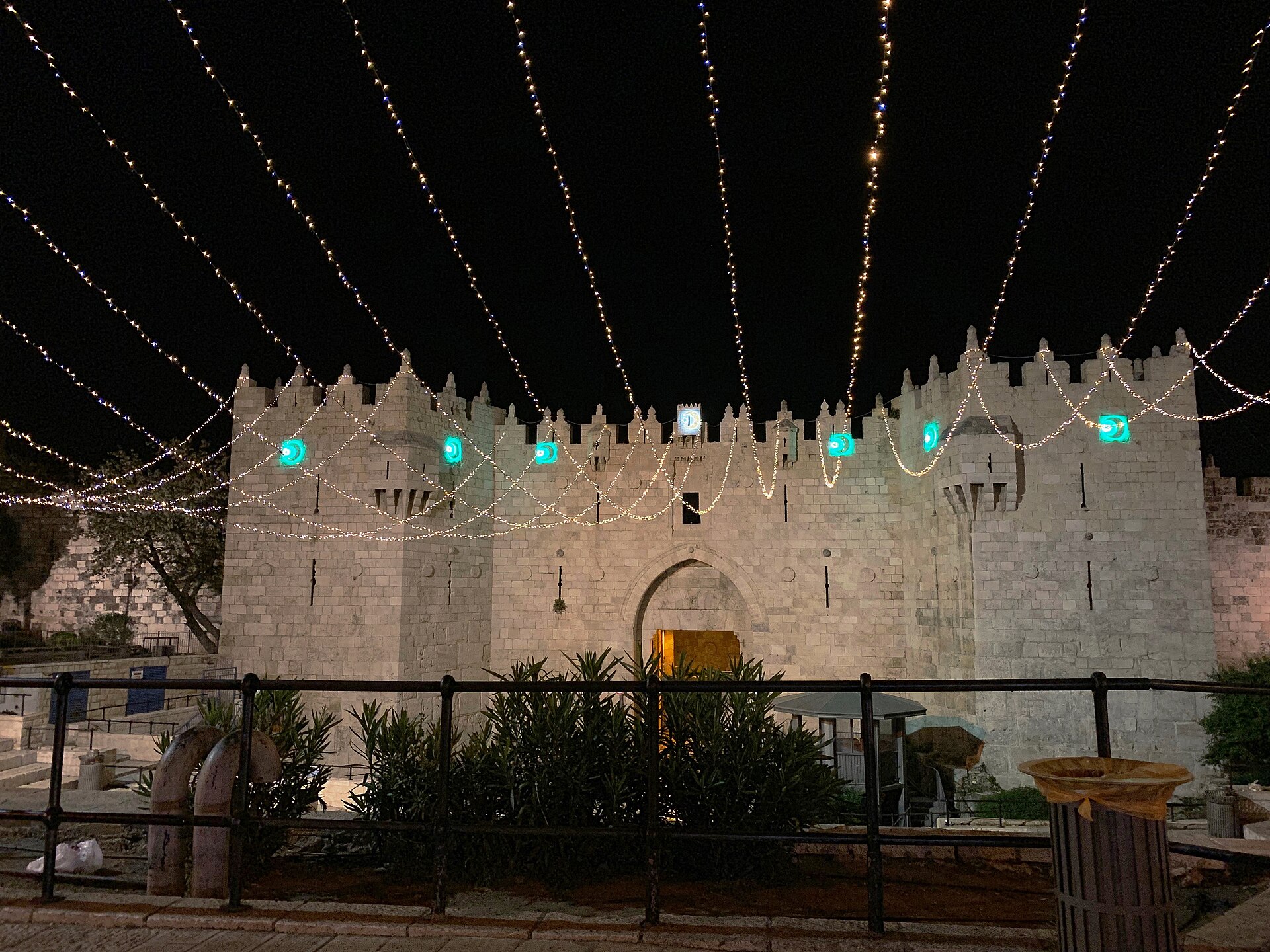
Damascus Gate, Bab al-Amud in Arabic, is one of the grandest of the Old City’s gates and the front door of East Jerusalem. It was built in the 16th century under the Ottoman sultan Suleiman the Magnificent, and its stepped, amphitheatre-like plaza is one of the city’s great people-watching spots: traders laying out produce, families heading into the souq, students, shoppers and, at times, police patrols. Entry is free, as it is through all the Old City’s gates. Our guide to the gates of the Old City covers it alongside the others.
Sultan Suleiman Street runs along the northern wall in front of the gate. Across the road is the East Jerusalem bus station, and just inside the gate the market lanes lead into the Muslim Quarter and the Old City market.
Zedekiah’s Cave
Between Damascus Gate and Herod’s Gate, an entrance in the wall leads into Zedekiah’s Cave, a vast underground quarry beneath the Muslim Quarter that is associated in tradition with King Solomon and with Freemasons’ ceremonies. It’s cool, atmospheric and a good half-hour on a hot day. A self-guided visit costs ₪25 for adults and ₪15 reduced; it opens Sunday to Thursday and closes on Friday and Saturday, with shorter hours in winter. Check the operator’s site before you go.
Ramadan Nights
During Ramadan the gate and the streets around it are hung with lights, and after the fast is broken at sunset the plaza fills with families, sweets stalls and coffee sellers late into the night. Ramadan in 2027 is expected to run from the evening of 7 February to 8 March, subject to the sighting of the moon. It’s a memorable time to be here, though crowds are heavy and tensions have flared in some years; our guide to Ramadan in Jerusalem has the detail.
Salah al-Din Street and Herod’s Gate
Salah al-Din Street runs north from Sultan Suleiman Street near Herod’s Gate (Bab al-Zahra), and it’s the main shopping street of Palestinian East Jerusalem. It isn’t a tourist street, which is its appeal: clothes and shoe shops, pharmacies, bakeries turning out ka’ak (the long sesame bread rings sold all over the city), juice bars, sweet shops and small cafés, busy with local shoppers. Walk it slowly, buy something to eat, and look up at the older stone buildings above the shopfronts.
The Educational Bookshop
The best-known stop on the street for visitors is the Educational Bookshop, founded in 1984, with two shops facing each other: the stationer at 22 Salah Eddin Street and the bookshop and café at 19. It’s a good place for English-language books on the region, its politics and Palestinian life, along with novels, cookbooks, maps and Palestinian music and film. The shop’s own site says it’s open every day from 08:00 to 20:00. It’s also a pleasant place to sit with a coffee and a book you’ve just bought.
Nablus Road: Churches, Gardens and the Bus Station
Nablus Road (Derech Shchem in Hebrew) runs north from Damascus Gate towards Sheikh Jarrah, and in the space of a few hundred metres it passes several of East Jerusalem’s best-known Christian sites.
The Garden Tomb
Down a lane off Nablus Road, the Garden Tomb is a quiet garden around a rock-cut tomb that many Protestant Christians regard as a possible site of Jesus’s burial and resurrection. It’s free to enter and run as a place of worship as well as a visitor site. In autumn 2026 its published hours were 09:00 to 13:00, closed on Fridays and Sundays; check its site before you go, as hours change. Our full Garden Tomb guide covers the history and how it compares with the Church of the Holy Sepulchre.
St George’s Cathedral
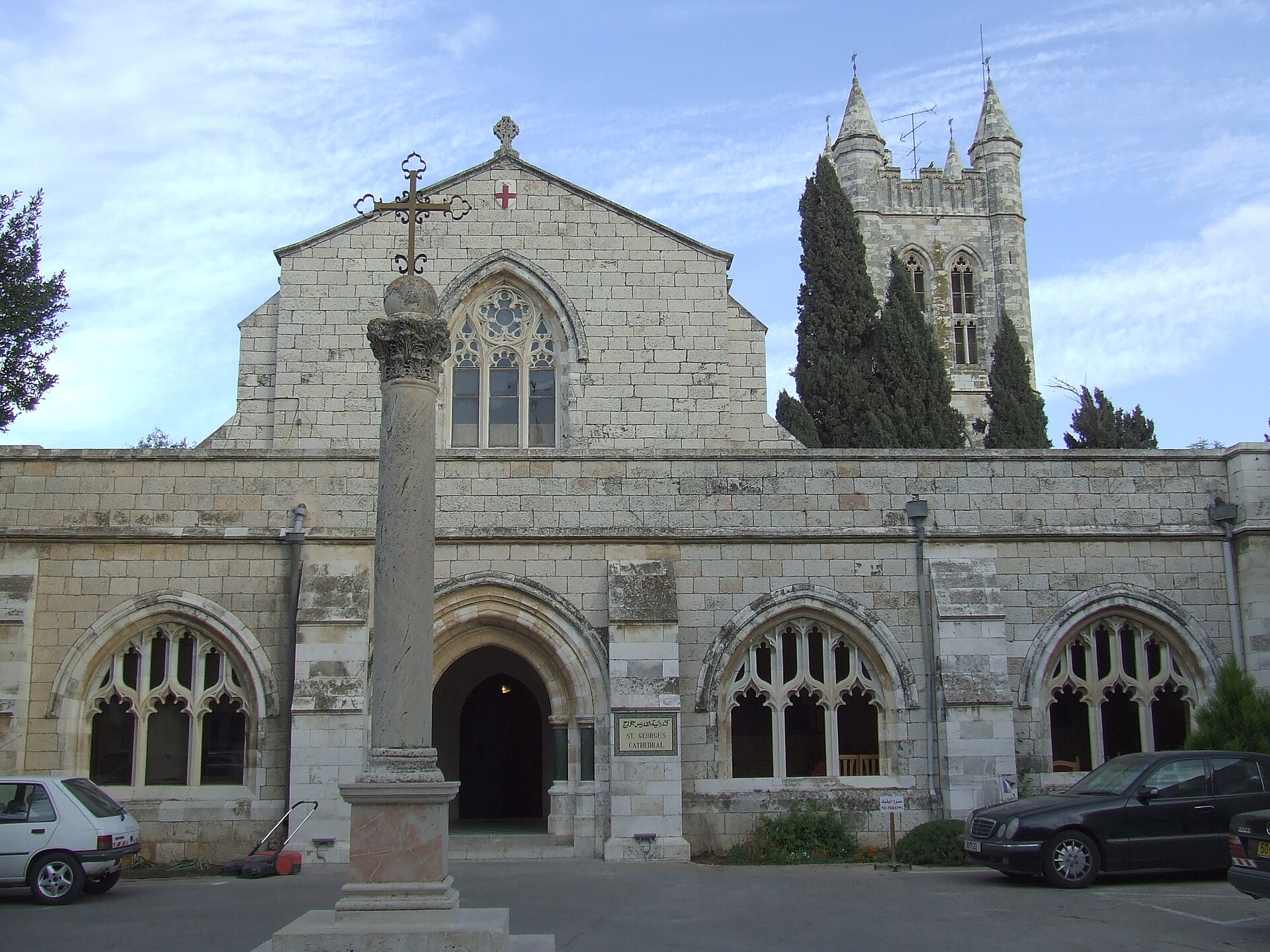
About 200 metres further north, St George’s Cathedral is the Anglican cathedral of Jerusalem, established in 1899, with a square tower that looks as if it has been lifted from an English country town. Its courtyard and cloister are peaceful, and it is the seat of the Anglican (Episcopal) Diocese of Jerusalem, whose congregations are largely Palestinian. Visitors are generally welcome; check service times and access with the cathedral before you go, especially on Sundays.
The Bus Station
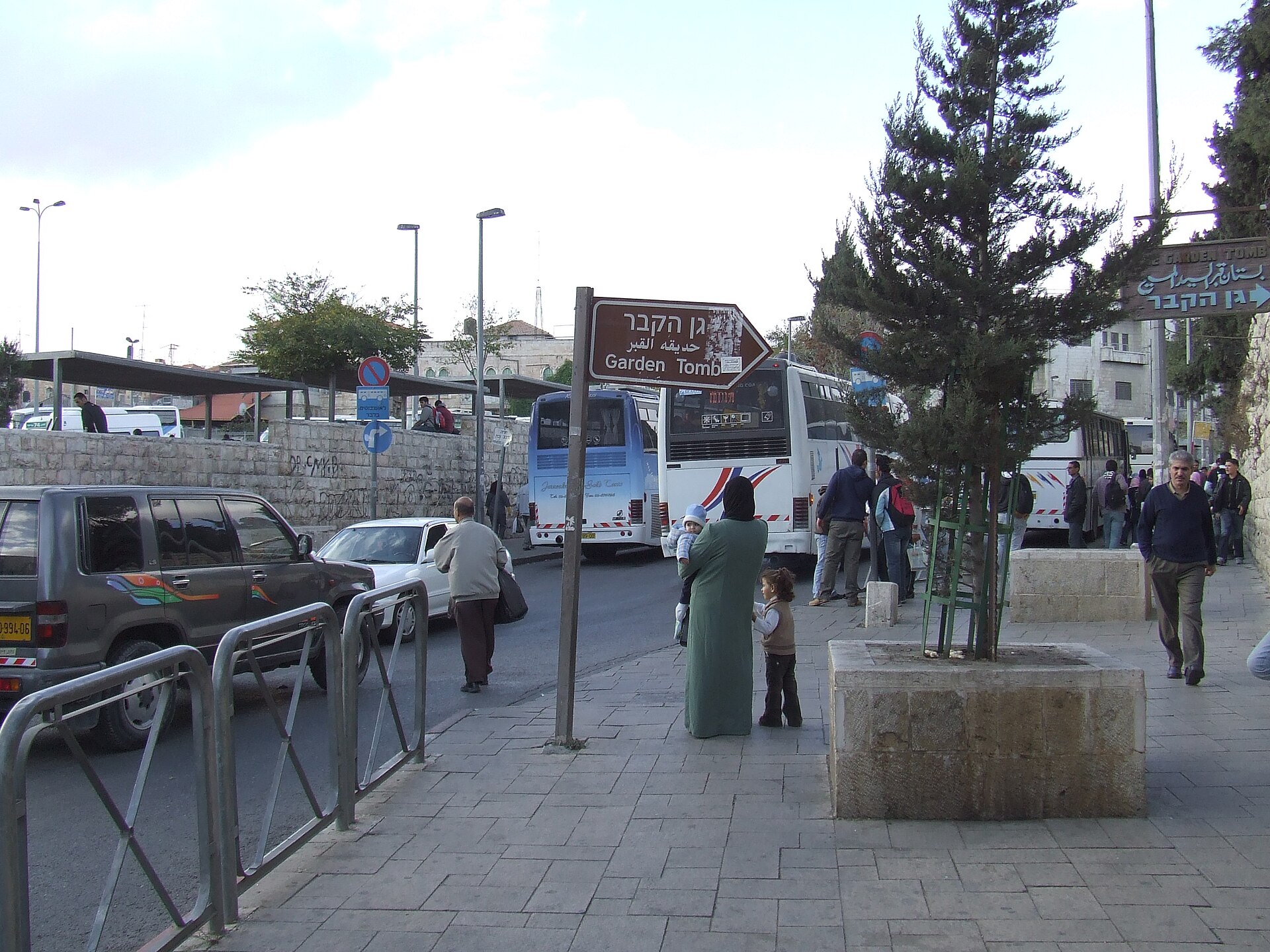
The East Jerusalem bus station sits on Sultan Suleiman Street opposite Damascus Gate, next to the Damascus Gate light rail stop. This is where Palestinian buses leave for Bethlehem and other West Bank towns. They are a cheap, frequent way to reach Bethlehem; check the route at the station, and see our Bethlehem day trip guide for the options, checkpoints and what to bring.
The American Colony
North of St George’s, the name American Colony recalls a remarkable community. In 1881 Horatio and Anna Spafford, a Chicago couple who had lost their children in a shipwreck and then a son to illness, came to Jerusalem with a small group of followers and founded a Christian communal society. Joined later by Swedish settlers, the group ran schools, soup kitchens and hospitals, and in 1896 moved into a large house in what is now Sheikh Jarrah, built for Rabbah al-Husseini.
From around 1900 the colony’s photography department documented the city and the wider region in thousands of images. That collection, later donated to the US Library of Congress, is one of the great visual records of late Ottoman and Mandate Palestine; if you’re interested in old Jerusalem, it’s well worth browsing online before your trip. The community’s main building has been a hotel since the late 1950s. This guide doesn’t recommend places to stay; our guide to the best neighbourhood to stay in Jerusalem covers that.
Sheikh Jarrah
Sheikh Jarrah is a Palestinian residential neighbourhood that rises north from the American Colony area. It takes its name from Sheikh Jarrah, a physician to Saladin, and it also contains the tomb that Jewish tradition identifies as that of Simeon the Just (Shim’on HaTzadik), a high priest of the Second Temple period, which draws Jewish worshippers and gives the light rail stop its name.
Since the 1970s Sheikh Jarrah has also been the scene of long-running legal battles over property. Jewish organisations have sued to evict Palestinian families from homes in one part of the neighbourhood, on the basis of 19th-century Jewish land purchases; the families, many of them refugees housed there by Jordan and the UN in the 1950s, contest the claims. Suits were first filed in 1972. In 2021 pending evictions became a focus of protests and international attention, and in August 2021 several families rejected a compromise proposed by Israel’s Supreme Court, under which they would be recognised as protected tenants in exchange for recognising Israeli ownership of their homes. On 1 March 2022 the court ruled that four families could remain in their homes until a land-registration process settles ownership, leaving the question of ownership open.
For visitors, Sheikh Jarrah is a neighbourhood you pass through on the main roads, on the way to St George’s, the American Colony, Mount Scopus or the tomb. It is a place where people live, and where feelings run high. If you want to understand the disputes, go with a guide who will set out the positions of the different sides; don’t photograph residents or homes without asking, and avoid any protest or confrontation.
Further Afield: Wadi al-Joz, Mount Scopus and the Mount of Olives
Wadi al-Joz
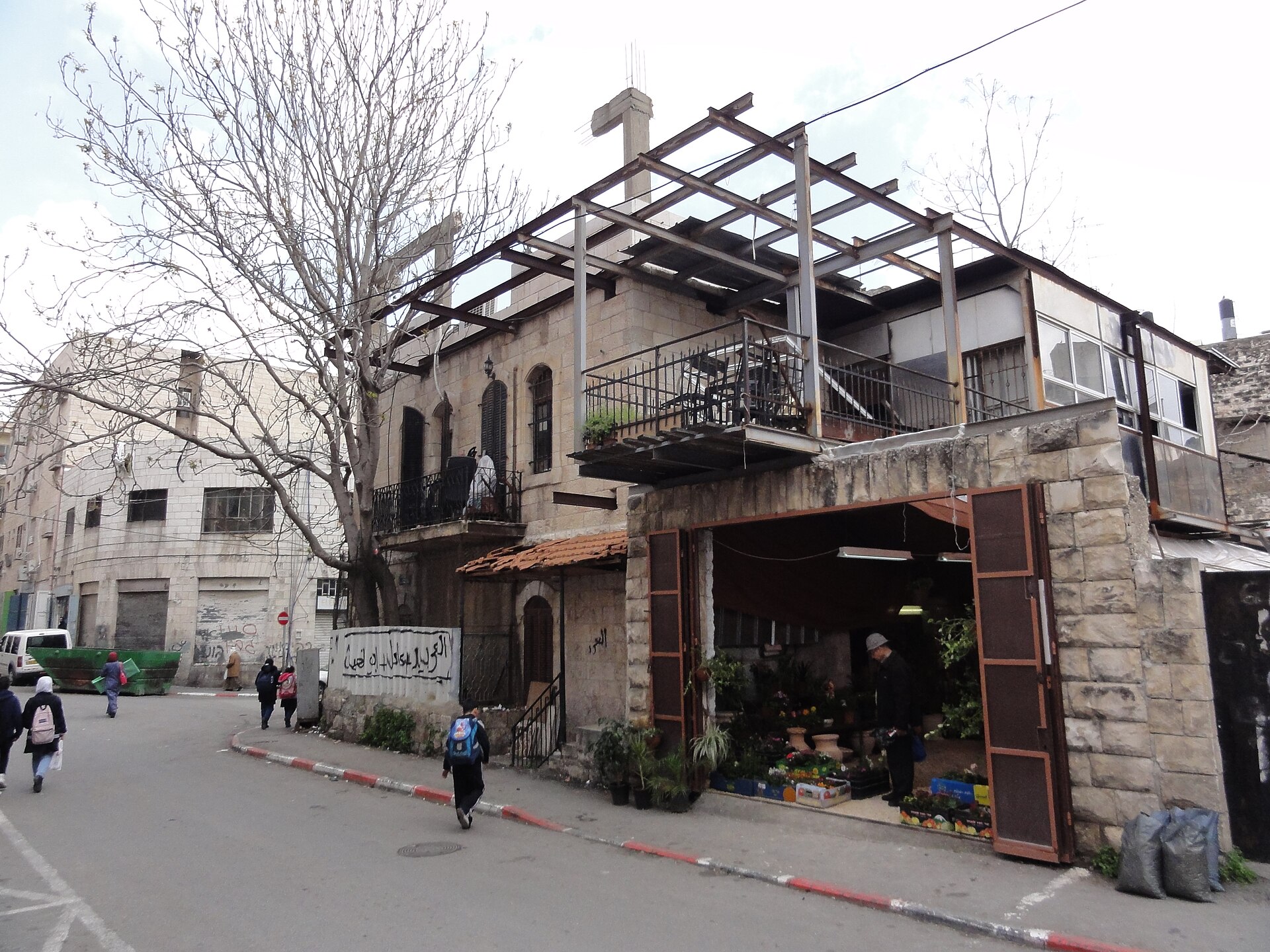
East of Salah al-Din Street, Wadi al-Joz runs down the valley below Mount Scopus. It’s a busy residential and commercial district with garages, workshops and grocers, of little specific interest to visitors but a good glimpse of everyday East Jerusalem if you walk between the city centre and the Mount of Olives.
Augusta Victoria
On the ridge between Mount Scopus and the Mount of Olives, the Augusta Victoria compound was founded in the early 20th century by the German Kaiser Wilhelm II, and its Church of the Ascension, with a bell tower 60 metres high, is one of the landmarks of the city’s skyline. The compound also houses the Augusta Victoria Hospital, which serves Palestinian patients. The church can be visited, with a small entry fee; published hours vary between sources, so check before you go.
The Mount of Olives
The Mount of Olives, with its churches, its ancient Jewish cemetery and its famous view of the Old City, is also in East Jerusalem. It gets its own guide: see our Mount of Olives guide and our page on the Garden of Gethsemane at its foot.
Landmarks You Can Only See From Outside
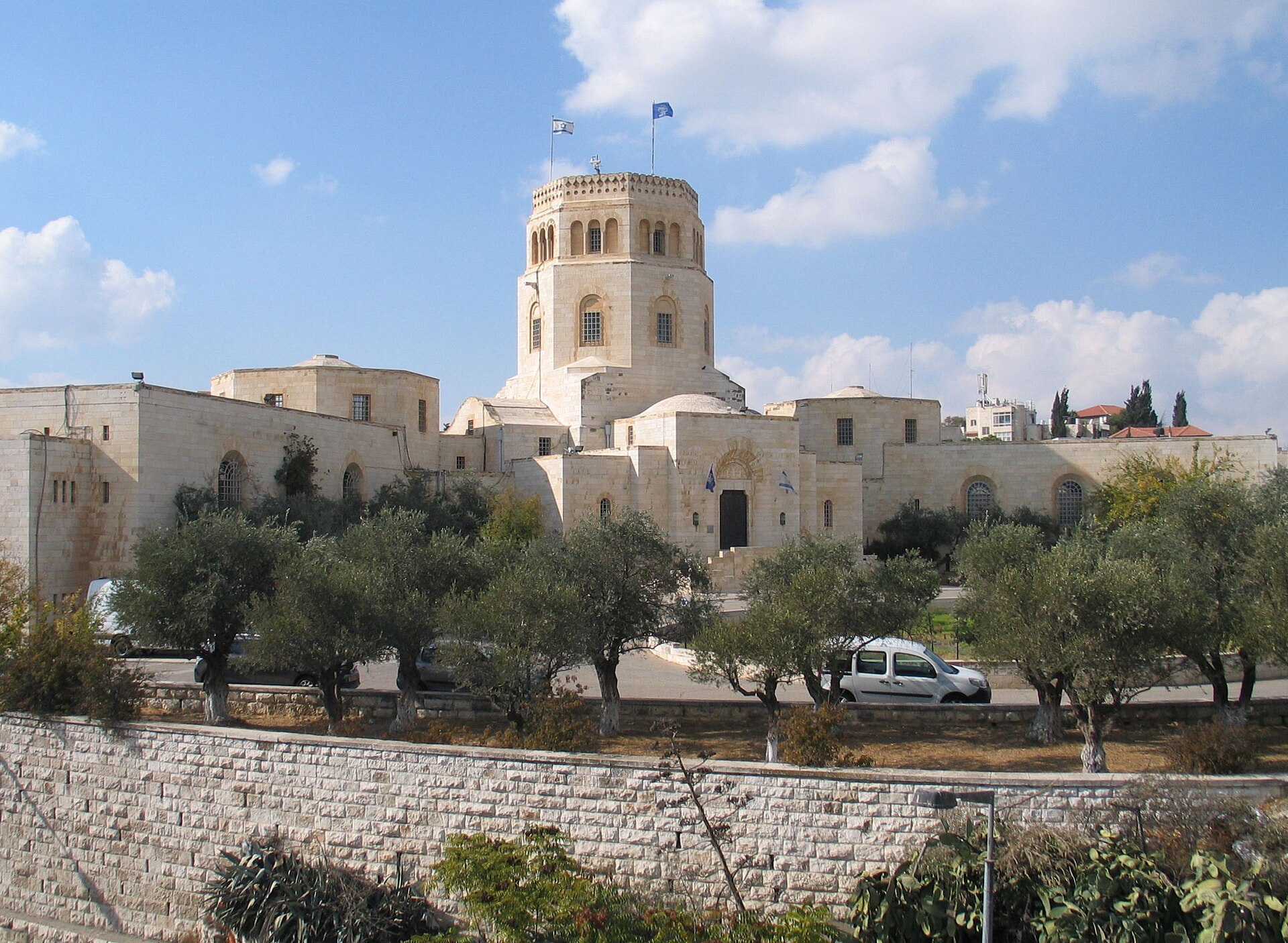
- The Rockefeller Archaeological Museum, opened in 1938 opposite the north-eastern corner of the walls, has a fine building and a great collection, but is closed to regular visitors; see our Rockefeller Museum page for what access remains.
- Orient House, the former headquarters of the PLO’s representation in Jerusalem, was closed by Israeli government order in August 2001.
- The Tomb of the Kings near the northern end of Salah al-Din Street, a monumental rock-cut tomb owned by France, has limited visiting times; ask the French Consulate General in Jerusalem about access.
Culture: Theatre, Books and Food
East Jerusalem’s cultural life is small but real. The Palestinian National Theatre (El-Hakawati), founded in 1984 near the American Colony, has long staged Palestinian theatre and hosted music and festivals; check its current programme before you plan around it. The Educational Bookshop runs talks and book launches. For food, the bakeries and sweet shops around Damascus Gate and Salah al-Din Street are the place for ka’ak, knafeh and other sweets, and the area has some of the city’s well-known hummus places; our guides to the best hummus in Jerusalem and Jerusalem street food point you to them.
Getting There and Around
- Light rail: the Red Line stops at Damascus Gate, then Shivtei Israel and Shim’on HaTzadik along the western edge of East Jerusalem. A single ride costs ₪8. See our light rail guide.
- On foot: from the Old City, walk out of Damascus Gate or Herod’s Gate. The walk from Damascus Gate up Nablus Road to St George’s takes only a few minutes.
- Buses: Palestinian buses to Bethlehem and other West Bank towns leave from the bus station opposite Damascus Gate. Israeli city buses also serve the area. Our transport guide has the overview.
- Taxis: plentiful around Damascus Gate; agree the fare or insist on the meter.
Visiting Respectfully
- Dress modestly as you would in the Old City: shoulders and knees covered, especially if you’ll enter a church or pass mosques at prayer time. Our dress code guide has the detail.
- Fridays are the main day of prayer. Around midday the streets near the Old City fill with worshippers heading to Al-Aqsa, and some shops close for prayers. It’s a striking time to see the area, but crowded, and occasionally tense afterwards.
- Ask before photographing people, and don’t photograph police or security forces.
- Spend money locally. Buying your coffee, bread or books here is the simplest way to show you came to see the place rather than just pass through it.
- Keep conversations open. Many residents speak English and are happy to talk; listen more than you argue.
Is East Jerusalem Worth Visiting?
If you only have a day or two, you’ll see a good part of East Jerusalem anyway: the Old City and the Mount of Olives are in it. The question is whether to step outside the walls on the north side, and many visitors give it an hour or two. A walk from Damascus Gate up Nablus Road to the Garden Tomb and St George’s, back down Salah al-Din Street with a stop at the Educational Bookshop and a bakery, gives a picture of the city that most tours skip.
What isn’t worth it: wandering into residential districts with no purpose, or treating disputed neighbourhoods as sightseeing. If you want to understand the politics, book a guide; if you want to understand the place, eat, shop and talk to people. Our guide to Jerusalem’s neighbourhoods puts East Jerusalem alongside the districts west of the walls, and our guide to Jerusalem tours includes options that cover both.
Final Word on East Jerusalem
East Jerusalem is not a separate destination so much as the other half of the city, and seeing even a little of it makes sense of the rest. Walk out of Damascus Gate, take your time on Nablus Road and Salah al-Din Street, and read the travel advice before you go. Then carry on to our Old City guide, our guide to holy sites in Jerusalem and our page on the Al-Aqsa Mosque, which sits at the heart of the Temple Mount / Haram al-Sharif.
Photo Credits
Nablus Road leading to Damascus Gate: Jerusalem Nablus Road (2065141850) by Chris Yunker from St. Louis, United States, CC BY-SA 2.0, via Wikimedia Commons.
St George’s Cathedral: Jerusalem St. George’s Cathedral (2543670829) by Chris Yunker from St. Louis, United States, CC BY-SA 2.0, via Wikimedia Commons.
A flower shop in Wadi al-Joz: East Jerusalem – panoramio (2) by Mujaddara, CC BY-SA 3.0, via Wikimedia Commons.
Buses near Damascus Gate: Jerusalem Nablus Road (2069565299) by Chris Yunker from St. Louis, United States, CC BY-SA 2.0, via Wikimedia Commons.