On a Saturday afternoon, when much of West Jerusalem is shuttered for Shabbat, there is one place where the city still feels like a city: children on scooters weaving across a long wooden deck, families eating under a painted canopy, couples walking off lunch along an old railway line. The First Station Jerusalem calls itself a centre of entertainment, culture and food, and it is housed in the city’s original railway terminus, the end of the line from Jaffa that opened in 1892. Behind it, the old track bed has been turned into the Train Track Park, a walking and cycling path that runs for about seven kilometres across the south of the city.
This guide covers both: the station’s history, what’s there now, where to eat, how it works on Shabbat, the Train Track Park and what lies along it, and how to get there. Opening details, restaurant hours, bus lines and parking prices were checked in November 2026 on the First Station’s own site and the Jerusalem Development Authority’s pages; venues change their hours often, so check before you go.
The First Station at a Glance
| Details | |
|---|---|
| What it is | Jerusalem’s original railway station, now a complex of restaurants, bars, events and children’s activities |
| Where | David Remez Street, between Hebron Road and Bethlehem Road, at the edge of the German Colony |
| History | Opened 26 September 1892; closed 15 August 1998; reopened as a leisure complex in May 2013 |
| Open | Every day, including Saturday; each restaurant and venue sets its own hours |
| Entry | Free to walk in; you pay for food, drink and some activities |
| Train Track Park | About 7 km of walking and cycling path along the old line, from the station to Teddy Stadium in Malha |
| Getting there | Buses to the Gan HaPa’amon or David Remez/Khan stops; on foot from the Old City |
| Parking | Private lot on David Remez Square: ₪25 for the first hour, then ₪5 per 15 minutes, up to ₪150 a day |
A Station With a Story
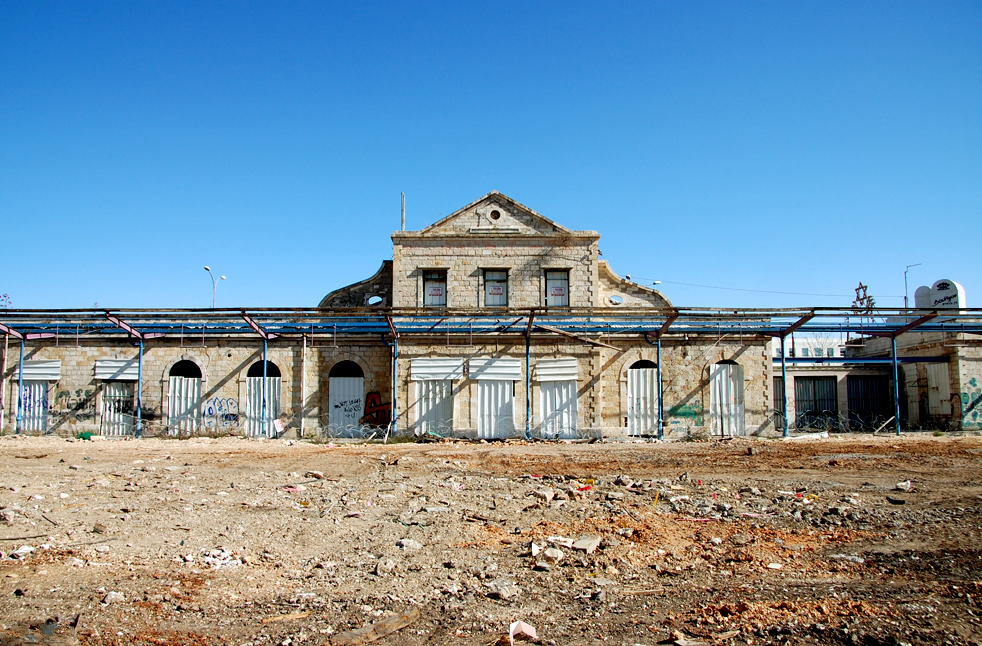
The railway from Jaffa to Jerusalem was built under an Ottoman concession. The Ottoman authorities granted the concession, which passed to a French company, the Société du Chemin de Fer Ottoman de Jaffa à Jérusalem et Prolongements, and the line opened on 26 September 1892. Its Jerusalem terminus was built here, outside the city on the road south, and for most of the following century trains from the coast ended their climb through the hills at this modest stone building.
The station served Ottoman, British Mandate and Israeli railways in turn, but it was never well placed for a growing city, and the winding mountain line was slow. It closed to passenger traffic on 15 August 1998, and for years the building and its yards stood empty and fenced off. The Jerusalem Development Authority restored the complex as a culture, entertainment and leisure compound, and it reopened in May 2013. Today the city’s main railway station is Yitzhak Navon, by the Central Bus Station, and the old terminus has a second life.
What’s There Today
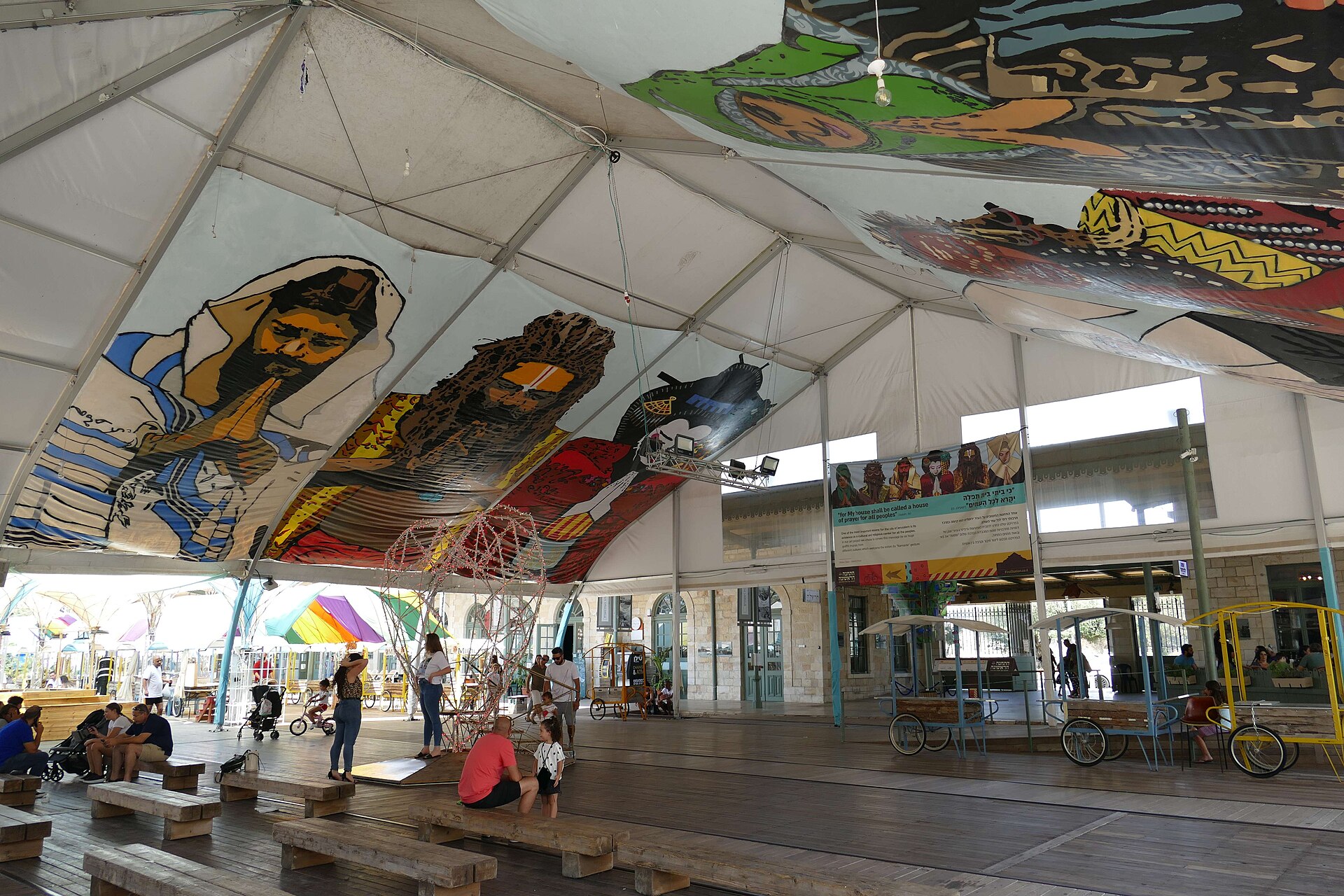
The restored station building, its old platforms and the yard in front of them now make up an open, pedestrianised complex. The heart of it is a broad wooden deck laid where the tracks used to run, with benches, tables and a large canopy for shade. Around it are restaurants, bars and cafés in the old station and goods buildings, and spaces for concerts, exhibitions, fairs and holiday events.
- Food and drink: a mix of sit-down restaurants and quicker counters, some kosher and some not, some open on Shabbat and some not (more below).
- Children: the operator describes a large children’s area, and its events listings include a Children’s Station, a model railway called Train World, sports activities and exhibitions. With open space to run around, it’s one of the easier places in the city to take small children. See our guides to Jerusalem with kids and kid-friendly attractions.
- Events: concerts, holiday celebrations, exhibitions and fairs run through the year. The designers’ fair doesn’t follow a fixed weekly schedule, so check the events calendar on the First Station’s site.
- Segway tours leave from the complex, according to the operator.
- Accessibility: the operator says its events and restaurants are accessible and there is an accessible toilet; the deck and the park are level. Our accessibility guide covers the rest of the city.
Open on Shabbat
The First Station says it is open all week, including Saturday, and that is a large part of its appeal. From Friday afternoon until Saturday night most of West Jerusalem closes: shops shut, public transport stops and the centre goes quiet. Here, some restaurants and cafés stay open and the deck fills with families, making it one of the few lively places in the western city on a Saturday.
Two things to know. First, it’s generally the non-kosher places that open on Shabbat; the kosher restaurants close on Friday afternoon and reopen on Saturday night, after Shabbat ends. Second, with no buses on Shabbat, you’ll need to walk or take a taxi to get here on a Saturday. Our guide to Shabbat in Jerusalem explains how the day works and where else is open.
Where to Eat
The complex’s own directory listed these among its restaurants in November 2026. Hours vary by season and on holidays, so treat them as a guide and check before you go.
| Restaurant | What it serves | Hours listed by the First Station |
|---|---|---|
| Nanosh | Middle Eastern | Daily 09:30 to 23:00 (last orders) |
| Lechem Basar | Kosher meat restaurant | Sun–Thu 12:00–23:00; Fri 12:00–15:00 on summer time, closed on Fridays on winter time; Sat from 1.5 hours after Shabbat ends to 23:30 |
| Fiori | Pasta bar | Sun–Wed 10:00–23:00; Thu 10:00–midnight; Fri 10:00–14:00; Sat from the end of Shabbat to midnight |
| Salon Yevani | Greek | Sun–Wed 18:00–23:30; Thu 18:00–midnight; Fri 12:30–16:00; Sat 20:30–midnight |
| Wok to Walk | Stir-fried noodles to go | Sun–Wed 18:00–23:30; Thu 18:00–midnight; Fri 11:00–15:30; Sat 20:00–midnight |
Read the hours closely: most places close early on Friday and some open only after Shabbat ends, so if you’re planning a meal on a particular day, check the restaurant directly. The honest verdict on the food is that it’s pleasant and convenient rather than a destination in itself; you come for the setting and the open air. For the city’s best eating, see our Jerusalem food guide, and for strictly kosher options our guide to kosher restaurants in Jerusalem. With children, our list of kid-friendly restaurants has more ideas.
The Train Track Park
When the trains stopped, the old line south of the station became a well-used open space. The Train Track Park (Park HaMesila in Hebrew) follows the former track bed for about seven kilometres from the First Station to Teddy Stadium in Malha, passing through the German Colony, Baka, Katamon, Pat, Mekor Chaim and Beit Safafa. The Jerusalem Development Authority says work began in 2009, and the park was built in stages between 2010 and 2013.
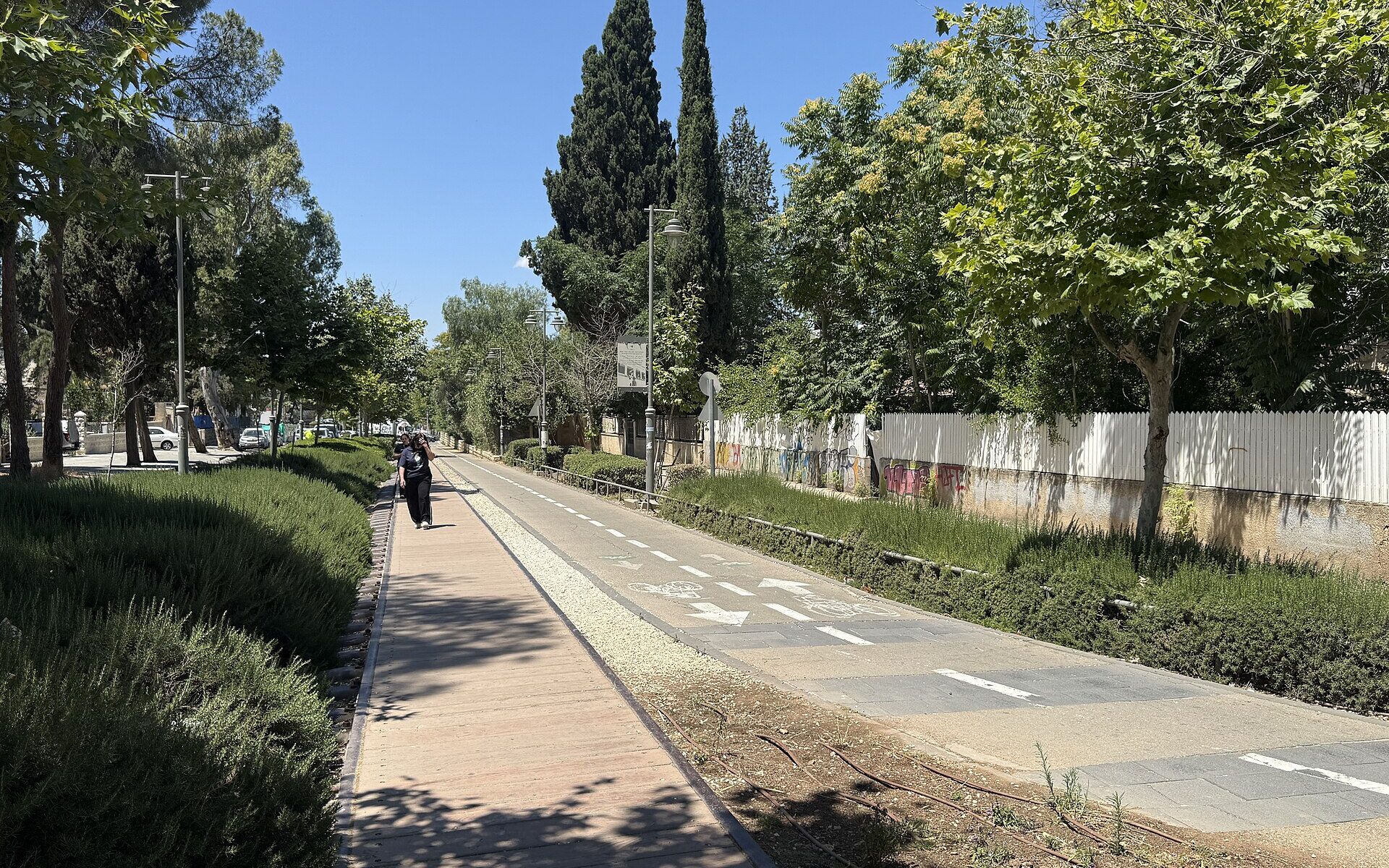
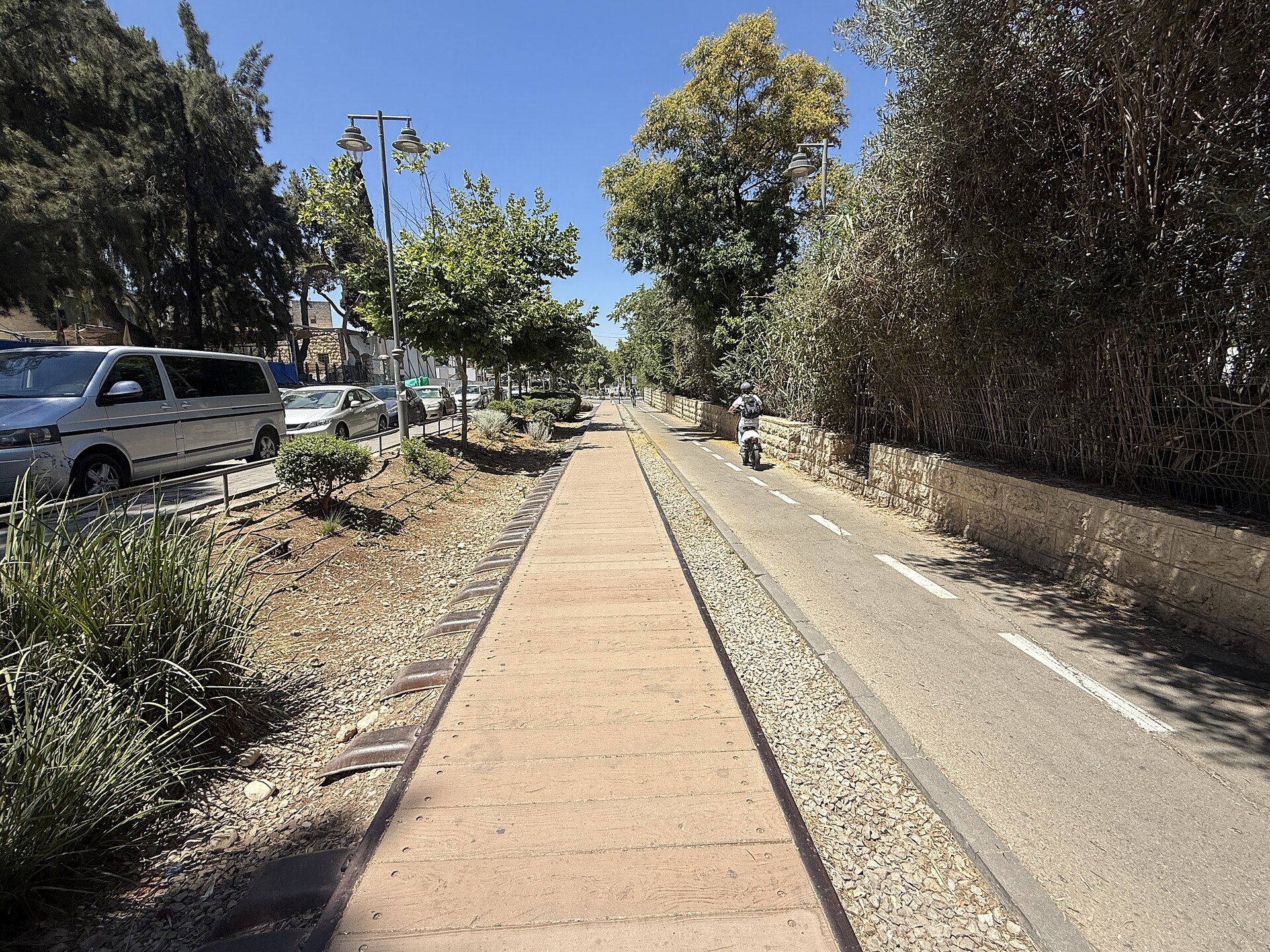
It’s a simple idea done well: a footpath and a separate paved cycle path running side by side, with lengths of the old rails left in place between them, pergolas and benches along the way, and planting on either side. The JDA describes it as a link between Jerusalem Park and the Cultural Mile, the string of cultural venues around the Old City. It is level and wheelchair-accessible, which in a hilly city makes it a rare thing.
Walking and Cycling It
- On foot: you don’t need to walk the whole length. The stretch through the German Colony and Baka, close to the station, is the most attractive, with cafés a short detour away on Emek Refaim Street. Walk out as far as you like and come back, or carry on and catch a bus back from one of the main roads it crosses.
- By bike: the separate cycle path makes this one of the easiest places in Jerusalem to ride. The city’s bike-sharing scheme, Jerufun, has its own site; check it for current stations and prices. For more serious riding, see our guide to cycling and mountain biking in Jerusalem.
- Running: it’s a favourite with local runners, especially early in the morning before the heat.
- When to go: early morning or late afternoon in summer, when it’s cooler; any time in spring and autumn. In the evening the stretch near the station is busy with people heading to the complex.
Nearby
- The German Colony and Emek Refaim: the First Station is close to the northern end of Emek Refaim Street, the café-lined main street of the German Colony, with its 19th-century Templer houses. Our guide to Jerusalem’s neighbourhoods covers it.
- The Cultural Mile: the JDA notes that the station is near Sultan’s Pool, the Jerusalem Cinematheque and the Khan Theatre, all within a short walk.
- Yemin Moshe and Mount Zion: walk north towards the Old City and you reach Yemin Moshe, with its windmill and views of the walls, and beyond it Mount Zion.
- The Haas Promenade: the Armon Hanatziv promenade is one of the viewpoints in Jerusalem; use a journey planner for the route from the station.
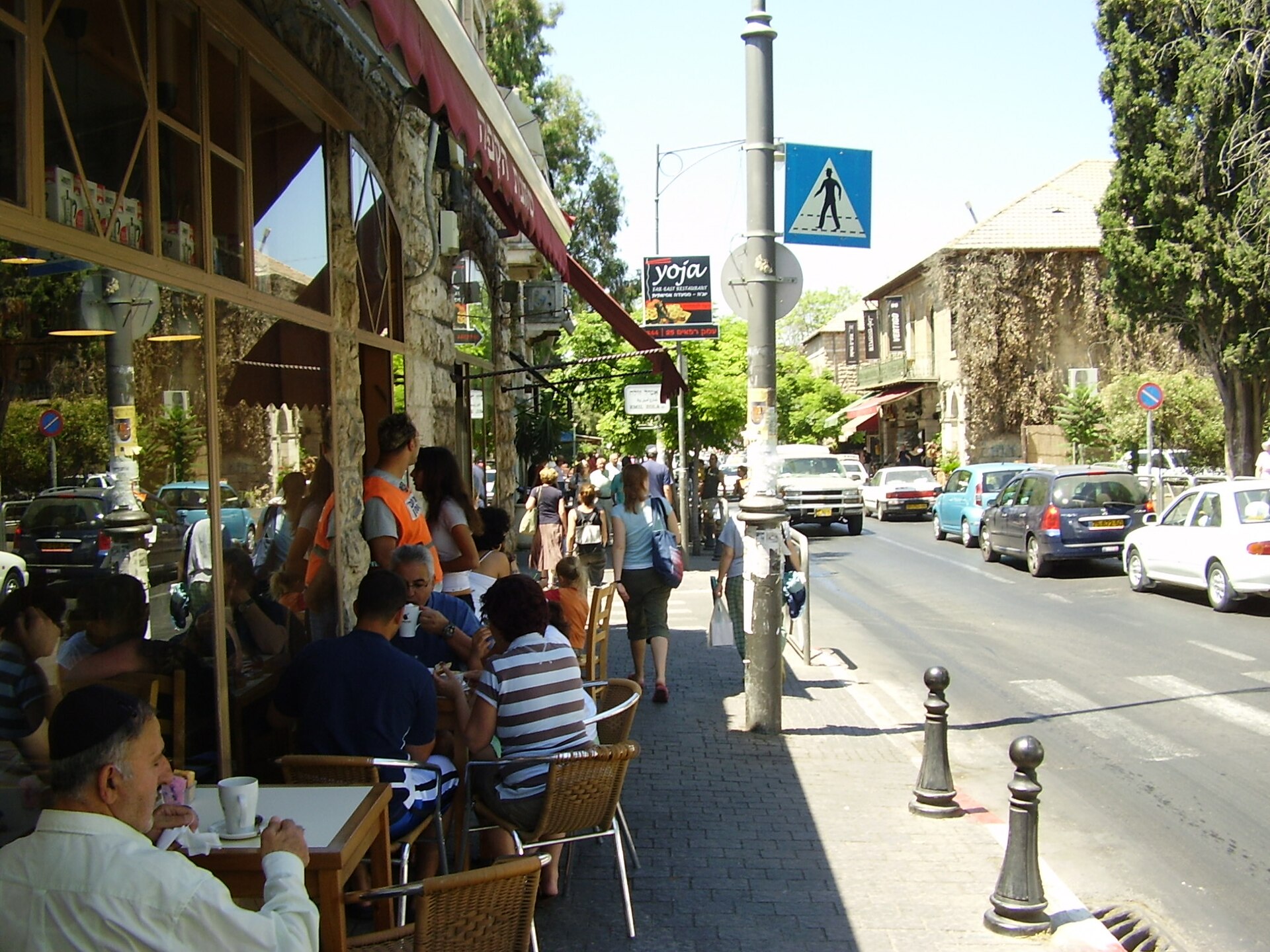
Getting There
- On foot: the JDA describes the station as within walking distance of the Old City and Mamilla. From Jaffa Gate, the pleasant way is down through Yemin Moshe and along the valley road.
- By bus: the First Station lists two nearby stops. At Gan HaPa’amon: lines 7, 18, 18A, 34, 49, 77, 77A, 85, 101, 102, 103, 105, 106 and 729. At David Remez/Khan: lines 7, 7A, 30, 30A, 38, 71, 72, 74, 75, 78, 78A, 107, 480 and 746. Use Moovit or the operators’ journey planners for the right one from where you are. Our transport guide explains tickets.
- Light rail: the First Station’s own directions list bus stops, not a light rail stop. The planned Blue Line is still under construction; see our light rail guide for the lines that are running.
- By car: the private car park on David Remez Square charges ₪25 for the first hour, then ₪5 per 15 minutes, up to ₪150 a day, by credit card only (not American Express or Diners). There are also municipal car parks reached from Hebron Road and at Gan HaPa’amon.
- On Shabbat: walk or take a taxi; buses don’t run.
Is It Worth Visiting?
Yes, for the right visit. The First Station is at its best on a Saturday, when it’s one of the few places in West Jerusalem where you can eat out in the daytime, and on warm evenings, when the deck is busy and there may be music. It’s a natural stop on a walk from the Old City through Yemin Moshe to the German Colony, and with children it’s a godsend: space to run, things to do and food everyone will eat. The Train Track Park is worth an hour on its own, especially early in the morning.
It’s less worth crossing the city just to eat here on a weekday: the restaurants are decent, but Jerusalem has better food elsewhere, and the history is more interesting than what’s left to see of it. Think of it as a pleasant open-air hub rather than a sight. Our pages on free things to do in Jerusalem and Jerusalem at night suggest how to fit it in.
The German Colony starts at the station’s doorstep. Our guide to the German Colony and Emek Refaim covers the Templer houses, the cafés along the main street and a short walk you can begin right here.
Final Word on the First Station
The First Station is a good example of Jerusalem recycling its past: a 19th-century terminus turned into a place for families, food and a Saturday stroll, with an old railway line behind it that now carries walkers and cyclists instead of trains. Pair it with the German Colony and Yemin Moshe for an easy half-day; our family itinerary, our guide to Jerusalem’s parks and our list of things to do in Jerusalem show where else to go next.
Photo Credits
The station building in January 2011: Chan train station jerusalem januar 2011 efi elian 02 by אפי אליאן EFI ELIAN. Original uploader was Elians at he.wikipedia . Later versio, CC BY-SA 3.0, via Wikimedia Commons.
The Train Track Park: 149906 jerusalem-hamesila park PikiWiki Israel by שלמה רודד, CC BY 2.5, via Wikimedia Commons.
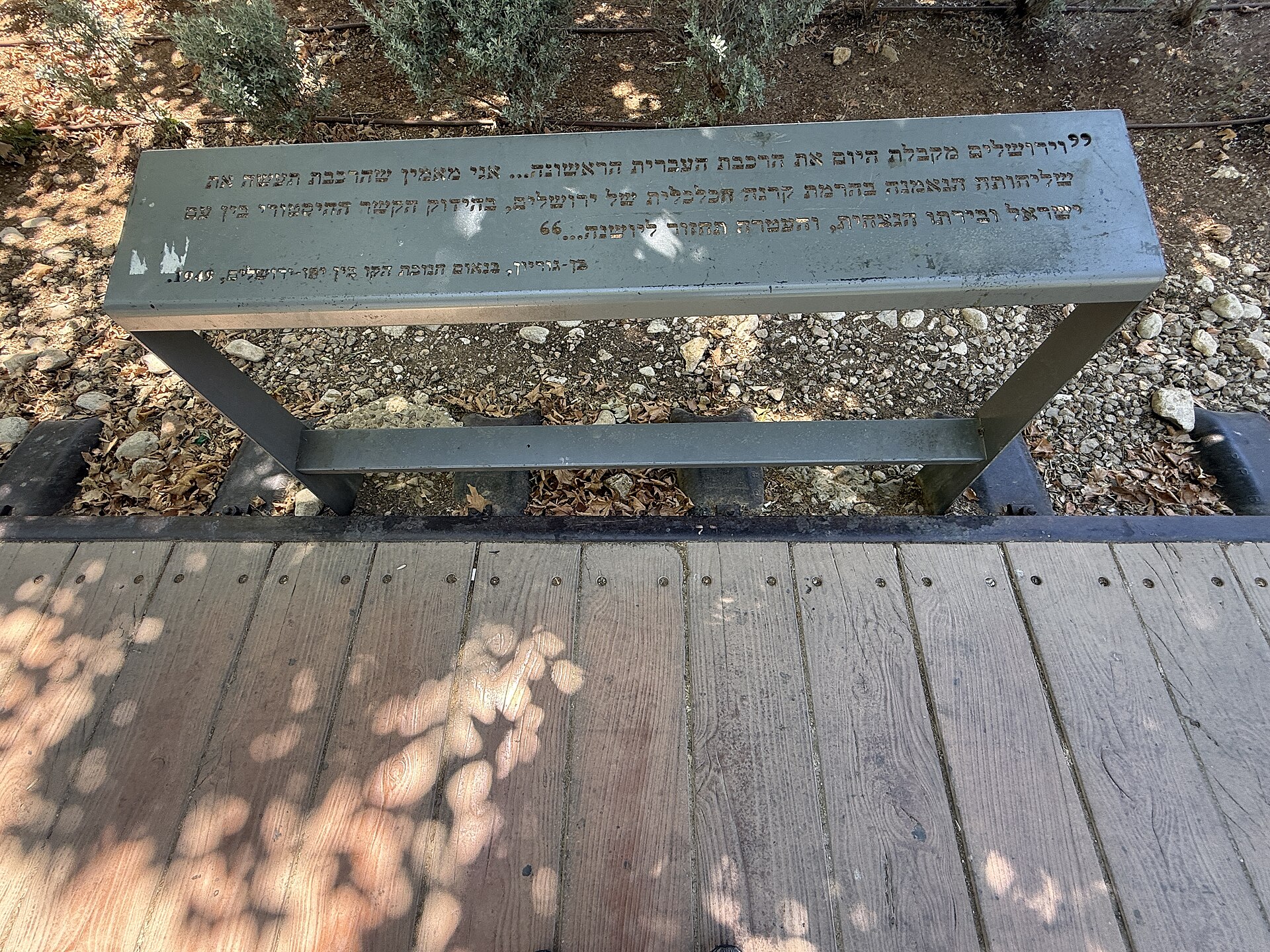
A plaque in the Train Track Park: 149903 jerusalem-hamesila park PikiWiki Israel by שלמה רודד, CC BY 2.5, via Wikimedia Commons.
The Train Track Park boardwalk and cycle lane: 149907 jerusalem-hamesila park PikiWiki Israel by שלמה רודד, CC BY 2.5, via Wikimedia Commons.