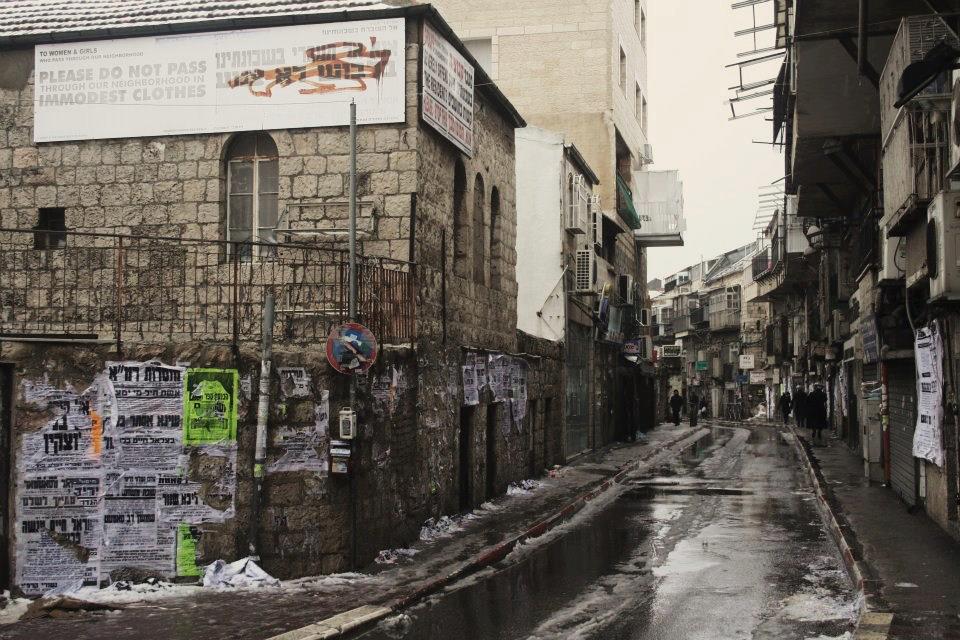
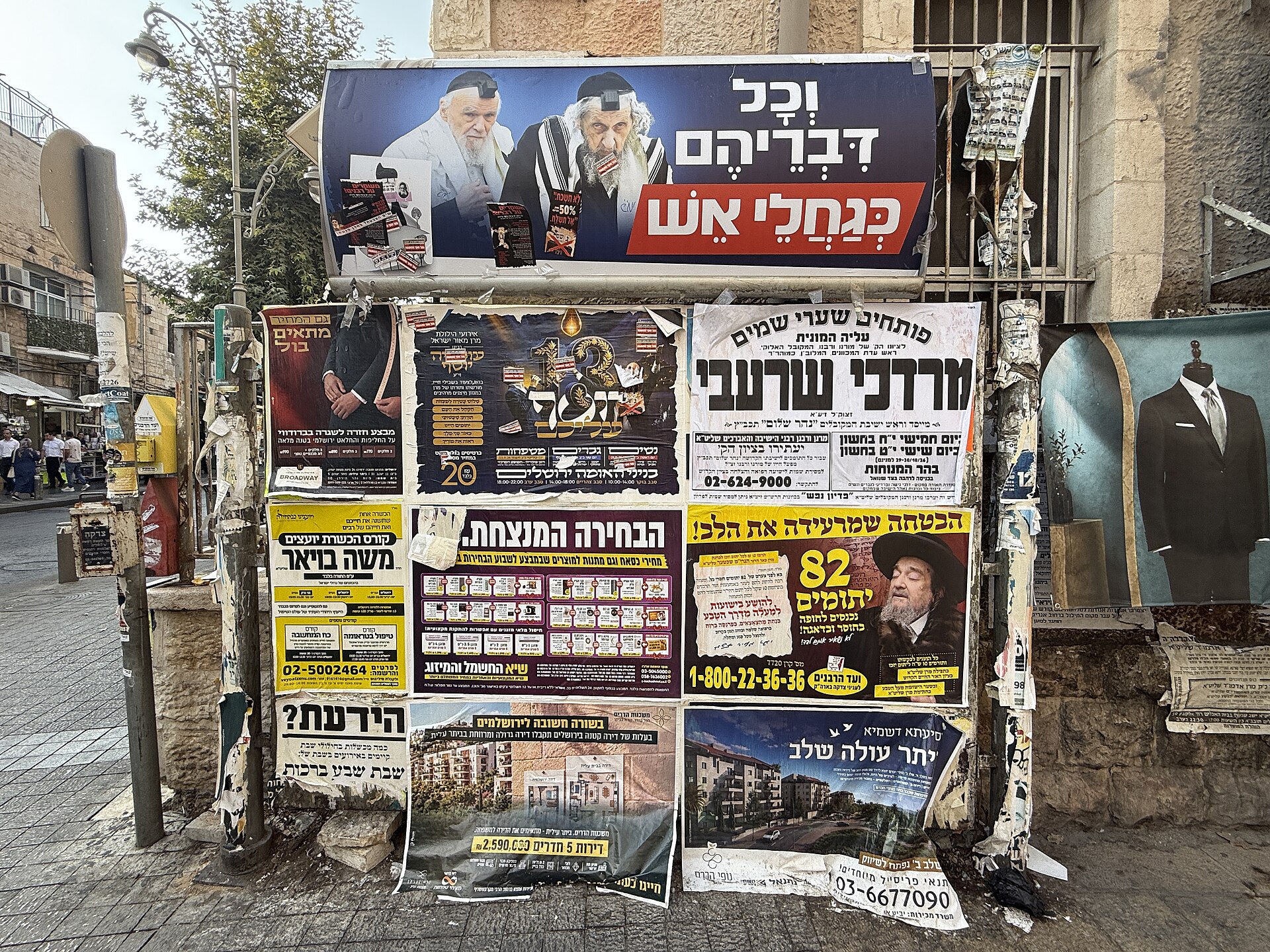
The first thing you notice is the posters. Walk north from Jaffa Road and within a few minutes the shop signs switch to Hebrew only, the walls are papered with black-bordered notices, and at the entrance to the neighbourhood a large sign in Hebrew and English asks visitors not to walk through in immodest clothing. Mea Shearim is one of the oldest neighbourhoods outside Jerusalem’s Old City walls and one of the best-known of its ultra-Orthodox (Haredi) districts, and it is one of the few places in the city where how you dress and what you point your camera at matter as much as where you go.
This guide explains how to visit respectfully: what the neighbourhood is and who lives there, what the signs at the entrances ask, what to wear, how to handle photography, when not to come, and what’s worth seeing once you’re there. History and practical details were checked in November 2026 against the city’s official tourism guidance, Hebcal’s calendar and reporting in the Israeli press. For dress rules at holy sites across the city, see our separate Jerusalem dress code guide; this page is about the neighbourhood itself.
Mea Shearim at a Glance
| Details | |
|---|---|
| Where | North of the city centre, north of Jaffa Road; Geula and its main street, Malchei Yisrael, lie to the west |
| Founded | 1874, by a building society of 100 shareholders |
| Who lives there | Haredi Jewish communities, many of them Hasidic |
| Entry | Free; it’s a residential neighbourhood, not an attraction |
| Dress | Women: skirt to the knee or longer, shoulders and arms covered. Men: long trousers, no sleeveless shirts |
| Photography | Don’t photograph residents, especially women and children; none at all on Shabbat |
| When to go | A weekday, in daylight |
| When not to go | Shabbat (Friday sunset to Saturday nightfall) and Jewish holidays |
| Getting there | Light rail to Ha-Davidka or Jaffa Center, then walk north |
A Short History
By the 1870s Jerusalem’s Old City was badly overcrowded, and Jewish families had begun building outside the walls. Mea Shearim was founded in 1874 by a building society of a hundred shareholders, making it one of the earliest Jewish neighbourhoods outside the Old City. The German-born architect and missionary Conrad Schick, who planned many buildings in 19th-century Jerusalem, drew up the plans, including the first hundred houses, a synagogue and a ritual bath (mikveh). The first hundred apartments were ready in October 1880 and allocated by lottery.
The name comes from a verse in Genesis (26:12) in which Isaac sows in the land and reaps “a hundredfold”, mea she’arim in Hebrew; a popular tradition says it refers to a hundred gates. In fact it was built as a walled compound: long rows of houses facing inwards around courtyards, with gates that were locked every evening for safety. You can still read that plan in the long terraces and inner yards of the oldest parts.
The neighbourhood grew outwards as more courtyards were added. Nearby Batei Ungarin, the “Hungarian houses”, was built in 1891 by Kolel Ungarin, the charitable fund of Hungarian Jews in Jerusalem, and Geula to the west was established in the late 1920s. Together they now form a large Haredi area of the city. Our pillar guide to Jerusalem’s neighbourhoods puts it in the context of the city’s growth beyond the walls.
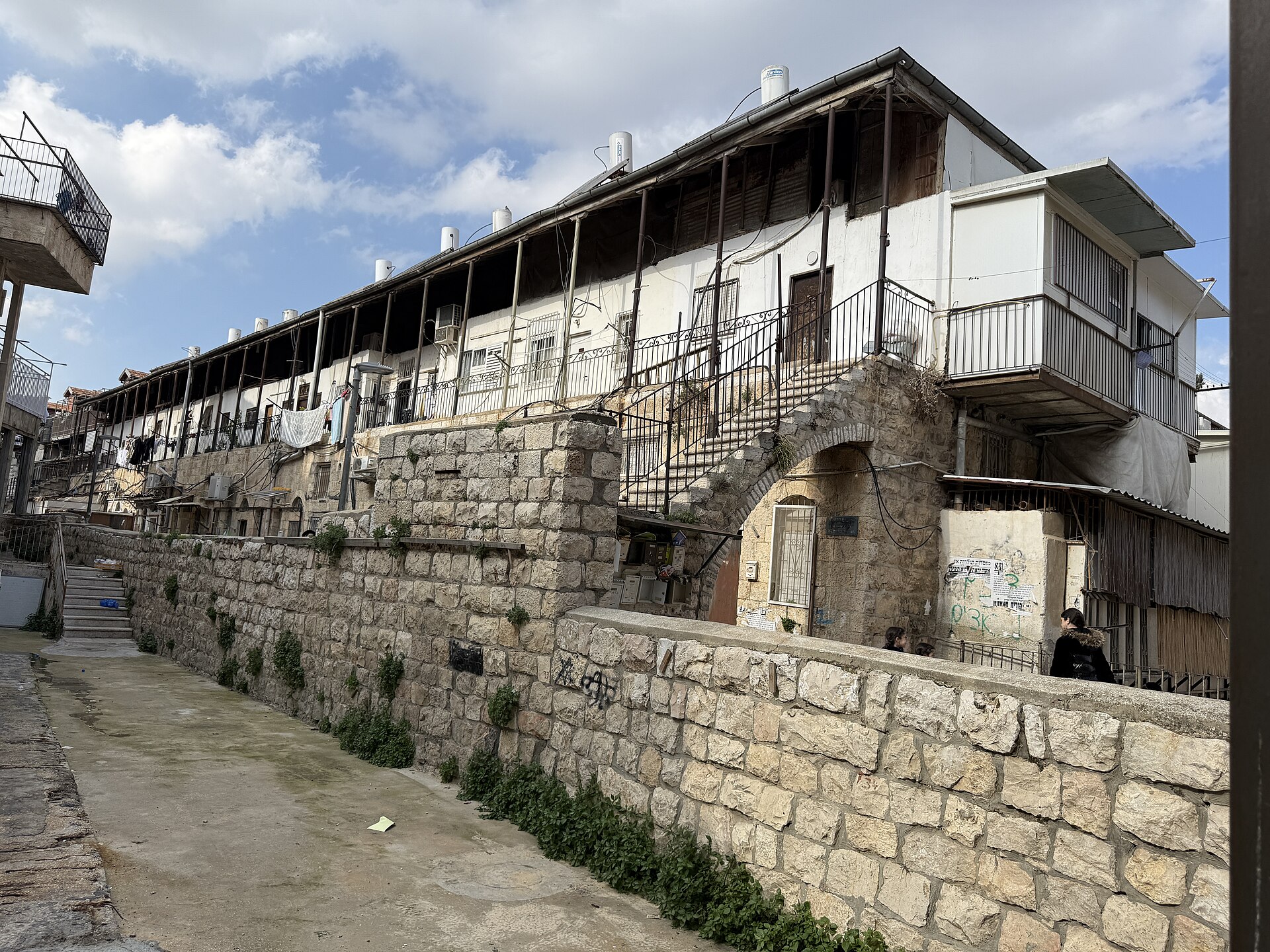
Who Lives There Today
Mea Shearim is home to a dense mix of Haredi communities, many of them Hasidic: among the groups with a presence here are Breslov, Slonim, Toldos Aharon, Toldos Avraham Yitzhak and Satmar. The Edah HaChareidis, a strictly Orthodox communal organisation, has its headquarters at the western end of the neighbourhood. Attitudes to the State of Israel differ between these communities: some reject it on religious grounds; others don’t. To an outsider they can look alike, but dress details such as hats, coats and socks often signal which community someone belongs to.
Daily life revolves around family, study and prayer. Families are large, the streets are full of children, and many men spend much of the day in study. Community news travels on the wall posters you’ll see everywhere. This is a living residential community rather than an attraction, and that is the starting point for everything else in this guide.
The Signs at the Entrances
At the entrances to the neighbourhood, large posters in Hebrew and English ask visitors to dress modestly. One version, photographed by Ynet, reads: “Please do not walk through our neighborhood in immodest clothing.” Fuller versions spell out what that means: skirts to the knee or longer, covered shoulders and no short sleeves for women, no shorts or sleeveless shirts for men, and no large, conspicuous groups.
The signs are a request, and they’re also part of an argument. Those who put them up say they protect the character of their streets. To critics, including Israeli activists and some local politicians, they are a step towards excluding women from public space; Ynet reported in 2015 that women in Beit Shemesh won damages of ₪15,000 each over similar signs there, and that a Jerusalem councillor and activists asked the mayor to remove such signs in the capital. Ynet also reported in 2016 on posters asking women not to walk on the neighbourhood’s main street at night during the intermediate days of Sukkot, after Israel’s High Court ruled against street partitions and “modesty ushers”, with the municipality saying enforcement would deal with it.
For a visitor the practical point is simple: you are walking through someone else’s home, and the polite thing is to dress as they ask.
What to Wear
Women
- A skirt or dress that reaches at least the knee, and better below it. Trousers are tolerated on visitors more than shorts, but a skirt is the respectful choice.
- Shoulders and upper arms covered; sleeves to the elbow or longer.
- No low necklines, crop tops or anything tight or see-through.
- You don’t need to cover your hair as a visitor; married Haredi women do, but nobody expects it of tourists.
Men
- Long trousers, not shorts.
- A shirt with sleeves; no vests or sleeveless tops.
- A head covering is only needed if you go into a synagogue.
Practical Tips
- If you’re spending the day elsewhere in shorts, carry a long wrap skirt or light trousers and a scarf or shirt to put on before you walk in.
- The same outfit will also get you into churches, the Western Wall and mosques, so it’s worth packing anyway; our packing list has suggestions.
- Children should be dressed modestly too; it’s simpler than explaining why they can’t come in.
Photography: The Rules That Matter Most
Many Haredi residents object strongly to being photographed, and some find it deeply offensive, particularly when the camera is pointed at women or children. Tourists pointing phones at people as if they were part of the scenery is one of the main sources of friction in the neighbourhood.
- Don’t photograph people without asking, and assume the answer is no. Women and children above all.
- No long lenses from across the street, and no photographing into windows, doorways or courtyards.
- Photograph buildings, signs and streets rather than residents, and keep it quick and discreet.
- No photography at all on Shabbat or holidays. Using a camera or phone breaks the Sabbath, and doing it in front of residents is provocative.
- No filming for social media. A video of a “strange neighbourhood” with residents in frame is something many residents resent.
- No drones.
If you want photographs of Jerusalem life, there are far better places to point a camera; our guide to photography spots in Jerusalem has plenty.
How to Behave
- Walk in small groups, or alone or in pairs, and keep your voice down. A large tour group sweeping through is resented.
- Don’t offer to shake hands with someone of the opposite sex. Many strictly observant men and women don’t touch members of the opposite sex outside their family.
- Don’t stare, point or comment on how people look; you’d be uncomfortable being treated as an exhibit too.
- Couples: no holding hands or displays of affection.
- Don’t go into synagogues, yeshivas or courtyards uninvited. If you’re invited in, men cover their heads.
- Shop. Buying something from a local bakery or bookshop is the most natural way to be in the neighbourhood rather than just looking at it.
Shabbat and Jewish Holidays
Don’t visit on Shabbat, from Friday sunset to Saturday nightfall, or on Jewish holidays. Shops are closed, the streets are given over to walking to and from synagogue, and residents ask visitors not to drive, smoke, take photographs or use mobile phones. A visitor walking through with a phone out is not welcome. Our guide to Shabbat in Jerusalem explains how the day works across the city.
Friday morning and early afternoon, by contrast, is one of the most interesting times to see the neighbourhood: the bakeries are busy with challah, the streets are full of people shopping for Shabbat, and there’s a sense of a whole community getting ready at once. Leave well before sunset.
Purim
The exception to the rule about holidays is Purim, when the neighbourhood is at its most exuberant: children and adults in costume, music, and gifts of food carried from house to house. Jerusalem celebrates Shushan Purim, a day later than most of the world; in 2027 Purim runs from sundown on Monday 22 March to nightfall on Tuesday 23 March, and Shushan Purim in Jerusalem from sundown on Tuesday 23 March to nightfall on Wednesday 24 March. Crowds are big, some revellers drink heavily, and the rules on dress and photography still apply. Our guide to Purim in Jerusalem has the detail.
Hanukkah and Sukkot
During Hanukkah, oil lamps burn in glass cases by doorways and in windows after dark, and during Sukkot balconies and courtyards fill with temporary booths. Both can be seen from the street; avoid Shabbat and the festival days of Sukkot.
What to See
Mea Shearim Street
The neighbourhood’s main street is lined with small shops selling religious books, ritual objects such as candlesticks, mezuzah cases and prayer shawls, clothing, hats and household goods, along with bakeries and grocers. It’s the easiest part to walk through, and the place where visitors are most expected.
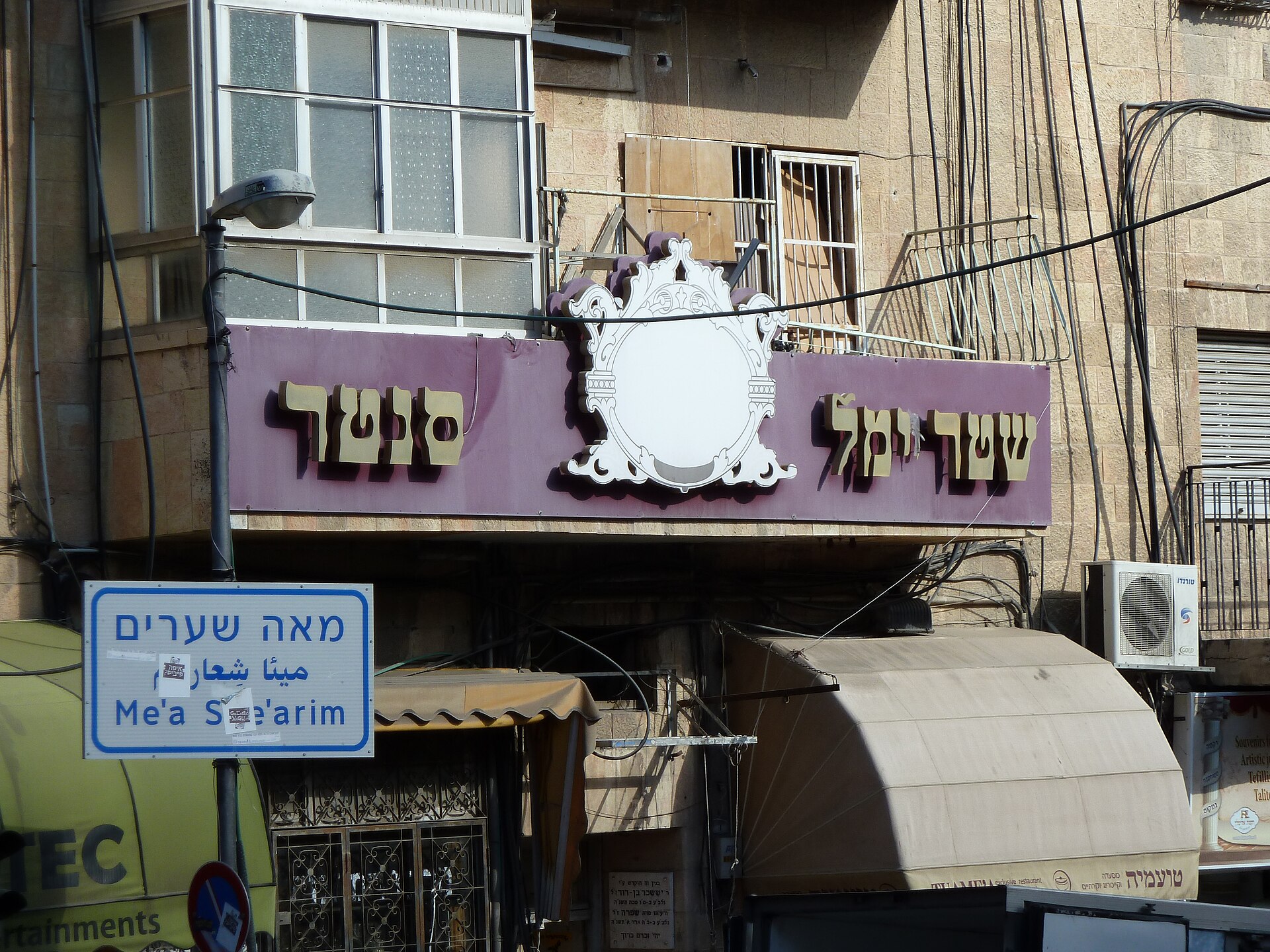
The Courtyards and Old Terraces
Off the main street, gateways lead into the original courtyards, with their long stone terraces, outside staircases, water cisterns and washing lines. Look from the gateway rather than walking in; these are shared private spaces.
The Wall Posters
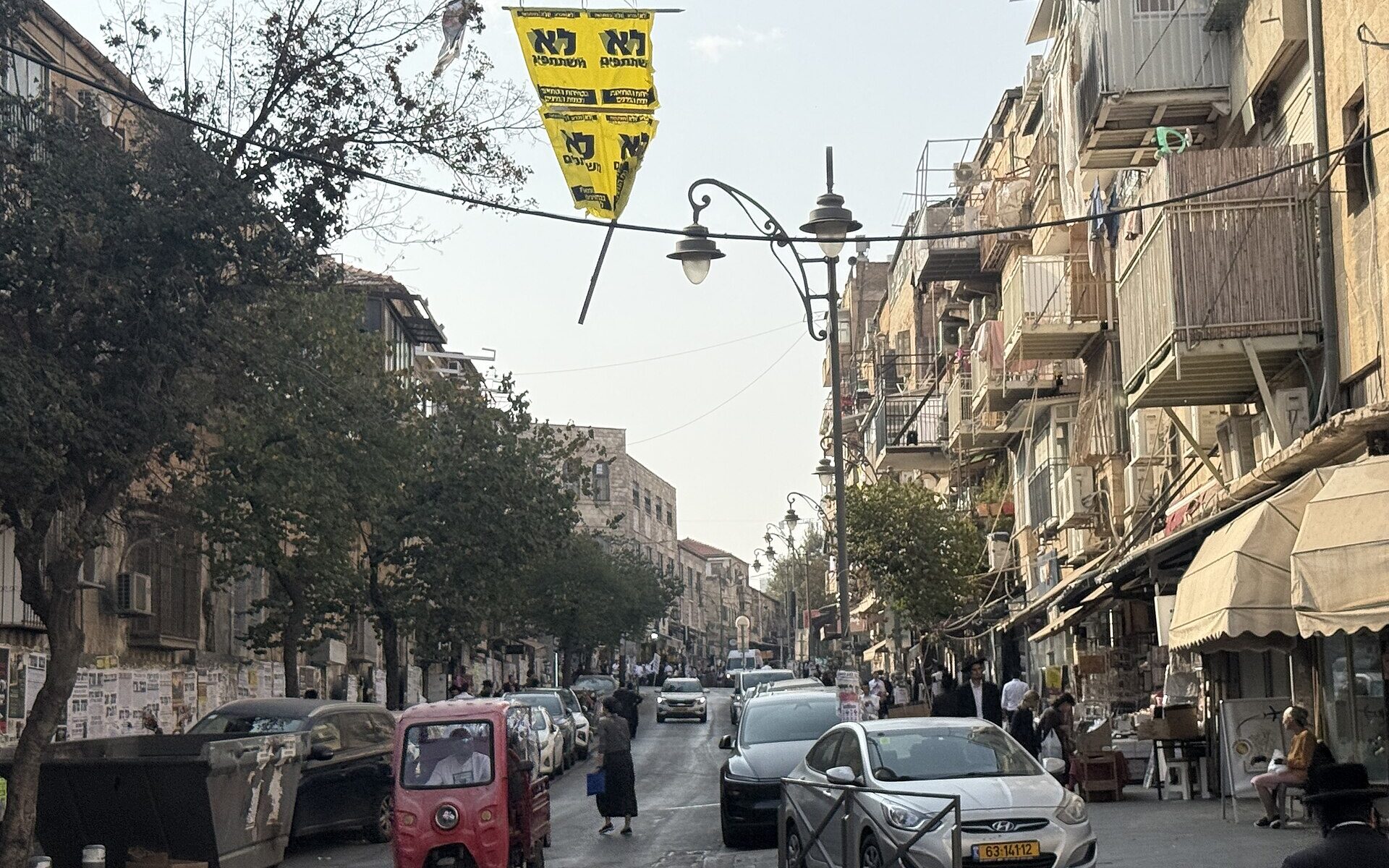
The posters, called pashkevilim, are how the community talks to itself: announcements of deaths and weddings, rabbinic rulings, warnings, appeals and campaigns, many of them strongly worded. If you read Hebrew they’re a remarkable window into community life; if you don’t, they’re still a striking sight, layered on every available wall.
Batei Ungarin
Next to Mea Shearim, Batei Ungarin, built in 1891 for Hungarian Jewish families, keeps much of the look of a 19th-century courtyard compound. The same rules apply there.
Malchei Yisrael Street, Geula
West of Mea Shearim, Malchei Yisrael Street is the main commercial street of Geula and the heart of the Haredi shopping district of north Jerusalem: about 300 metres of small shops, with no malls, ending at Mea Shearim Street. It’s busier and a little more relaxed than Mea Shearim itself, and a good place to see everyday Haredi life on a weekday afternoon.
Tensions and Safety
Most of the time Mea Shearim is a quiet residential neighbourhood, and visitors who dress modestly, don’t photograph residents and behave discreetly can walk through it. But it is also a place where feelings run high on some issues, and that can spill on to the streets.
- Protests. Haredi protests, particularly over military conscription, sometimes block roads in and around the neighbourhood. In November 2025, the Times of Israel reported, citing Hebrew media, that rioters threw stones and smashed the rear window of Mayor Moshe Lion’s car during a visit to Mea Shearim; he was unharmed. If you come across a demonstration, leave.
- Visitors who break the rules on dress or photography can be shouted at or confronted. Apologise, cover up or put the camera away, and move on.
- Shabbat is not the time to test any of this.
For the wider picture, including official travel advice, see our page on whether Jerusalem is safe to visit.
Getting There
- Light rail: the Red Line stops at Ha-Davidka and Jaffa Center on Jaffa Road. From either, walk north through the side streets towards Mea Shearim Street. For current fares, see our light rail guide.
- On foot: from the city centre, it’s an easy walk north. You can combine it with Musrara and Damascus Gate to the east, or with Mahane Yehuda market to the south-west.
- By car: don’t. The streets are narrow and congested, and on Shabbat some are closed to traffic.
Should You Go With a Guide?
You don’t need one, but a good guide who knows the community, or who comes from it, will explain far more than you can see on your own: what the posters say, which community wears what, how the courtyards work, and why the signs exist. It also makes it easier to visit respectfully. Our guide to Jerusalem tours covers how to choose one.
Is It Worth Visiting?
Yes, if you’re curious about how a deeply traditional community lives in the middle of a modern city, and if you’re prepared to follow its rules: an hour on a weekday, walking Mea Shearim Street, looking into the courtyards from their gateways, reading the posters and buying a pastry, is one of the more memorable things you can do in Jerusalem.
Skip it if you mainly want photographs of people, if you’d find the dress code a burden, or if you can only come on Shabbat. And it’s not a place for a big group with a guide talking through a microphone. For more of the Jewish city, our pages on the Jewish Quarter and Jewish holy sites in Jerusalem are good next steps.
Final Word on Mea Shearim
Mea Shearim asks more of visitors than most places in Jerusalem, and gives a lot back if you meet it halfway: dress as the signs ask, leave the camera down, come on a weekday and walk quietly. Then continue with our guide to Jerusalem’s neighbourhoods, our self-guided walking tour, and our pages on the religious holidays that shape the city’s calendar and on visiting Jerusalem for the first time.
Photo Credits
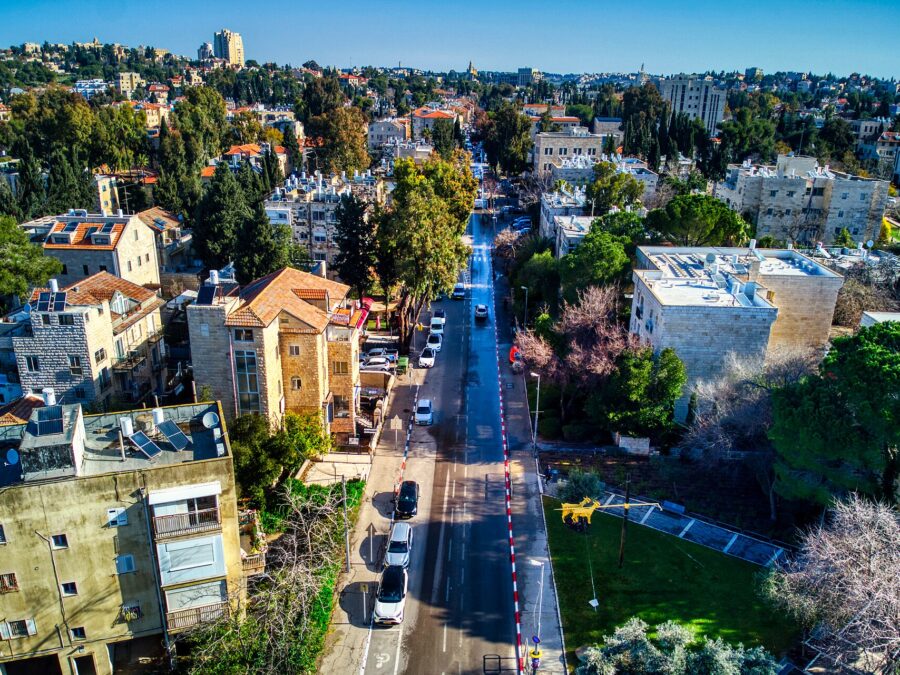
A street in Mea Shearim: 151352 jerusalem – mea shearim neighborhood PikiWiki Israel by שלמה רודד, CC BY 2.5, via Wikimedia Commons.
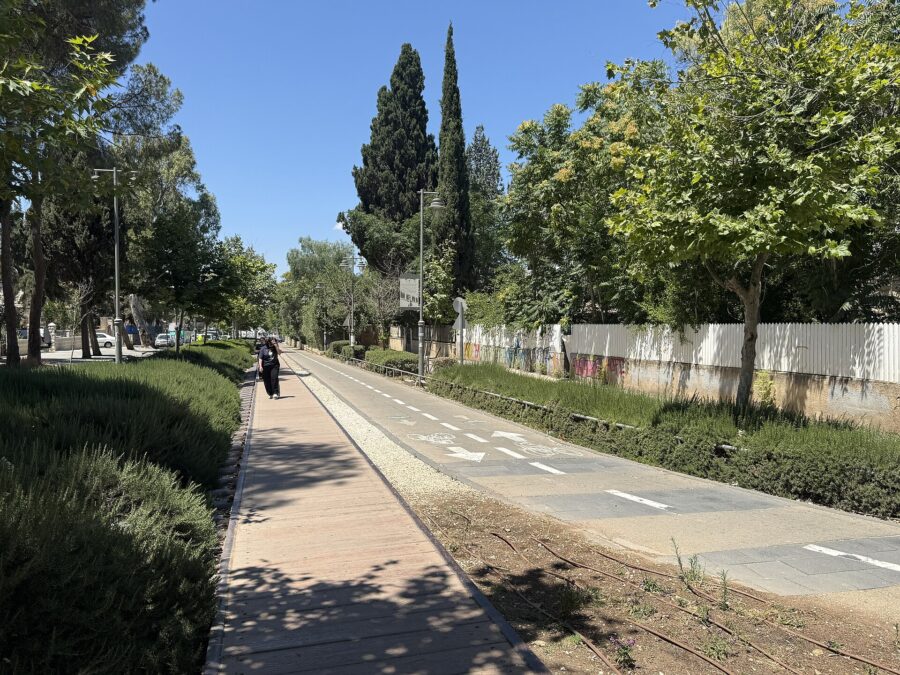
An old terrace in Mea Shearim: 125286 jerusalem – mea shearim PikiWiki Israel by שלמה רודד, CC BY 2.5, via Wikimedia Commons.
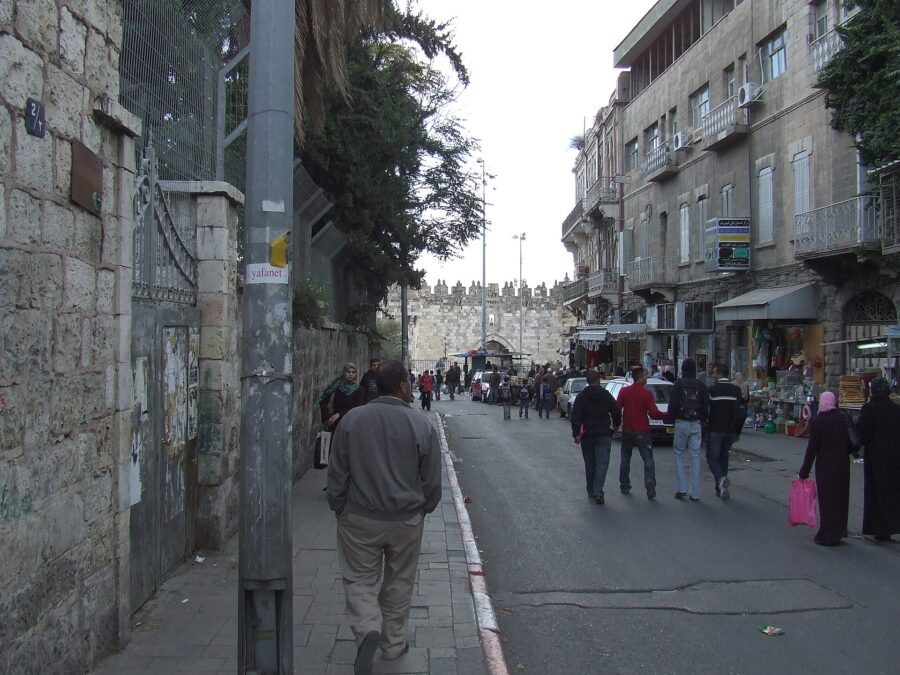
A modesty sign in Mea Shearim: Mea shearim by Anthony Baratier, CC BY-SA 3.0, via Wikimedia Commons.
Pashkevilim on a street corner: 151363 jerusalem – mea shearim neighborhood PikiWiki Israel by שלמה רודד, CC BY 2.5, via Wikimedia Commons.
A Mea Shearim street sign: Jerusalem Mea Shearim Shtreimel Center sign by Utilisateur:Djampa – User:Djampa, CC BY-SA 4.0, via Wikimedia Commons.