Jerusalem is one of the most photographable cities on earth, but it doesn’t give up its best images easily. The Old City’s narrow alleys, intense religious sites, and unforgiving midday sun all conspire against the casual snap. Yet the rewards for the patient photographer are immense: the gold of the Dome of the Rock catching first light, the warm-toned Jerusalem stone glowing at sunset, the steam from a hummus shop drifting across a 12th-century alleyway. This is a photographer’s pilgrimage city, and with the right planning, even a smartphone can produce gallery-quality work.
This Jerusalem photography guide for 2026 is the most complete, location-specific resource we know of. Below you’ll find the best photography spots ranked by photographic value, with optimal timing for golden hour at each, lens recommendations, composition advice, and the local etiquette around photographing holy sites and people. Whether you shoot with a Sony A7, an iPhone, or a DSLR you brought once and don’t fully know how to use, this guide will help you walk away with photographs you’ll print and share for years.
Why Jerusalem Demands Photographic Patience
Three factors shape every photograph you’ll make in Jerusalem:
1. The light. Jerusalem’s elevation (~800m) and dry air mean the light is unusually crisp. The honey-colored Jerusalem-stone byelaw means buildings reflect warm tones beautifully — but the same stone goes harsh and washed-out under midday sun. Plan around golden hour (the first hour after sunrise, last hour before sunset).
2. The crowds. The most iconic spots (Western Wall, Holy Sepulchre, Mount of Olives viewpoint) get busy fast. Arrive at sunrise for empty frames; revisit at golden hour for warmer light. Be ready to wait 15 minutes for a tour group to clear.
3. The etiquette. Jerusalem is sacred to billions of people. Photography is welcomed at most public sites but restricted at others, and basic respect at religious moments will earn better cooperation from locals. Always ask before close-up portraits.
For complete attraction context, pair this with our Best Viewpoints in Jerusalem guide and the Jerusalem attractions map.
The 20 Best Photography Spots in Jerusalem
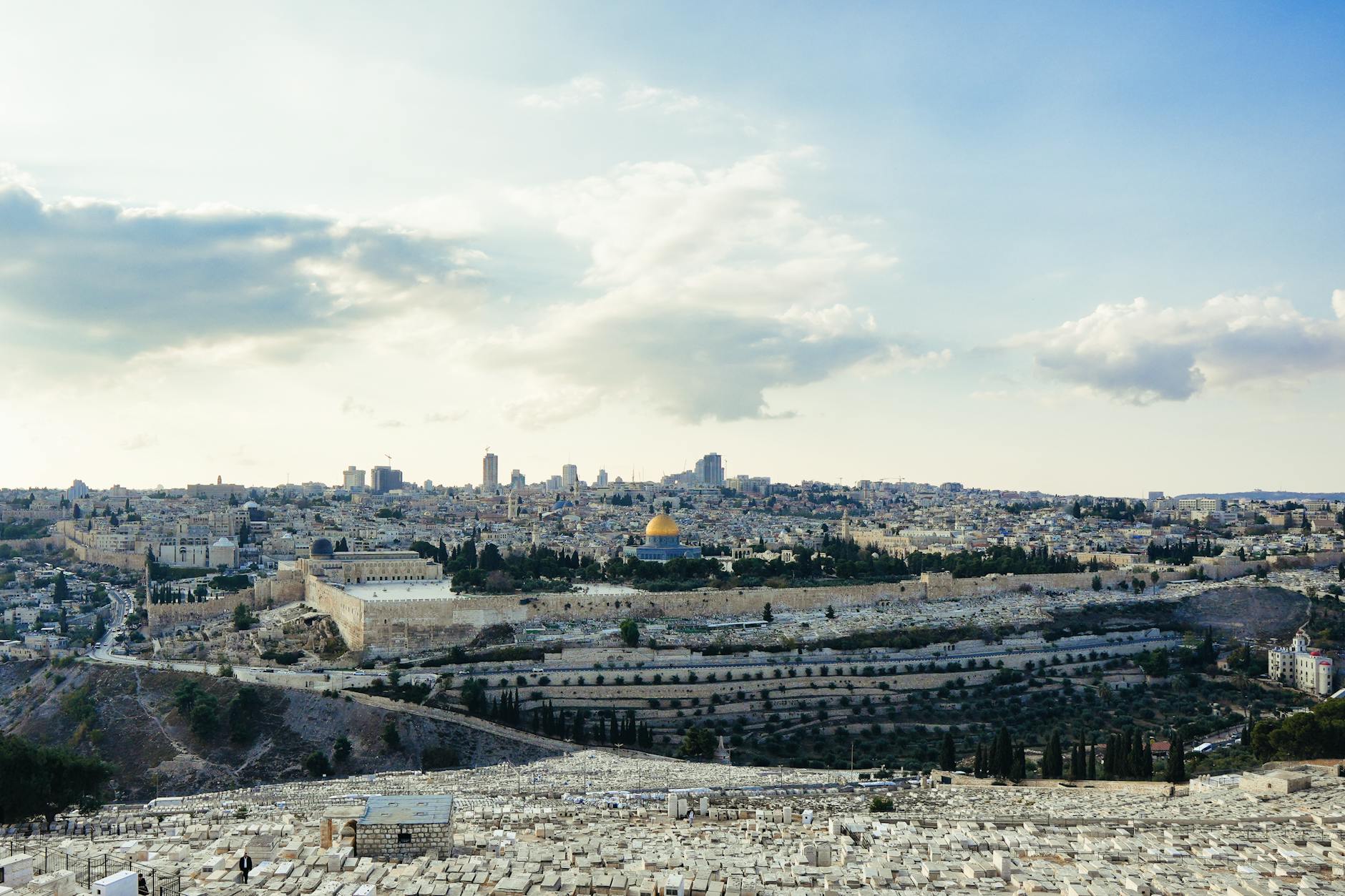
1. Mount of Olives Viewpoint — The Iconic Sunrise
What to shoot: The entire walled Old City framed by the Jewish cemetery, with the Dome of the Rock in the center.
Best time: Sunrise (5:30–6:30 AM summer; 6:30–7:30 AM winter). The Dome catches first light and turns into a golden orb.
Lens: 24–70mm zoom for panorama; 70–200mm for tight Dome of the Rock isolation.
Composition tip: Use the cypress trees in the foreground for depth.
2. Haas Promenade (Tayelet)
What to shoot: Cinematic panoramic skyline of the Old City with the Judean Hills behind.
Best time: Sunset and twilight blue hour.
Lens: 35mm for environmental panorama; 85mm for tighter composition.
Tip: Walk to the western end of the promenade for the best Old City alignment.
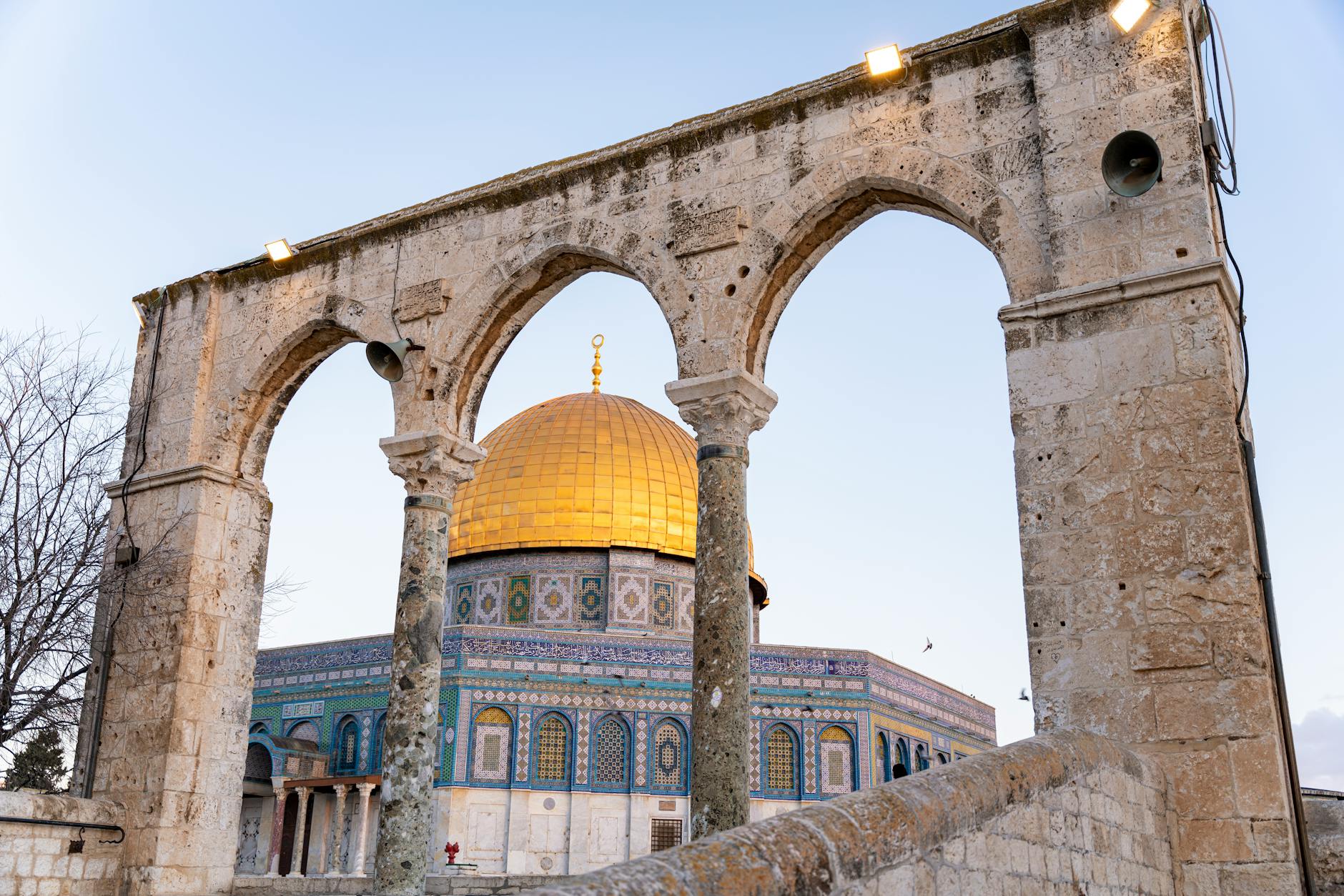
3. Dome of the Rock from the Temple Mount Esplanade
What to shoot: Up-close exterior of the Dome of the Rock — its blue-tile arabesques and gold dome.
Best time: 7:30 AM right after the gates open (during non-Muslim hours, Sun-Thu).
Lens: 24mm wide for whole structure + plaza; 50mm prime for detail shots of tile work.
Etiquette: Modest dress required; do not photograph worshippers up close. Stay on stone walkways.
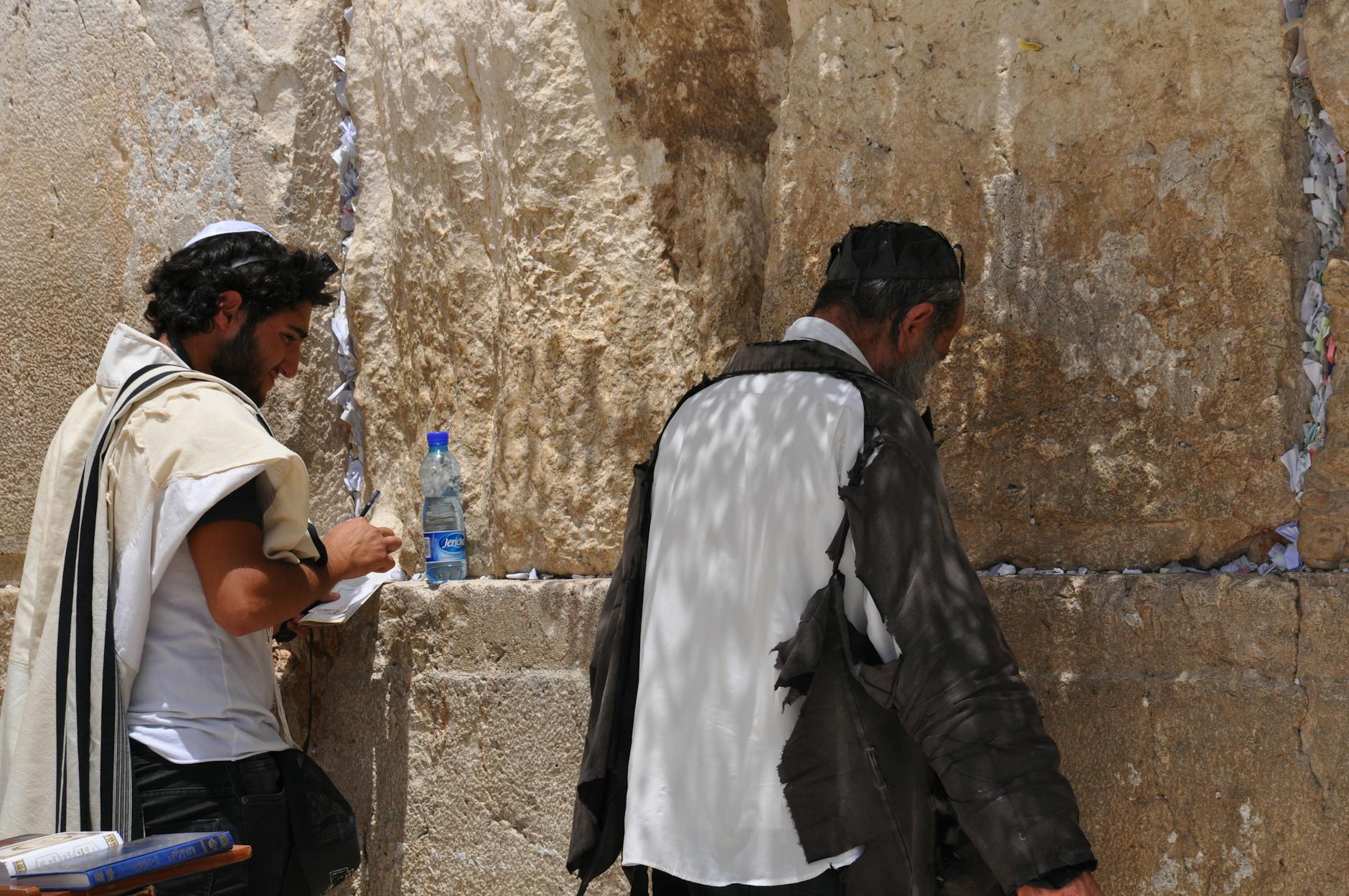
4. Western Wall (Kotel)
What to shoot: Worshippers’ silhouettes against the massive Herodian stones, prayer notes wedged in cracks.
Best time: Late afternoon when shadows of worshippers fall across the stones.
Lens: 35mm prime for environmental shots; 85mm for portraits.
Etiquette: No photography during Shabbat (Friday sunset to Saturday sunset). Be discreet during prayer.
5. Church of the Holy Sepulchre Interior
What to shoot: The Aedicule (tomb shrine), the rotunda lit by hanging lamps, candle-lit chapels.
Best time: Just after opening (5:00 AM) for empty interior; mid-morning for processions.
Lens: Fast wide (24mm f/1.4–2.8) — interior is dim. ISO 1600–6400.
Tip: No flash. The Greek Orthodox, Armenian, and Franciscan processions pass through daily.
6. Yemin Moshe and Montefiore Windmill
What to shoot: Cobblestone alleys, restored stone houses with bougainvillea, the iconic windmill against the Old City walls.
Best time: Late afternoon golden hour.
Lens: 35mm prime is the sweet spot here. Or 24–70mm zoom.
Tip: The path from Bloomfield Garden up past the windmill aligns the windmill, garden, and Old City wall in one frame.
7. Mahane Yehuda Market
What to shoot: Color-saturated produce stalls, vendor portraits, Solomon Souza’s shutter portraits at night.
Best time: Friday morning for peak energy; after 8 PM for the bar district transformation.
Lens: 35mm prime for street; 50mm for portraits. Smartphone works great here too.
Etiquette: Ask vendors before close-up portraits. Most are happy.
Tip: Shoot on an empty stomach — our Mahane Yehuda market food guide maps which stalls are worth eating at between frames.
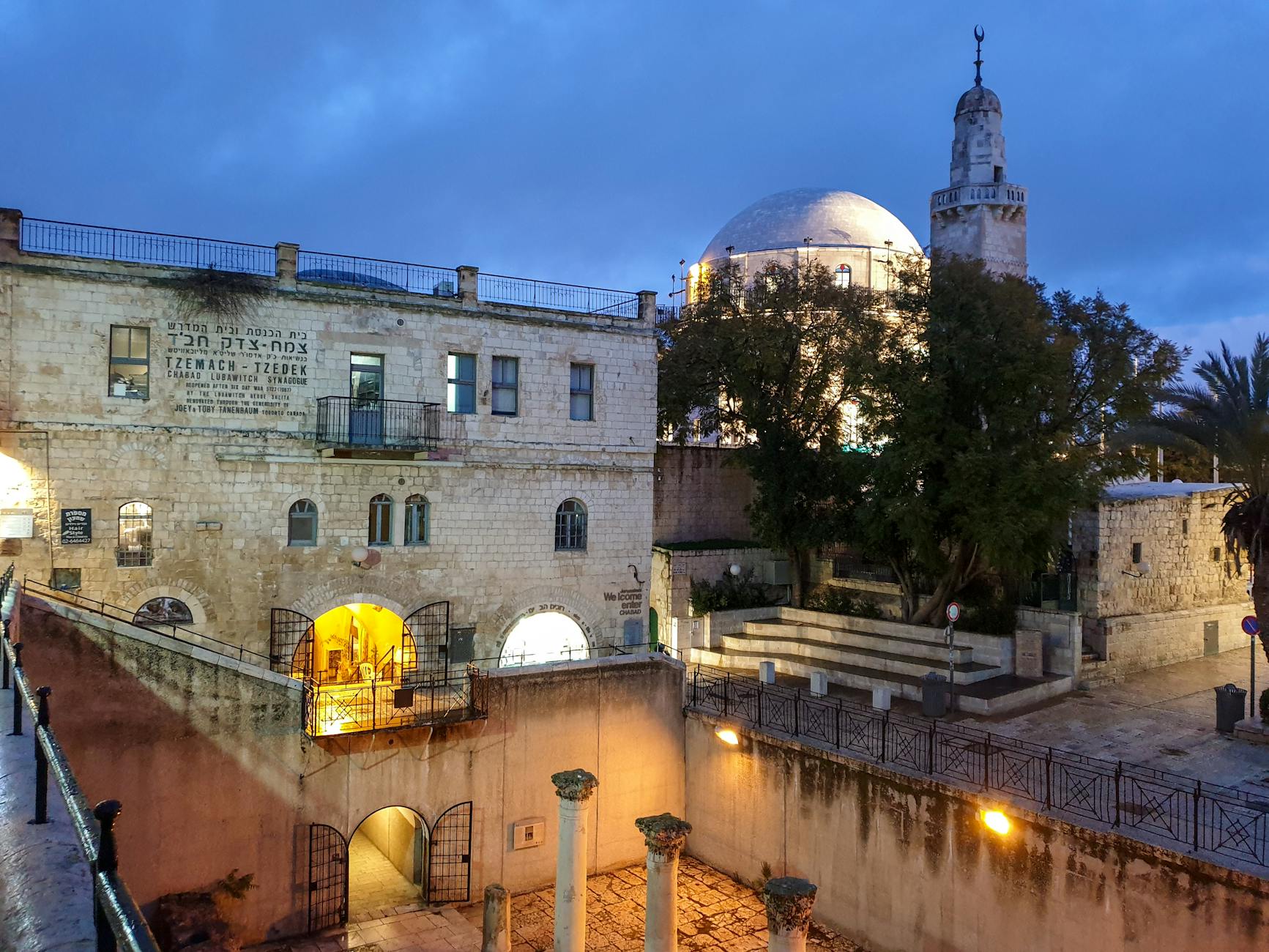
8. The Cardo Rooftop
What to shoot: Layered rooftops of the Old City quarters, with the Dome of the Rock as backdrop.
Best time: Golden hour.
Lens: 16–35mm ultra-wide for layered rooftops; 70–200mm to compress the Dome.
9. Austrian Hospice Rooftop
What to shoot: The Holy Sepulchre’s bell tower in the foreground, Dome of the Rock and Al-Aqsa beyond.
Best time: Mid-afternoon.
Lens: 70–200mm for compression; 35mm for environmental.
10. Damascus Gate
What to shoot: The most photogenic of the Old City’s gates, with constant flow of locals and pilgrims passing through.
Best time: Mid-morning or late afternoon.
Lens: 35mm street prime.
Tip: The steps in front of the gate are an ideal seated vantage point for street photography.
11. Old City Souks (Spice and Cotton Markets)
What to shoot: Spice mountains, hanging fabrics, light shafts through latticed roofs.
Best time: Mid-morning when shafts of light penetrate the covered markets.
Lens: Fast wide (24–35mm f/1.8 or wider).
12. Lutheran Church of the Redeemer Bell Tower
What to shoot: Aerial 360-degree view of the entire Old City.
Best time: Late morning when the eastern Dome is fully lit.
Lens: 24mm wide; 70mm for tighter compositions.
Tip: The spiral staircase itself is a worthwhile shot on the way up.
13. The Stairs from Jewish Quarter to Western Wall
What to shoot: The unique angle showing Western Wall, Dome of the Rock, Mount of Olives in one frame.
Best time: Early morning before crowds arrive.
Lens: 24mm wide.
14. Mamilla Mall and the Old City Walls at Night
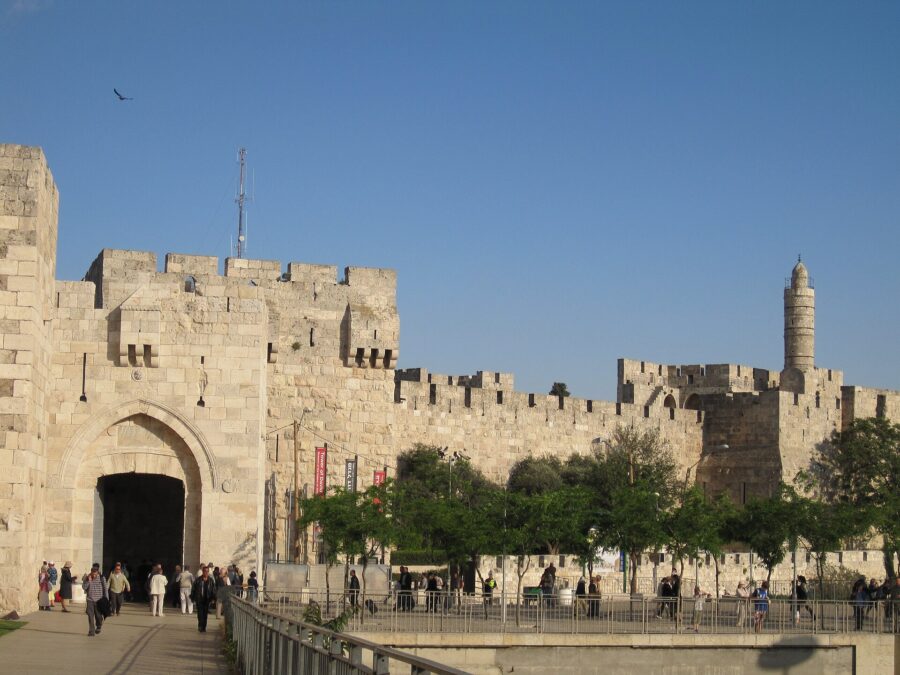
What to shoot: Floodlit Old City walls and Tower of David seen from the modern Mamilla Mall promenade.
Best time: Blue hour (~30 minutes after sunset).
Lens: 24–70mm; tripod.
Tip: The walls stay lit all evening, so this shot slots easily into a wider tour of night-time Jerusalem.
15. Tower of David Citadel Roof
What to shoot: 360-degree panorama from inside the citadel, with the moat and walls beneath you.
Best time: Mid-afternoon.
Lens: 24mm wide; 50mm prime.
16. Garden of Gethsemane
What to shoot: 900-year-old olive trees, Church of All Nations exterior with golden mosaic façade.
Best time: Early morning soft light.
Lens: 35mm prime.
17. Ein Kerem Village
What to shoot: Stone village lanes, Mary’s Spring, Church of the Visitation steps.
Best time: Late afternoon.
Lens: 35mm prime.
18. Mea Shearim Streets
What to shoot: The ultra-Orthodox neighborhood’s lanes, signs in Yiddish, Hasidic dress.
Etiquette: NO photography of people without permission. Modest dress mandatory. Avoid Shabbat. Stick to architectural and signage photography.
19. Hezekiah’s Tunnel and Pool of Siloam (City of David)
What to shoot: The dramatic ancient tunnel; the recently excavated Pool of Siloam.
Best time: Whenever you visit; tunnel is dim and requires either a phone flashlight or torch.
Lens: 24mm wide on the tunnel; 35mm at the pool.
Note: Bring a waterproof case if wading the tunnel.
20. Mahane Yehuda Solomon Souza Street Art at Night
What to shoot: The 250+ painted shutter portraits revealed only when the market closes.
Best time: 8:30 PM onward.
Lens: 35mm or 50mm prime; high ISO (1600+).
Tip: The shutter gallery is one of the city’s most offbeat after-hours experiences, and it only exists once the stalls shut.
Golden Hour and Light Timing for Jerusalem
- Sunrise: 5:30 AM (June) to 6:50 AM (December). Mount of Olives, Bloomfield Garden — east-facing.
- Morning soft light (1 hour after sunrise): Holy Sepulchre interior, Damascus Gate, Old City alleys.
- Late morning to early afternoon (10 AM–1 PM): Lutheran tower aerial, Tower of David, Mount Scopus.
- Afternoon (2–4 PM): Austrian Hospice rooftop, Western Wall worshipers’ shadows.
- Golden hour (1 hour before sunset): Yemin Moshe windmill, Cardo rooftop, Haas Promenade. Best light of the day.
- Sunset: Haas Promenade, Mamilla rooftop, Mount Zion outer walls.
- Blue hour (15–25 min after sunset): Old City walls floodlit; sky still blue.
- Night: Mahane Yehuda shutter art, Tower of David lit citadel, Old City alleys.
What Camera Gear to Bring
Smartphone Only
A modern iPhone or Android with a good night mode is genuinely capable across most of this list. Use the 0.5x ultra-wide for alleys and panoramas, the main lens for portraits and street, and the 2x or 3x telephoto for isolating the Dome of the Rock. Carry a small clip-on smartphone tripod for blue-hour shots.
Mirrorless / DSLR Setup
Recommended kit: a full-frame body with a 24–70mm f/2.8 as your main lens, plus a 70–200mm f/2.8 or f/4 for compression and isolation. Add a 35mm f/1.4 prime for low-light alleys and a small travel tripod. For dedicated night work, an f/1.4 wide prime is invaluable.
What Not to Bring
Drones are illegal over the Old City and central Jerusalem; don’t bring one. Massive tripods will get in the way in alleys and may face restrictions in religious sites — use a small travel tripod. A second body is overkill for a non-pro trip; pack light.
Photography Etiquette in Jerusalem
- Holy sites: Always check signage. Western Wall does not allow photography on Shabbat. Some chapels in the Holy Sepulchre prohibit flash. Many synagogues prohibit photography during prayers.
- People: Always ask permission before close-up portraits, especially of religious figures, children, or worshippers. A friendly hand gesture toward your camera and a smile usually works.
- Mea Shearim and ultra-Orthodox areas: Do not photograph people without explicit consent. Strict modesty in dress is required.
- Children: Get parental consent. Even if you don’t speak the same language, parents understand.
- Markets: Vendors are generally welcoming; consider buying a small item before snapping the stall.
- Funeral processions or moments of obvious mourning: Lower your camera. This is not Instagram material.
- Military and police: Generally do not photograph soldiers, security personnel, or sensitive infrastructure. Israeli military is sensitive to photographs.
Post-Processing Notes for Jerusalem Photos
- White balance: Jerusalem stone is warm-toned. Don’t overcool; embrace the honey color.
- Contrast: Midday harsh-light photos benefit from softening highlights and lifting shadows.
- Color grading: The classic “Jerusalem look” is high warmth, slight magenta tint in the highlights, and rich amber shadows.
- Sharpening: The fine detail of Jerusalem stone benefits from moderate clarity and sharpening — but don’t crush detail.
- Black and white: Holy Sepulchre interiors, Mea Shearim portraits, and street scenes work beautifully in B&W. Try a green filter equivalent for skin tones.
A Photographer’s One-Day Plan
This route strings the highest-value locations above into a single day. If you would rather build a general sightseeing day around the same stops, our guide to the best things to do in Jerusalem covers opening hours and ticket prices for each one.
- 5:30 AM: Mount of Olives sunrise.
- 7:00 AM: Walk down through the cemetery and Garden of Gethsemane.
- 7:30 AM: Enter Temple Mount (just after gates open).
- 8:30 AM: Holy Sepulchre interior (less crowded).
- 10:00 AM: Lutheran bell tower aerial.
- 11:30 AM: Spice and cotton markets — light shafts.
- 1:00 PM: Lunch + reset at Austrian Hospice rooftop.
- 3:00 PM: Western Wall — late-afternoon shadows.
- 5:00 PM: Yemin Moshe and the Montefiore Windmill.
- 6:00 PM: Sunset from Haas Promenade.
- 7:00 PM: Blue hour at Mamilla, looking back at floodlit walls.
- 9:00 PM: Mahane Yehuda Solomon Souza shutter portraits.
One date to know about if you shoot in Jerusalem: Orthodox Holy Saturday, when the Holy Fire fills the Christian Quarter and the light inside the Holy Sepulchre goes from near-darkness to several thousand flames in about ninety seconds. Access is cordoned and capped, so the rooftops around the Muristan are worth scouting days in advance — our guide to the Holy Fire ceremony covers where you can realistically stand.
One seasonal addition that belongs on any list like this. For eight nights each December, Nachlaot and the Jewish Quarter fill with hanukkiot burning in glass cases outside front doors, at knee height, the length of every alley — low, warm light against Jerusalem stone, and almost nobody photographing it. Bring a tripod and go at nightfall. Our guide to Hanukkah in Jerusalem has the routes and the timings.
Final Word: Slow Down, Show Up Early, Stay Late
The two photographers in our circle who consistently produce gallery-quality Jerusalem work share one habit: they arrive at sunrise, take a coffee break midday, and stay through blue hour. Light is the city’s gift to anyone willing to plan around it. Use the spots and timings above as your scaffolding, give yourself two to three days to revisit favorites in different light, and you’ll come home with images you’ll print and frame.
Pair this guide with the Best Viewpoints in Jerusalem guide, the Self-Guided Walking Tours, and the Jerusalem attractions map to plan a photo-focused trip.