For 88 years, from the conquest of 1099 to Saladin’s recapture in 1187, Jerusalem was the capital of a Latin Christian kingdom, and that brief medieval chapter left fingerprints all over the Old City you walk today. Crusader builders rebuilt the Church of the Holy Sepulchre under a single roof, raised the elegant Church of St. Anne, fortified the citadel by Jaffa Gate, and paved market streets you still shop in. This guide to Crusader Jerusalem sets out what actually happened, which Crusader-era sites survive, how to recognize their architecture, current visiting details in shekels, and a half-day walking route to tie it together.
The Crusades are emotive history, so this guide sticks to what you can see and verify, presented plainly. For the longer arc of the city, read it alongside our Jerusalem history overview and our Old City walls walk guide.
A short history of Crusader Jerusalem
The First Crusade, launched after Pope Urban II’s appeal in 1095, reached Jerusalem in the summer of 1099 and took the city from its Fatimid garrison after a short siege. The capture was notoriously violent, with a large part of the Muslim and Jewish population killed or driven out, an episode worth remembering honestly rather than romanticizing. The victors founded the Latin Kingdom of Jerusalem, first under Godfrey of Bouillon and then a line of crowned kings, and set about turning a conquered city into a Christian capital.
Over the next eight decades the Crusaders rebuilt churches, established the military-religious orders of the Knights Templar and the Knights Hospitaller, and reorganized the city’s streets and markets. Their rule ended at the Battle of Hattin in 1187, where Saladin’s Ayyubid forces shattered the Crusader army; Jerusalem surrendered to him that October, this time with comparatively little bloodshed. A diplomatic treaty briefly returned the city to Christian control between 1229 and 1244 under Emperor Frederick II, but the medieval Crusader era in Jerusalem was effectively over. What remains is architectural, and it is surprisingly substantial.
The major Crusader sites to visit
Most surviving Crusader work sits inside the Old City walls, within easy walking distance, which makes a focused half-day very doable. These are the sites that reward the effort.
Church of the Holy Sepulchre
The Holy Sepulchre that pilgrims enter today owes much of its form to the Crusaders. Constantine first built here in the 4th century, but the complex was largely destroyed in 1009 under the Fatimid caliph al-Hakim. The Crusaders rebuilt and reconsecrated the church in 1149, for the first time gathering Calvary (Golgotha) and the Tomb beneath one roof in the Romanesque style. The most legible Crusader feature is the twin-arched southern facade in the courtyard, where you enter. Admission is free and modest dress is required; arrive early to beat the lines for the tomb. Our Holy Sepulchre guide walks through the layout.
Church of St. Anne
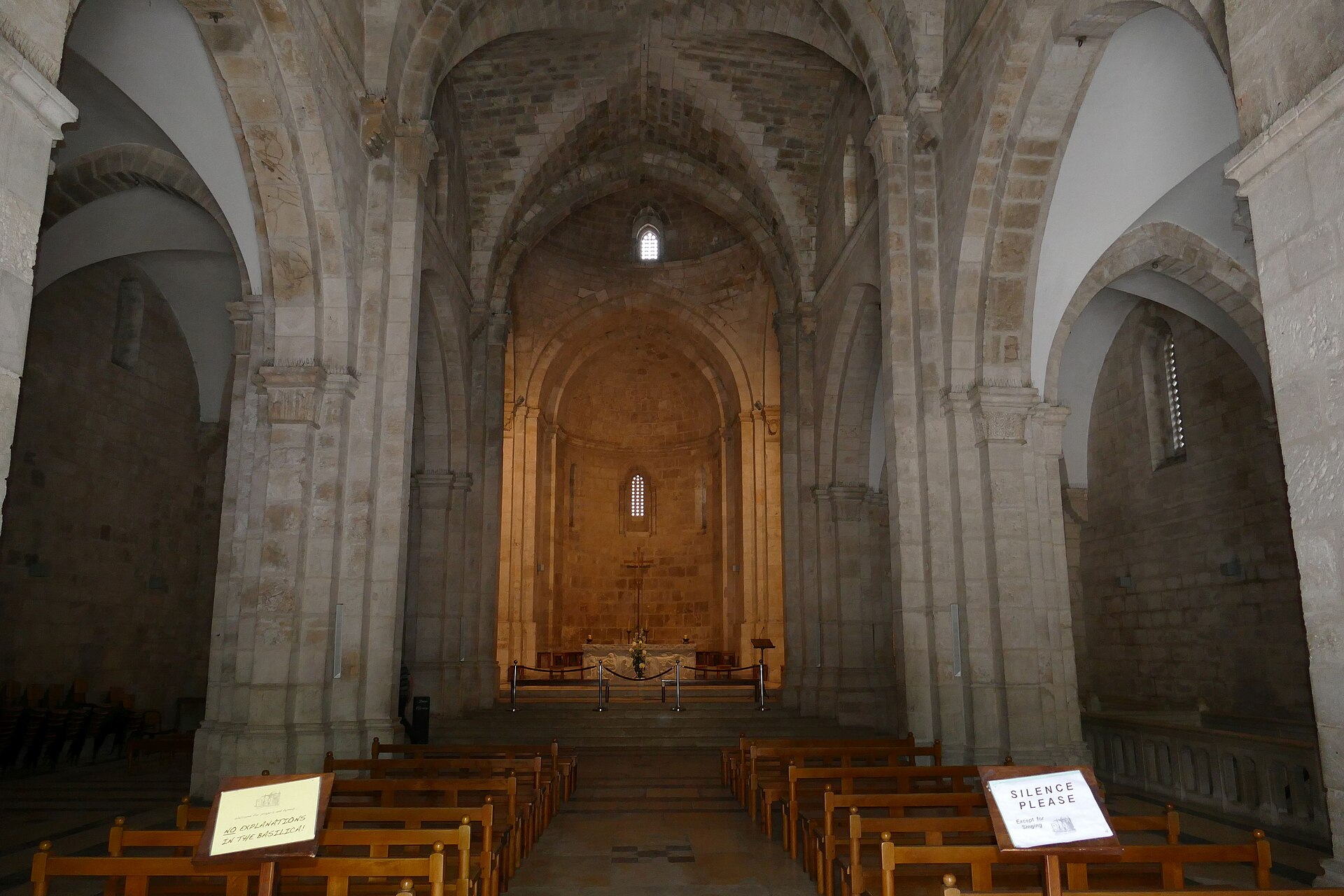
Just inside the Lions’ Gate stands the finest piece of Crusader architecture in the country. Built around 1138 over the traditional birthplace of Mary, St. Anne’s is a clean, three-aisled Romanesque basilica that survived because Saladin converted it to a school rather than demolishing it. Its austere stone interior is renowned for extraordinary acoustics, and pilgrim groups regularly stop to sing. A small admission fee applies, and the same compound holds the excavated Pool of Bethesda. It is generally open daytime hours with a midday break, and closed on Sundays.
Tower of David Citadel
The citadel by Jaffa Gate carries layers from the Hasmonean period onward, but the Crusaders greatly expanded and fortified it, and Latin kings used it as a royal residence. Inside, the Tower of David Museum tells the city’s whole story, and the ramparts give some of the best Old City views around. The evening sound-and-light show projected onto the ancient walls is a highlight. Expect an admission fee of roughly 40 to 60 shekels for the museum, with the night show ticketed separately; hours run daytime with the show after dark. Full details are in our Tower of David guide.
The Muristan and the Knights Hospitaller
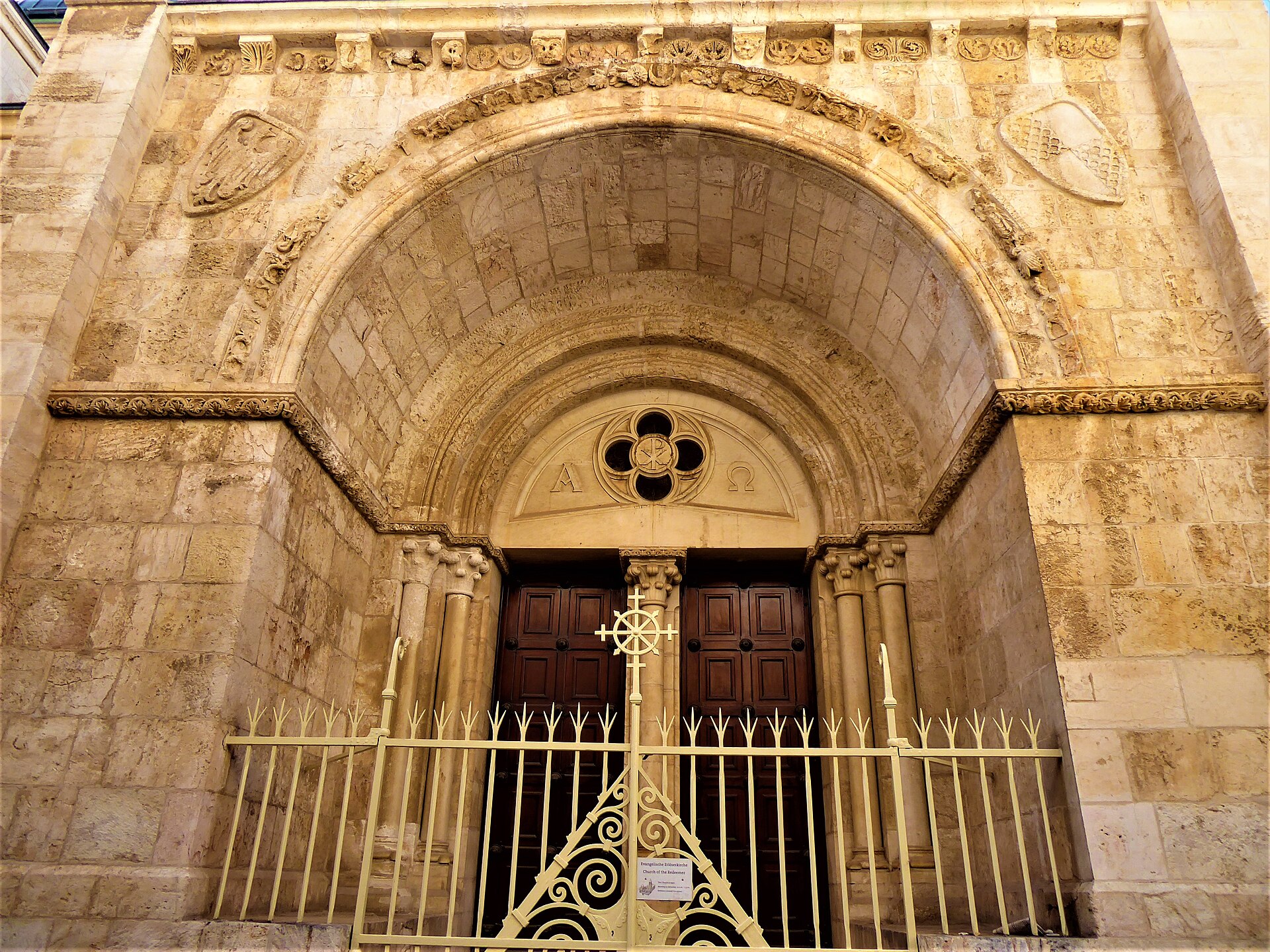
South of the Holy Sepulchre, the Muristan was the headquarters of the Knights Hospitaller, who ran a vast pilgrim hospital here. Today it is a market area threaded with original Crusader masonry, centered on the German Lutheran Church of the Redeemer, built on Crusader foundations in the 19th century. Climbing its bell tower (small fee) rewards you with a fine rooftop panorama over the Old City quarters.
How to recognize Crusader architecture
Once you know the cues, you start spotting Crusader work all over the Old City. Look for these features as you walk.
- Round, semicircular arches in the Romanesque manner, rather than the pointed arches of later Gothic.
- Large, neatly dressed ashlar stone blocks, often with a distinctive diagonal tooling on the surface.
- Curved apses at the east end of churches.
- Cross-vaulted (groin-vaulted) ceilings spanning bays of a building.
- Small windows and thick walls, reflecting the constant need for defense.
- Heavy fortifications with crenellations on towers and gates.
Walking Crusader-era streets
Some of the most atmospheric Crusader remains are underfoot. The Cardo, the colonnaded Roman-Byzantine main street, was revived by the Crusaders as a covered market, and a restored stretch in the Jewish Quarter shows medieval shopfronts. In the markets along David Street and Christian Quarter Road, many of the worn paving stones and vaulted ceilings date to the Crusader and earlier periods. It is worth slowing down and looking up at the stone vaults and down at the grooved paving rather than only at the merchandise. For a broader market wander, see our Old City market guide.

A self-guided Crusader walking tour
This route links the main Crusader sites in a logical loop and takes about three to four hours with stops. Wear comfortable shoes and dress modestly for the churches.
- Start at Jaffa Gate and tour the Tower of David citadel and museum for the Crusader fortifications and the citywide story.
- Walk the restored Cardo in the Jewish Quarter to see the medieval market street.
- Cross to the Muristan and climb the Church of the Redeemer tower for the view over the quarters.
- Enter the Church of the Holy Sepulchre, noting the Crusader southern facade and Romanesque interior.
- Continue to St. Anne’s Church near the Lions’ Gate, the best-preserved Crusader church, and the adjoining Pool of Bethesda.
- Finish along the eastern walls, where Crusader-era fortification underlies later Ottoman work.
If you would rather not navigate solo, guided Old City history walks cover this ground with context; our Jerusalem tours guide lists options. To weave the Crusader story into the full sweep of the city, the Ottoman Jerusalem guide picks up the later centuries of walls and gates.
Practical tips
| Site | Entry | Notes |
|---|---|---|
| Church of the Holy Sepulchre | Free | Modest dress; go early to avoid lines |
| St. Anne’s Church | Small fee (a few ILS) | Daytime with midday break; closed Sundays |
| Tower of David Museum | ~40-60 ILS | Night show ticketed separately |
| Church of the Redeemer tower | Small fee | Rooftop Old City views |
| Cardo and street remains | Free | Open access in the markets |
Prices and hours shift, so confirm before you go, and remember that the Old City markets quiet down considerably around Shabbat and on Sundays in the Christian Quarter. Cover shoulders and knees for the churches, and carry small change for the minor entry fees and the tower climbs. For getting to Jaffa Gate, the Light Rail Red Line stops nearby; see our transportation guide.
The military orders: Templars and Hospitallers
No account of Crusader Jerusalem is complete without the two great military-religious orders that grew up here. The Knights Hospitaller began as a brotherhood caring for sick pilgrims, headquartered in the Muristan, before evolving into a formidable fighting force; their hospital is said to have tended thousands at a time. The Knights Templar took their name from their base on the Temple Mount, in and around the Al-Aqsa compound, which the Crusaders called the Temple of Solomon. Both orders combined monastic vows with military discipline, built castles across the Latin Kingdom, and became immensely wealthy and influential.
While you cannot freely tour the Templars’ former quarters on the Temple Mount, understanding who these knights were adds depth to the stones you do see. The Hospitaller legacy is most tangible in the Muristan, and the orders’ wider story echoes through the fortifications and churches of the period. For the religious geography that underlay all of this, our holy sites guide maps the sacred places the Crusaders fought to control.
Crusader traces beyond the walls
The Crusader footprint extends past the Old City. On the western approach to Jerusalem, the village of Abu Ghosh preserves one of the region’s best-kept Crusader churches, a sturdy 12th-century building set in tranquil gardens, often paired with a meal at the village’s well-known hummus restaurants. Out in the surrounding hills and along the coast, Crusader castles and fortified churches mark the routes the knights once held. These make natural add-ons for travelers keen on the medieval period and can be folded into a wider day out; see our day trips guide for ideas.
Closer to home, the layered nature of Jerusalem means Crusader work rarely stands alone. A single wall might show Herodian foundations, a Crusader arch, and an Ottoman repair, all in one span. That stratification is part of what makes hunting for Crusader features so satisfying, and it is why even a short, attentive walk turns up more than you would expect.
Where to pause nearby
The Crusader route runs through the heart of the Old City, so refreshment is never far. The cafes and juice stands around the Muristan and along Christian Quarter Road are handy mid-walk stops, and the rooftops near the Lutheran Church of the Redeemer offer a calm spot to take in the view. For a fuller sit-down meal, the eateries near Jaffa Gate and in the Christian Quarter cater to visitors, and our Old City guide points to the quieter corners. Time your walk to finish before the markets wind down in the late afternoon, and you can linger over coffee without feeling rushed.
Two of the finest pieces of Crusader carving from the city, the twelfth-century lintels from the facade of the Church of the Holy Sepulchre, were taken down for safekeeping under the British Mandate and placed in what is now the Rockefeller Museum, just outside Herod’s Gate. The museum has been closed to walk-in visitors since 2023; our guide explains how its occasional tours have worked.
The story did not end when Jerusalem fell in 1187. The Crusader kingdom governed from Akko for another century, and its halls and tunnels survive beneath the Ottoman town; our guide to Caesarea, Haifa and Akko from Jerusalem explains how to see them, along with Louis IX’s walls at Caesarea.
Photo Credits
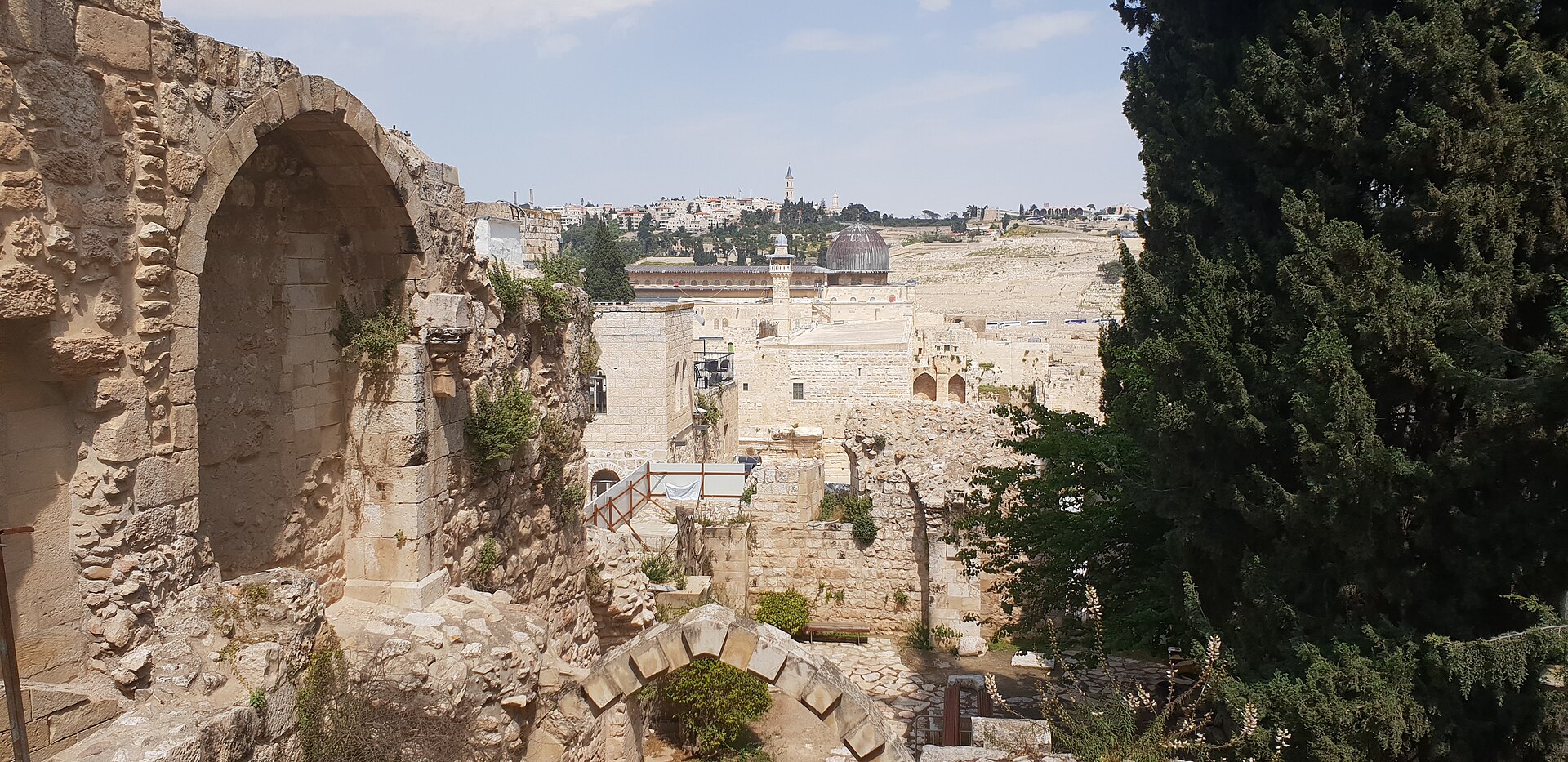
The ruins of the Crusader church of St Mary of the Germans, with the Temple Mount and Mount of Olives beyond: Jerusalem – Ancient remains 20190427 133041 (49110753526) by TimeTravelRome, CC BY 2.0, via Wikimedia Commons.
The Romanesque north portal of the Lutheran Church of the Redeemer, from the medieval church of St Mary of the Latins: Romanesque north portal, Lutheran Church of the Redeemer (02) by Chris06, CC BY-SA 4.0, via Wikimedia Commons.
The Crusader nave of the Church of St Anne near Lions’ Gate: Jerusalem-Church-of-St-Anne-DZCA-1172 by Bukvoed, CC BY 4.0, via Wikimedia Commons.