Bargaining in Jerusalem markets is part of the fun once you know the rules, and the single most important rule is knowing where it applies. In the Old City’s Arab souk, haggling is expected and a fixed first price is rare; in Mamilla Mall, Mahane Yehuda Market, and modern city-center shops, prices are set and bargaining is not the custom. The style that works is friendly and unhurried, not aggressive: you open with a counter-offer well below the asking price, trade a few rounds, and either settle somewhere in the middle or walk away with a smile. This guide is your playbook, covering where to bargain and where not to, how much to offer, the etiquette, common pitfalls, and a few useful phrases.
Get the where-and-how right and shopping the souk goes from intimidating to genuinely enjoyable. Use this with our Old City market guide and the Jerusalem souvenirs guide for what to actually buy.
Where Bargaining Is Expected, and Where It Is Not
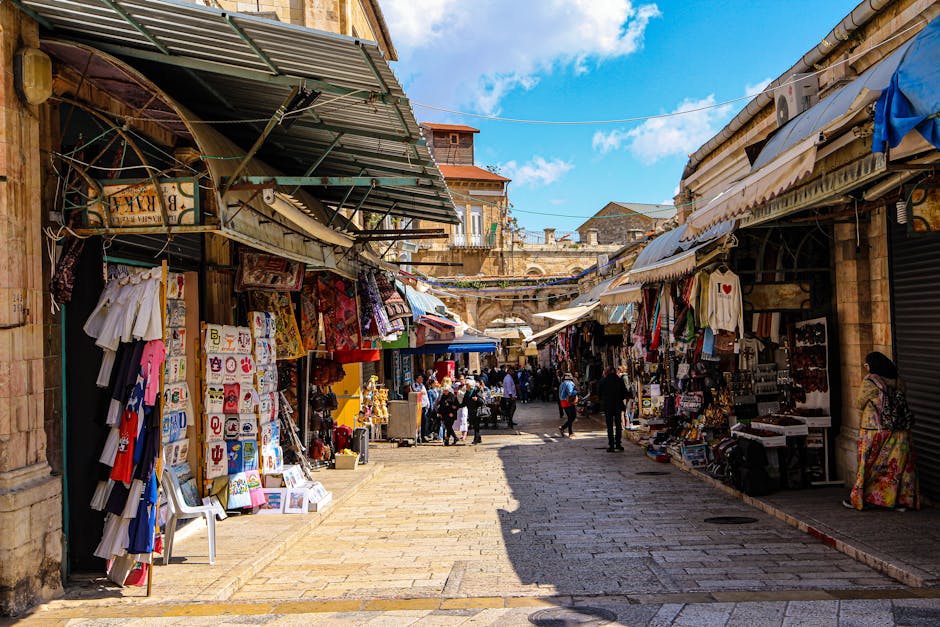
The clearest way to avoid an awkward misstep is to learn the map of where haggling fits. The Old City souk and similar traditional markets run on negotiation; the modern retail world does not.
| Place | Bargain? |
|---|---|
| Old City Arab souk / Muslim Quarter shops | Yes, always expected |
| Christian Quarter souvenir shops | Yes, moderate |
| Armenian Quarter ceramic studios | Limited; largely fixed |
| Jewish Quarter shops | Mostly fixed |
| Bethlehem markets | Yes, expected |
| Mahane Yehuda Market | No, fixed prices |
| Mamilla Mall and modern shops | No, fixed prices |
| Restaurants and cafes | No |
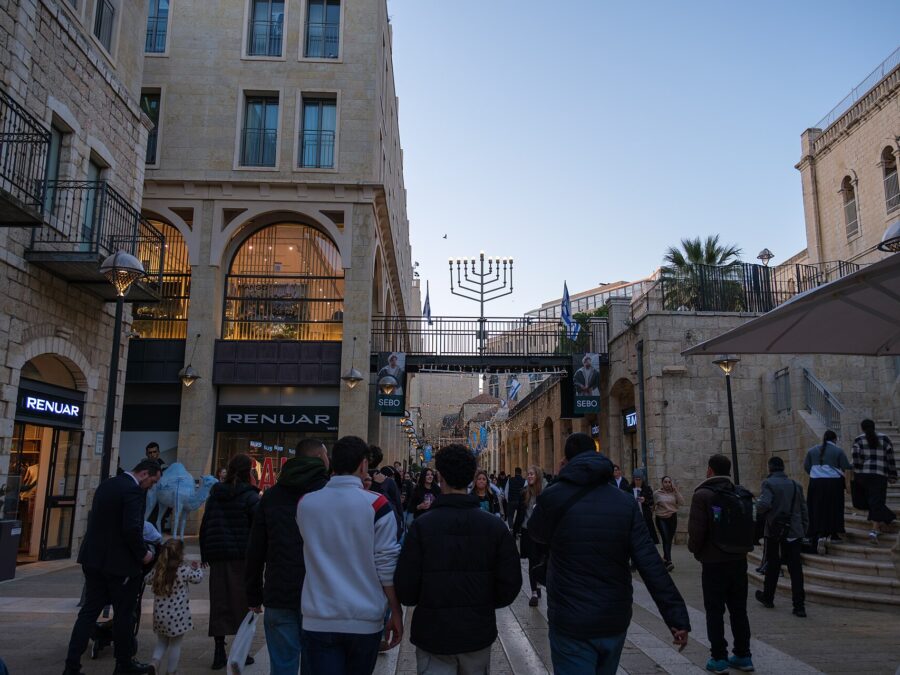
Trying to haggle at a fixed-price shop or a market food stall reads as out of place, while paying the first asking price in the souk simply means overpaying. When in doubt, a quick “is this your best price?” tells you instantly which world you are in. For the modern, no-bargain end of the spectrum, see our Mamilla Mall guide.
The Core Rules
A handful of principles cover almost every souk negotiation. None of them require toughness; they reward patience and good humor more than anything else.
Start low, but not insultingly low
Decide your maximum price before you say a word, then open with a counter-offer around 40 to 50 percent of the asking price. Going far below that, under roughly 30 percent, can come across as dismissive and sour the mood. From there you each move toward the other, and many deals settle somewhere around 60 to 70 percent of the original ask. The first price you are quoted is rarely the real one, especially if you have been pegged as a visitor.
Keep it friendly
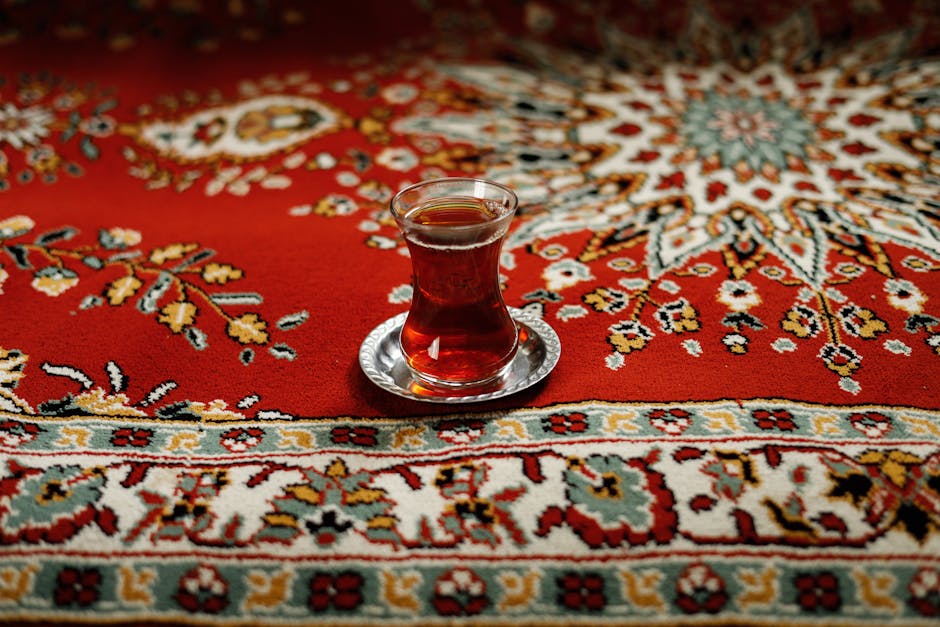
Bargaining here is a social exchange, closer to a game than a fight. Smile, make a little conversation, and show genuine appreciation for the goods; praising the craftsmanship gets you further than criticizing it. If a vendor offers mint tea or coffee, accepting is gracious and helps build rapport, and it does not commit you to buying anything. Never disparage the quality of what you are negotiating for, which undercuts the respect the whole interaction depends on.
Be ready to walk away
The willingness to leave is your strongest card. If the price will not come down to where you want it, thank the vendor and start to go; very often you will be called back with a better number. If you are not, you can always return later, and there is usually a similar item a few stalls along. The key is that the walk-away has to be real, not a bluff, or it loses its power.
Pay in cash
Cash gives you leverage and usually a better price, since card payments may carry a fee the vendor would rather avoid, and physical money you are holding out is persuasive. Carry small bills and coins so you can pay the agreed amount exactly and make change easy.
How a Negotiation Unfolds
A typical exchange follows a familiar rhythm. You browse without showing too much eagerness, then pick up the piece you want, which brings the vendor over. They name a price, usually on the high side. You counter at roughly 40 to 50 percent, and the two of you trade offers back and forth, often through several rounds, sometimes over a glass of tea. You either meet in the 60-to-70-percent range or, if it stalls above your maximum, you politely begin to leave. The pace is deliberately unhurried, so do not rush it; the conversation is part of the price, and treating it as a pleasant ritual rather than a transaction tends to get you the best result.
Cultural Etiquette
A little courtesy goes a long way and often improves your price. Greet the vendor warmly before getting down to business, a simple “salaam alaikum” in the Arab markets or “shalom” in Jewish areas lands well. Accepting an offer of tea is a kindness that builds goodwill without obligating a purchase, and refusing brusquely can come across as cold. Compliment the goods rather than only haggling over the number, stay patient and good-natured even when pressing hard, and keep the conversation away from religion and politics, which have no place in a friendly market exchange. Receiving an item with both hands is a small, respectful gesture that is noticed.
Common Pitfalls to Watch For
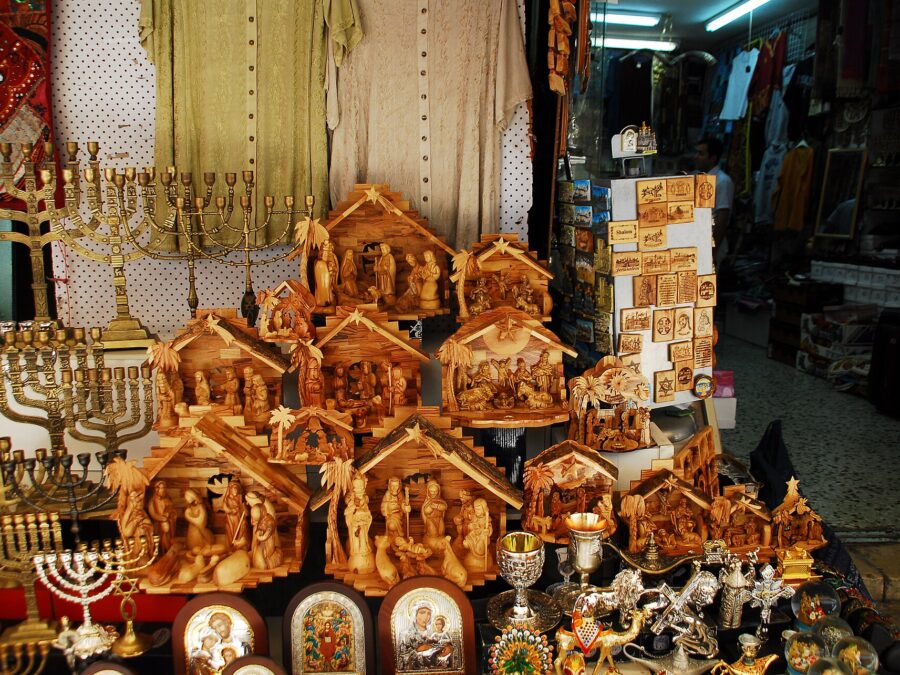
Most vendors are honest, but a few claims warrant skepticism, and a calm awareness protects you. Treat “this is solid silver” with caution, since cheaper metals are common, a small magnet can be a quick rough test for some metals. “Genuine olive wood” that is suspiciously pale and cheap may be a stained lesser timber, so check for the dense, swirling grain. Anything described as an “antique” or “antiquity” from a market table is almost certainly a modern reproduction, and genuine antiquities cannot legally leave the country without an official export license. Be alert to a “special price just for you” that is actually inflated, and to a “free gift” that is meant to nudge you into a bigger purchase. As in any crowded market, keep your bag zipped and in front of you, and check restaurant menu prices before you order rather than after.
What to Bargain For, and Typical Discounts
Bargaining suits some purchases far more than others. Souvenirs, trinkets, textiles, embroidery, olive wood, and general ceramics in the souk are all fair game, as are religious items at souvenir stalls. Spices have thinner margins, so expect less movement, and at fixed-price craft studios and food stalls there is little or no room. The ranges below are rough guides to how far a price typically falls from the first ask, not guarantees.
| Item | Typical discount off asking |
|---|---|
| Souvenirs and trinkets | 30–50% |
| Textiles and embroidery | 30–40% |
| Olive wood | 20–30% |
| Ceramics (souk stalls) | 20–30% |
| Spices | Small, if any |
| Multiple items bundled | Often the best deal |
Two timing factors help: vendors are often more flexible late in the day when they would rather make a sale than pack up, and the quieter winter off-season can bring softer prices than the spring and autumn peaks. Buying several things from one stall is usually your strongest lever for a better per-item price. For authenticity checks on specific crafts, see our guides to olive wood and Armenian ceramics.
Tactics That Actually Work
Beyond the core rules, a few practical moves reliably nudge the price down. The walk-away remains the most effective by far. Holding out the actual cash you are willing to pay is surprisingly persuasive. A breezy “maybe later” while you browse other shops gives you room to compare and signals you are in no hurry. Bundling several items into one deal almost always beats negotiating them separately. Mentioning a lower price you saw at another stall can work if it is plausible, and politely pointing out a genuine small flaw can justify a discount. Late afternoon, when vendors are keener to close a sale, is a good time to press. None of these are tricks so much as gentle leverage applied with a smile.
A Few Useful Phrases
You do not need the language to bargain, since English is widely understood and numbers can be typed into a phone or calculator, but a couple of words break the ice. In Arabic, “kam hada?” means roughly “how much is this?” and “ghali kteer” means “very expensive.” In Hebrew, “kama ze ole?” is “how much is this?” and “yakar midai” is “too expensive.” These transliterations are approximate, and the effort matters more than the accuracy; a friendly attempt usually earns a smile and sometimes a better price. Learning to recognize a few numbers in each language helps you follow the back-and-forth.
A Sample Exchange
To see how it fits together, imagine a hand-embroidered cushion cover you like. The vendor quotes 280 shekels. You admire the work, ask if that is the best price, and counter at around 130. They look pained, come down to 240, and offer tea. You accept, chat a little, and move to 160. After a couple more rounds you are at their 200 and your 175. You mention you also like a small scarf; bundling the two, you settle the pair at a price that works out well per item, pay in cash with small bills, and leave on warm terms. The whole thing took ten minutes, cost you nothing in stress, and got you a fair deal because you stayed friendly and were ready to walk.
When Not to Bargain
Knowing when to stop is as important as knowing how to start. Do not haggle in fixed-price environments: Mamilla Mall and modern boutiques, supermarkets, and Mahane Yehuda Market, where prices are set and marked. Established Armenian ceramic studios and many Jewish Quarter craft shops price fairly and are not really negotiable. Restaurants and cafes are off the table entirely. For very small purchases, under about 50 shekels, the time and goodwill spent often outweigh the few shekels at stake, so it is usually kinder and easier to simply pay. And at official religious sites, items and candles are typically offered for a set price or a donation, not bargained. Reading the setting and respecting these lines marks you as a considerate visitor.
Haggling goes better with shekels in hand: dollar prices in the souk are set at the shopkeeper’s own rate. Our guide to money in Israel explains where cash still matters, how to get it cheaply and what to tip.
Bargain With a Smile
Bargaining in Jerusalem markets is friendly social commerce, not a battle. Bargain where it belongs and pay the marked price where it does not, start low, stay good-humored, keep cash handy, and be ready to walk away. The best deals come from rapport as much as resolve. Continue with our Old City market guide, the souvenirs guide, our complete guide to shopping in Jerusalem, and the Muslim Quarter guide for the heart of the souk.
Photo Credits
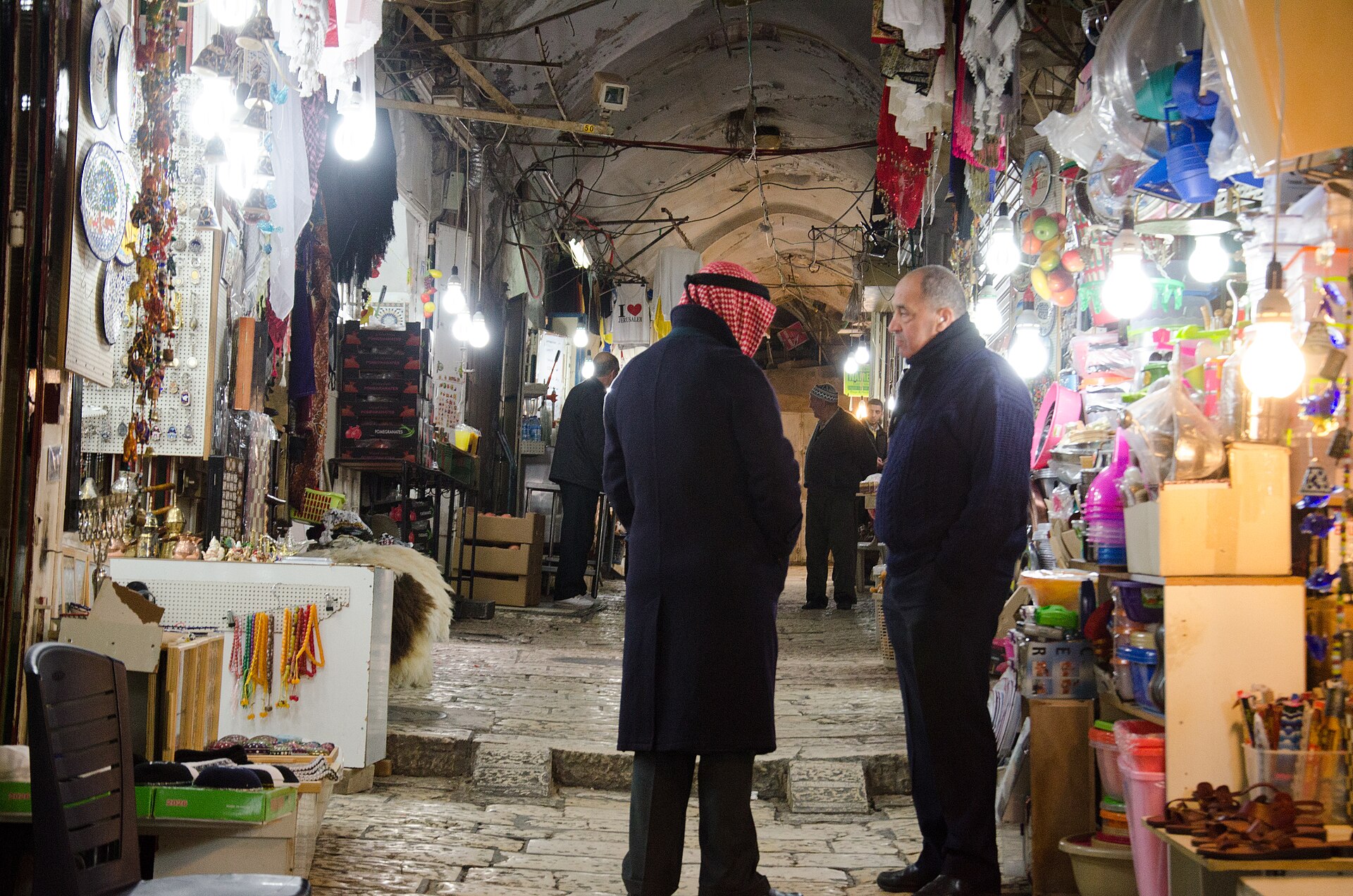
Talking outside the shops of a covered Old City souk: DSC-0032-jerusalem-old-city-market by Rakoon, CC0, via Wikimedia Commons.