The Jerusalem most visitors picture, that golden ring of crenellated walls pierced by grand stone gates, is largely an Ottoman creation. For four centuries, from the conquest of 1517 to the British arrival in 1917, the city was a provincial town of the Ottoman Empire, and the empire left its mark on almost everything inside the walls: the gates you enter through, the covered markets you shop in, the public fountains, and the blue-tiled crown of the Dome of the Rock. This guide to Ottoman Jerusalem history traces those four hundred years, shows you what survives, and lays out a walking route to see the best of it.
The period is long and layered, so this guide focuses on what you can actually visit and understand on the ground, told plainly and without taking sides. For the wider context, pair it with our Jerusalem history overview and our guide to the Old City gates.
Four centuries of Ottoman rule
The Ottomans took Jerusalem in 1517 when Sultan Selim I defeated the Mamluks. The city’s golden age followed under his son, Suleiman the Magnificent, who reigned from 1520 to 1566 and poured resources into Jerusalem despite its modest size and distance from the imperial centers. After Suleiman, Jerusalem settled into centuries as a quiet, predominantly religious town, its fortunes rising and falling with the wider empire, before reforms and European interest reshaped it again in the 19th century. Ottoman rule ended in December 1917, when British forces under General Allenby entered the city during the First World War.
Throughout this span the city was religiously mixed. Under the Ottoman millet system, Muslim, Christian, and Jewish communities managed their own religious and civil affairs, and Jerusalem drew pilgrims from across Europe, Russia, North Africa, and the wider Islamic world. That diversity is part of why the Old City’s quarters took the shape they still hold today.
Suleiman’s walls
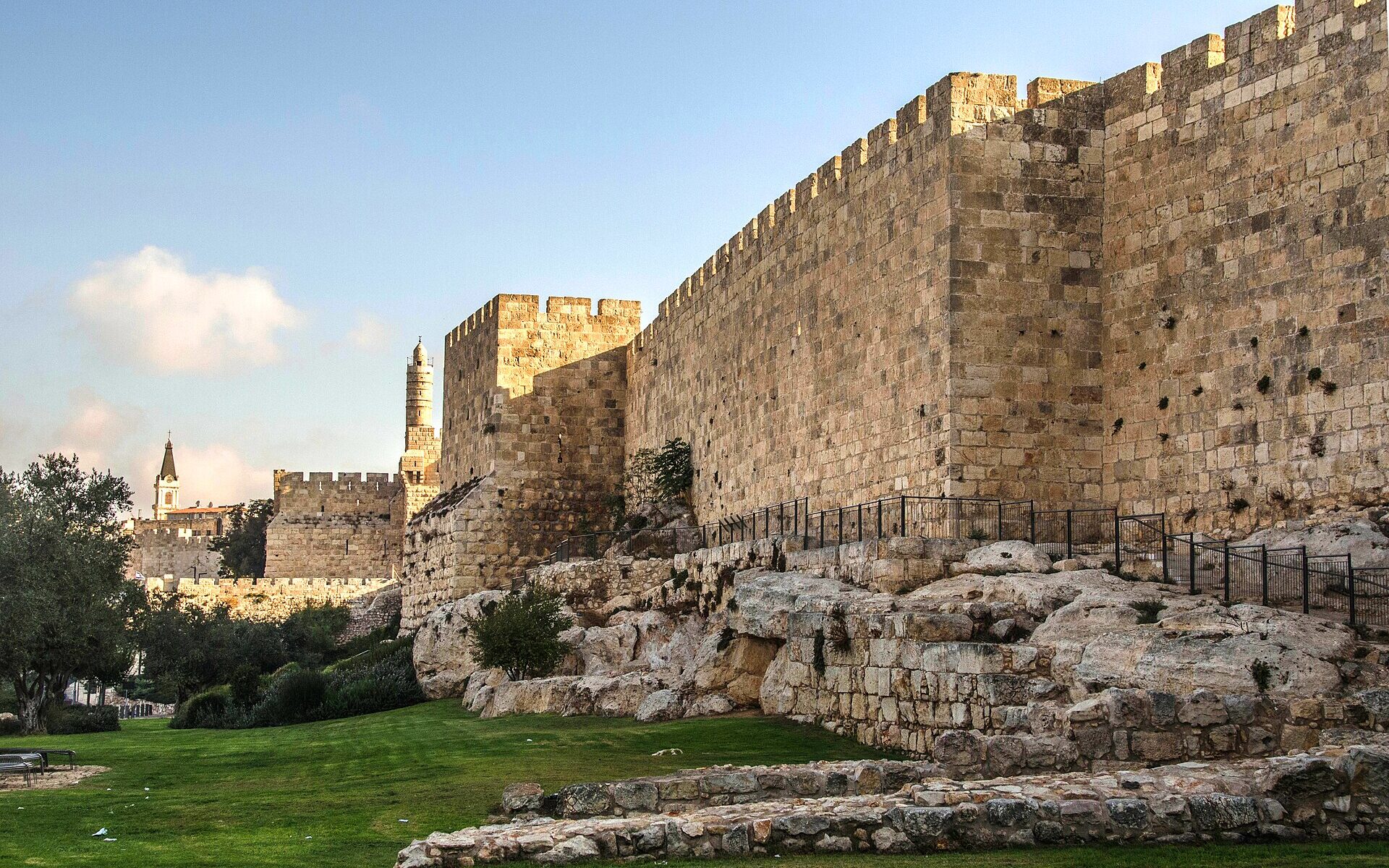
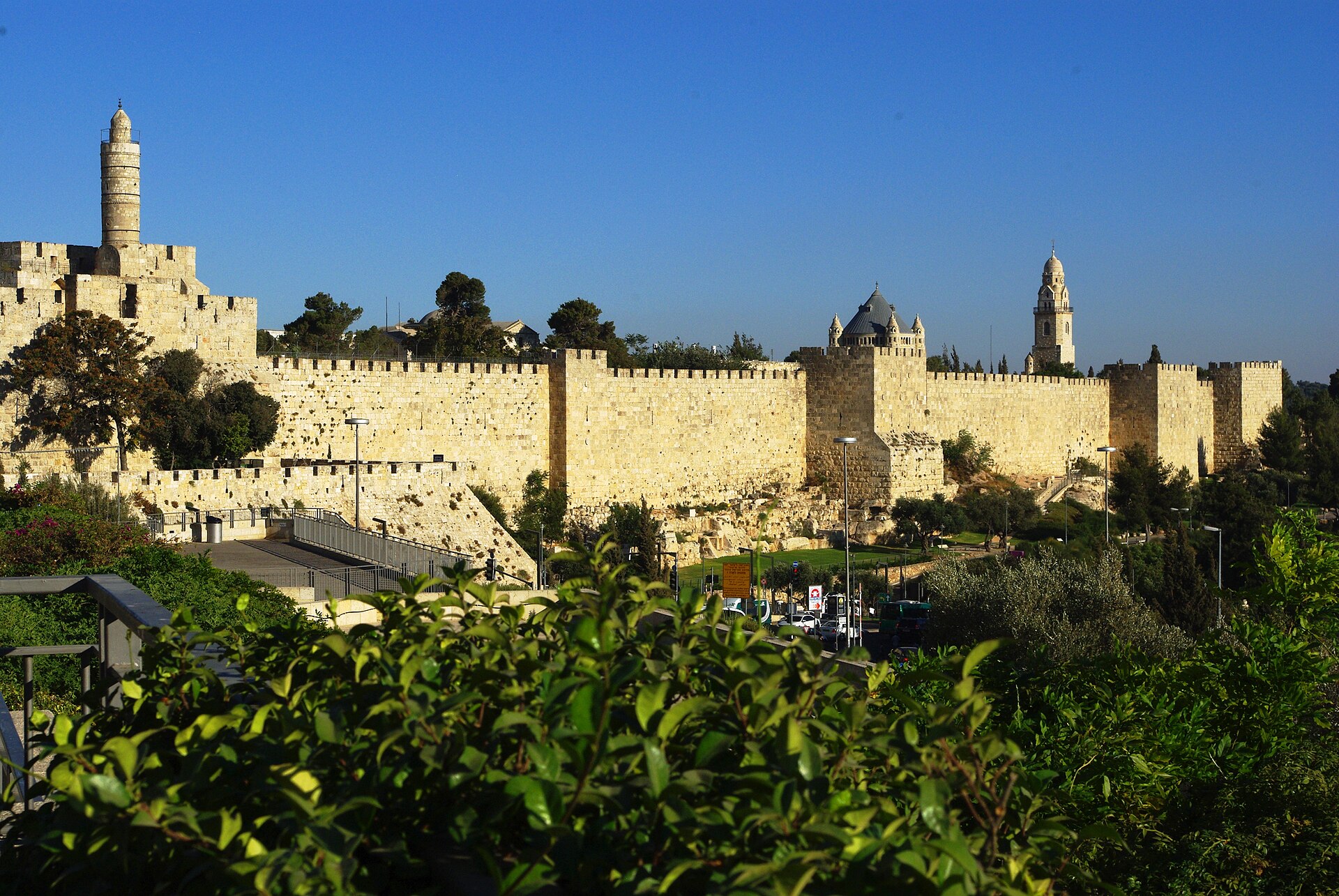
The single most visible Ottoman legacy is the city wall. Between roughly 1535 and 1541, Suleiman had the present walls built atop Crusader and earlier foundations, enclosing the Old City in a circuit of about four kilometers, averaging some twelve meters high. These ramparts define what the world pictures as old Jerusalem, and you can walk much of their length on the Ramparts Walk, looking down into the quarters and out across the modern city. Our Old City walls walk guide covers the route, tickets, and the two separate sections.
The gates
Most of the Old City’s gates date to Suleiman’s building program, each with an Arabic name reflecting its direction or destination. They remain the working entrances to the Old City today.
- Damascus Gate (Bab al-Amud): the grandest, completed in 1537, leading into the Muslim Quarter markets.
- Jaffa Gate (Bab al-Khalil): the main western entrance, near the Tower of David.
- Lions’ Gate (Bab al-Asbat): on the east, named for the carved felines flanking it, opening toward the Via Dolorosa.
- Zion Gate (Bab an-Nabi Daoud): on the south, toward Mount Zion, its stones still pocked from 1948 fighting.
- Dung Gate (Bab al-Maghariba): the closest gate to the Western Wall and the City of David.
- Herod’s Gate (Bab az-Zahra): on the north, into the Muslim Quarter.
- New Gate (Bab al-Jadid): the youngest, cut in 1889 to ease access to the Christian Quarter.
- Golden Gate (Bab adh-Dhahabi): facing the Mount of Olives and sealed for centuries.
Damascus Gate up close
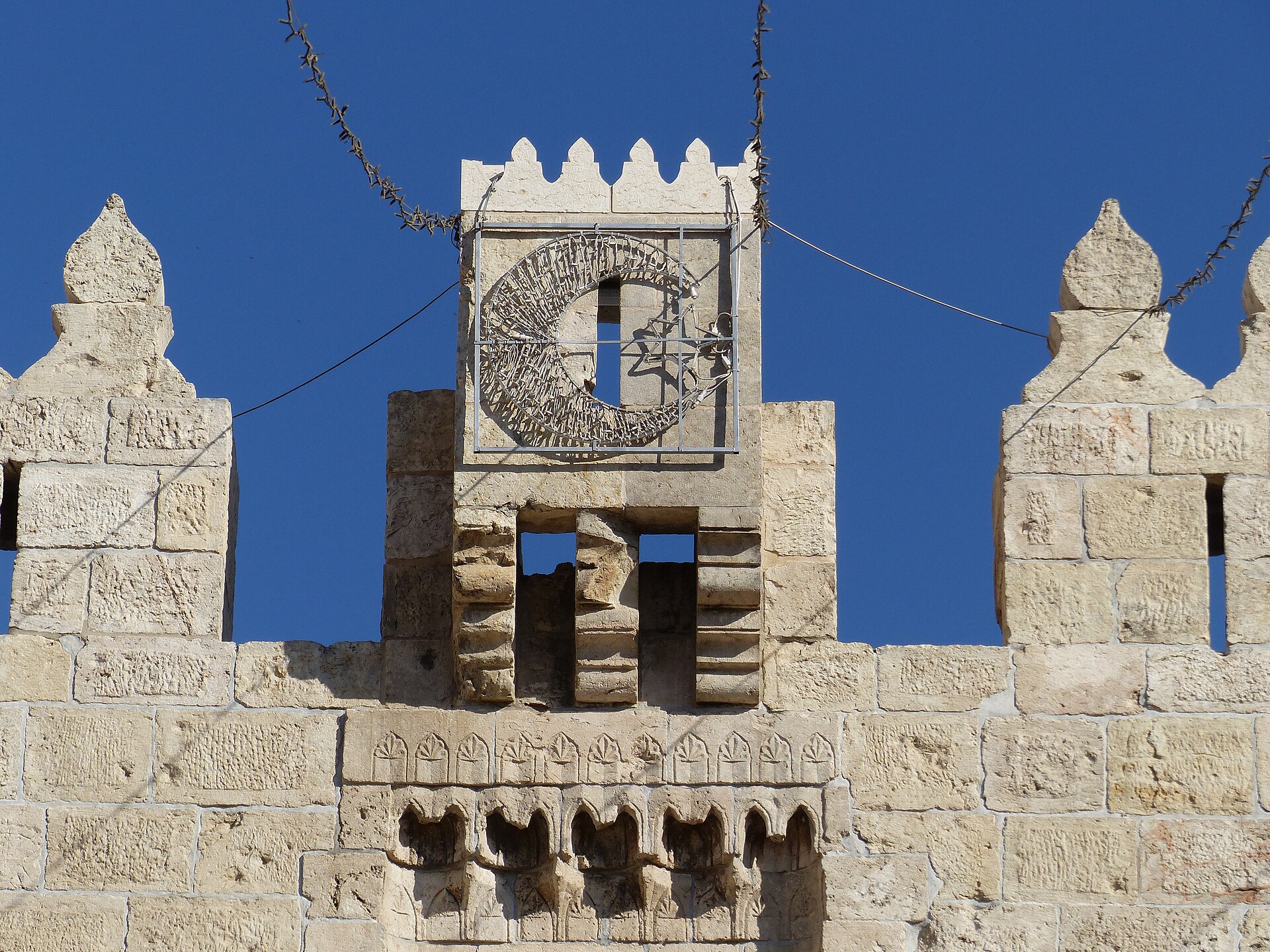
Of all the gates, Damascus Gate is the most richly decorated, with a defensive L-shaped passage, crenellations, and carved stonework that repays a slow look. Below the modern threshold, excavations have exposed the Roman-era gate and plaza, which you can view. The forecourt today is one of the liveliest gathering spots in the city, spilling into the market streets beyond.
Water, fountains, and the Dome of the Rock
Suleiman’s administration also overhauled the city’s water supply, repairing aqueducts and building public drinking fountains known as sabils, often endowed by wealthy patrons as acts of charity. Several survive along the approaches to the Temple Mount, with their carved marble, calligraphic inscriptions, and small domes. The large reservoir below the Yemin Moshe neighborhood, the Sultan’s Pool (Birkat al-Sultan), dates to this era and now hosts open-air concerts.
Perhaps the most photographed Ottoman contribution is invisible as such to most visitors: the brilliant exterior tiling of the Dome of the Rock. The shimmering blue Iznik tiles and Quranic inscriptions that wrap the shrine were added during a major 16th-century restoration under Suleiman, replacing earlier mosaics. The golden dome itself has been re-covered in modern times, but the Ottoman tilework defines the building’s look today. Non-Muslims cannot enter the shrine and may visit the Temple Mount only during restricted hours; see our Dome of the Rock guide for the rules.
Recognizing Ottoman architecture
Once attuned, you will spot Ottoman features throughout the Old City. Watch for these elements as you wander.
- Mashrabiya: intricately carved wooden lattice window screens projecting over the streets.
- Domes and Iznik tilework: coloured ceramic tiles on important buildings.
- Calligraphic inscriptions: Quranic verses and dedications carved above doorways.
- Khans (caravanserais): merchants’ inns built around a central courtyard.
- Sabils and cisterns: public fountains and the vast underground water stores that fed them.
Ottoman markets and mosques
Much of the Old City’s market fabric is Ottoman or earlier in origin and still in daily use. The beautiful covered Cotton Merchants’ Market (Souk al-Qattanin), the spice market (Souk al-Attarin), and the long, vaulted Khan al-Zeit are atmospheric places to feel the continuity of trade. Small mosques with their slender minarets punctuate the Muslim Quarter, including the Mosque of Omar near the Holy Sepulchre and the mosque inside the Tower of David citadel. To explore the markets in depth, our Old City market guide and our spice market guide point the way.

Daily life and the late Ottoman city
For much of the Ottoman period Jerusalem was a small town of perhaps ten thousand people, growing toward forty thousand by 1900. Arabic, Turkish, Ladino, and Yiddish were heard in its lanes, and its economy leaned heavily on pilgrimage. The 19th century changed everything. The empire-wide Tanzimat reforms opened the city, European powers established consulates, churches, schools, and hospitals, and the population grew and diversified.
The pressure of growth pushed the city beyond its walls for the first time. The almshouses of Mishkenot Sha’ananim, built in 1860 across the valley from Jaffa Gate, are usually cited as the first Jewish neighborhood outside the Old City, and the windmill above them is a local landmark. The Jaffa-Jerusalem railway opened in 1892, telegraph and postal services arrived, and the modern city we know began to take shape, all still under Ottoman administration until 1917.
A self-guided Ottoman walking tour
This loop strings together the best Ottoman sights and takes about three to four hours with stops. Comfortable shoes and modest dress for religious areas are a good idea.
- Begin at Damascus Gate, the Ottoman masterpiece, and look at the Roman remains below.
- Follow the market streets to a sabil or two on the approaches to the Temple Mount.
- Detour into the Cotton Merchants’ Market, the finest covered Ottoman bazaar.
- Walk to the Tower of David, noting the Ottoman fortifications and the citadel mosque.
- Exit at Jaffa Gate, then join the Ramparts Walk along Suleiman’s walls.
- Finish above Yemin Moshe, looking down on the Sultan’s Pool and the first neighborhoods outside the walls.
Guided history walks cover this ground with extra context; our Jerusalem tours guide lists options, and the Crusader Jerusalem guide covers the era just before. For getting to Damascus or Jaffa Gate, the Light Rail Red Line is the easy choice; see our transportation guide. Note that the markets quiet sharply around Shabbat and on Fridays during midday prayers.
The quarters under Ottoman rule
The familiar division of the Old City into Muslim, Christian, Jewish, and Armenian quarters hardened during the Ottoman centuries, shaped by where communities clustered around their holy places and institutions. The Muslim Quarter, the largest, spread across the north and east near the Temple Mount; the Christian Quarter grew around the Holy Sepulchre in the northwest; the Armenian Quarter held its compact southwest corner around St. James; and the Jewish Quarter occupied the south, close to the Western Wall. The Ottomans generally allowed each community to maintain its own religious courts and schools, and the result is the mosaic you still walk through. Our guides to the Muslim Quarter and the Jewish Quarter trace how each developed.
This communal patchwork is not just historical trivia. It explains why the markets, the rhythms of prayer, and even the opening days of shops differ from lane to lane. A street in the Christian Quarter may be quietest on Sunday, while the Muslim Quarter markets thin during Friday midday prayers and the Jewish Quarter all but closes for Shabbat. Reading the city through its Ottoman-era communities helps make sense of these patterns.
Practical tips for an Ottoman-themed visit
| Detail | What to know |
|---|---|
| City gates and walls | Free to pass through; the Ramparts Walk is ticketed (a modest fee) |
| Covered markets | Free to wander; liveliest on weekday mornings |
| Dome of the Rock tilework | View from the Temple Mount during limited non-Muslim hours; no entry to the shrine |
| Sabils and small mosques | Seen from the street; respect prayer times and private areas |
| Best light for photos | Damascus Gate and the walls glow in late-afternoon sun |
Allow a relaxed half-day, wear comfortable shoes for the uneven stone, and carry water and a little cash for the Ramparts Walk ticket and market snacks. As with the rest of the Old City, plan around Shabbat: many Jewish-Quarter businesses close from Friday afternoon, and the overall atmosphere shifts noticeably over the weekend. If you want to understand how the Ottoman city connects to everything that came before and after, the broad sweep is laid out in our Jerusalem history guide, while the archaeology museums guide points you to collections that fill in the detail indoors.
Why the Ottoman layer still defines the city
Empires before and after the Ottomans built grandly in Jerusalem, yet it is the Ottoman skin that has lasted most intact at street level. The reason is partly timing: the walls, gates, and markets went up late enough to survive into the modern era, and partly philosophy, since Ottoman rule tended to maintain and repair the existing fabric rather than sweep it away. When you stand inside Jaffa Gate or look up at Damascus Gate’s carved crenellations, you are looking at the last great pre-modern building campaign the Old City received. Everything since, from British Mandate civic buildings to today’s conservation work, has largely framed and preserved that Ottoman shell rather than replaced it, which is exactly why a walk through the walled city still feels, in its bones, like a four-hundred-year-old Ottoman town.
Photo Credits
The Ottoman city wall south of the Tower of David: חומת העיר העתיקה, ירושלים by Pninama, CC BY-SA 3.0, via Wikimedia Commons.
The Old City walls from the Tower of David to Mount Zion: Murailles de la Vieille ville by Olevy, CC BY-SA 4.0, via Wikimedia Commons.
The crowning turret and merlons above Damascus Gate: Puerta de Damasco, Jerusalén, 2017 01 by Benjamín Núñez González, CC BY-SA 4.0, via Wikimedia Commons.