The Jerusalem Light Festival turns the Old City into a free open-air gallery of light for about a week each June. Artists from Israel and around the world install projection mapping on the ancient walls, interactive sculptures in the squares, and glowing works strung through the narrow lanes, and several marked routes guide you between them after dark. It draws around 250,000 visitors over its run and is one of the most rewarding evenings you can have in the city. This guide covers the 2026 timing, the walking routes, what the installations are like, photography, crowds and how to fit the festival into a wider trip.
For the full events picture, pair this with our Jerusalem festivals calendar and the Jerusalem at night guide. Exact dates are confirmed by the organizers a few months ahead, so verify before you lock in travel.
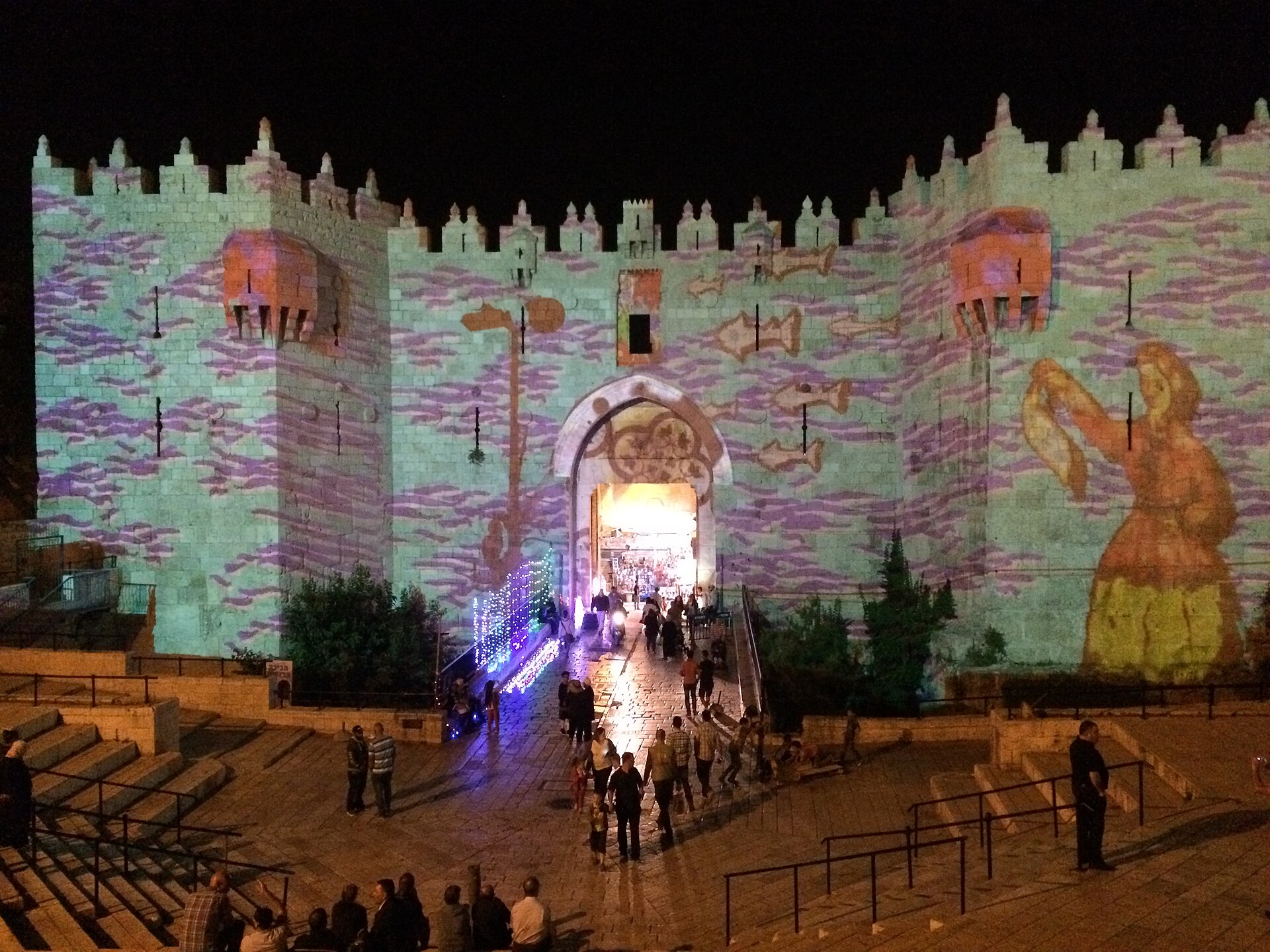
What the Jerusalem Light Festival Is
Now a fixture of the early-summer calendar, the festival began in 2009 and has grown into one of the largest events of its kind. For roughly a week, the walls, gates, churches and plazas of the Old City become surfaces for light art. The appeal is the contrast: thousand-year-old stone draped in contemporary projection and color, with the crowds moving slowly through alleys they might otherwise rush past. It is genuinely all-ages, free to attend, and unlike almost anything else the city offers.
| Detail | Information |
|---|---|
| When (2026) | First half of June, about a week of consecutive nights |
| Hours | From around 8pm, typically until about 11pm |
| Friday nights | Generally no festival activity (Shabbat) |
| Where | Throughout the Old City of Jerusalem |
| Cost | Free |
| Routes | Four marked walking routes |
| Maps | Distributed at Jaffa Gate and posted online |
| Visitors | Around 250,000 over the festival |
Because it runs during the warm, dry early summer with long evenings, it is comfortable to be out late, though the Old City’s stone lanes still cool down once the sun is gone. For how the festival sits within the season, see our best time to visit Jerusalem guide.
The Walking Routes
The festival is organized as several color-coded routes, each threading through a different part of the Old City and clearly signposted on the ground. You pick up a map at Jaffa Gate and follow the arrows. Most routes take roughly half an hour to under an hour at a relaxed pace, and many visitors combine two in an evening. The exact routes and their themes change year to year, but they typically break down along the Old City’s quarters as below.
Through the Christian Quarter
A route winding past churches and the lanes around the Church of the Holy Sepulchre, where projections on religious architecture give a contemplative, atmospheric mood. Plan around 30 to 40 minutes.
Through the Jewish Quarter
Often home to the biggest set-piece installations, this route runs through the restored Cardo, Hurva Square and toward the Western Wall plaza, where open spaces allow large-scale works and projection on historic stone. Allow 40 to 50 minutes.
Through the Muslim Quarter
Usually the most colorful and lively route, taking in the area around Damascus Gate and the market streets, with bold, playful installations strung above the lanes. Around 30 to 40 minutes.
Through the Armenian Quarter and Tower of David
The quietest and most intimate route, passing Armenian sites and the citadel. The Tower of David is frequently a centerpiece for projection mapping and sometimes runs its own night show in parallel. Roughly 25 to 35 minutes.
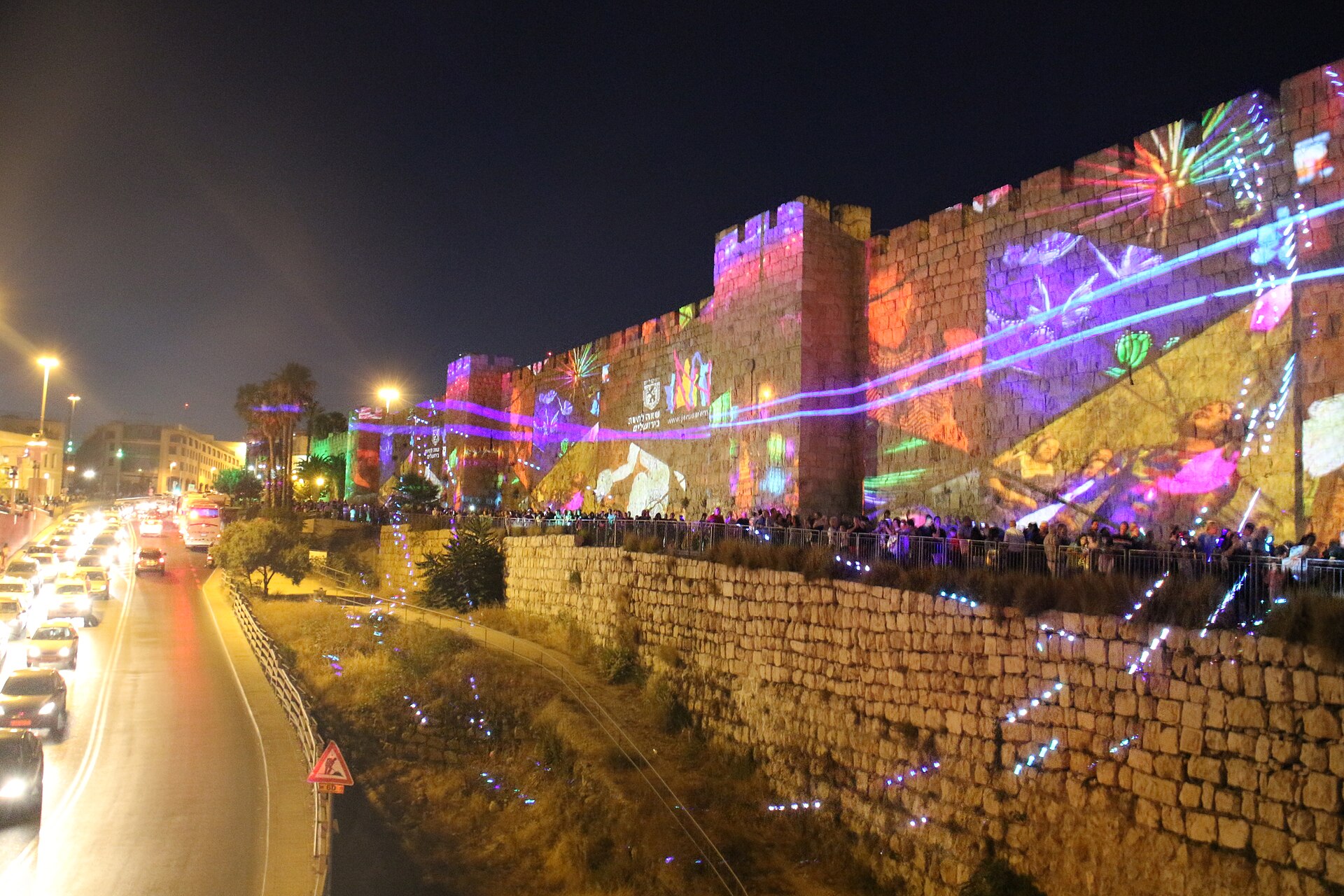
What the Installations Are Like
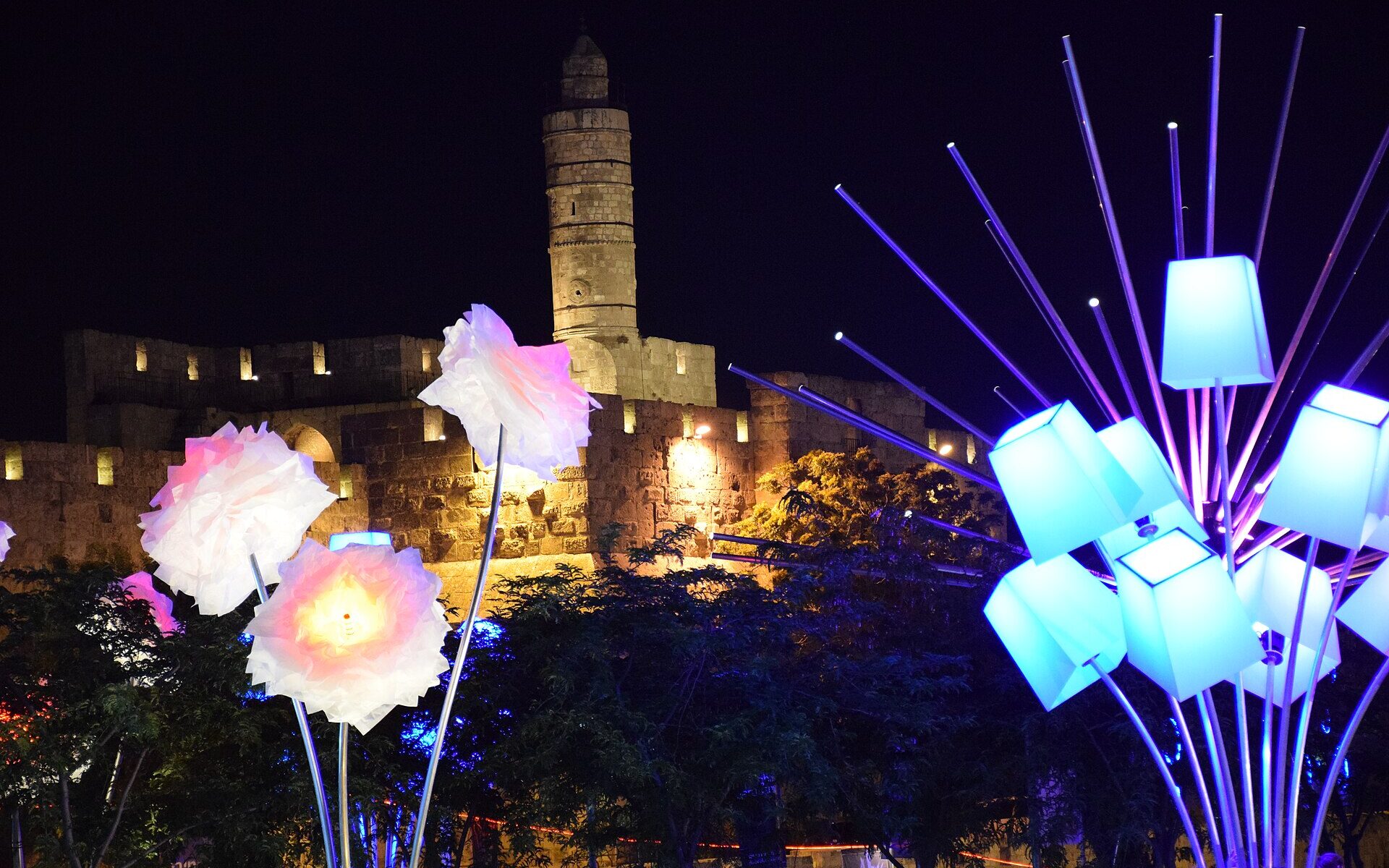
The works change every year as new artists are commissioned, but certain types recur. Large-scale projection mapping animates the city walls and the Tower of David, with imagery that seems to peel the stone open or set it in motion. Interactive sculptures respond to movement and touch, which is a hit with children. Suspended pieces hang over narrow streets so you walk beneath them, and entire facades are repainted in light. Some installations pair sound with the visuals at the bigger venues. Part of the pleasure is simply not knowing what you will round the next corner to find.
Planning Your Visit
A little timing strategy makes a big difference. Arrive around 9pm, once it is fully dark and the installations look their best, but before the heaviest crowds if you can. Mid-week nights, Tuesday through Thursday, are noticeably calmer than the weekend, and note that there is generally no festival activity on Friday night for Shabbat. Saturday night, after Shabbat ends, is among the busiest. Budget two to four hours so you are not rushing, and decide in advance whether you are doing one route or two.
- Wear comfortable shoes: the Old City is all uneven cobblestones and you will be on your feet.
- Bring a light layer: the stone lanes cool down at night even in summer.
- Pick up a map at Jaffa Gate or check the route online before you go in.
- Carry water: vendors operate but lines can be long at peak.
- Mind your belongings: dense crowds are easy targets for pickpockets, so keep bags zipped and close.
- Go later for fewer people: the final hour before closing thins out.
Visiting with children
The festival is wonderful for kids from around age four, who tend to love the interactive and suspended pieces. Bring a stroller for little ones, though be ready to carry it over the occasional step, and agree a meeting point in case anyone gets separated in the crowds. Dress children in something easy to spot.
Photography Tips
This is a photographer’s event, and a few basics go a long way. A tripod is the single most useful thing you can bring, letting you shoot long exposures that capture moving light cleanly; aim for shutter speeds of roughly one to four seconds and keep ISO low (around 200 to 400) to limit noise. A wide-angle lens helps you fit whole installations in tight lanes. The open plazas, such as Hurva Square and the area by the Western Wall, give room for sweeping wide shots, and including the slow-moving crowd in front of an installation adds scale and life. On a phone, use night mode and brace against a wall or railing to steady the shot.
Getting There and Around
Public transport is the way to go, since parking near the Old City is difficult and roads are busy during the festival. The Light Rail Red Line stops at City Hall, a short walk from Jaffa Gate, which is the main festival entrance and map point. Buses serve the city center and Damascus Gate, the natural entrance for the Muslim Quarter route. From most central hotels the Old City is a 10 to 15 minute walk. After the festival, taxis and ride apps are easy to find at the gates. For the full transit rundown, see our Jerusalem transportation guide, and remember the Light Rail does not run on Shabbat.
Making a Night of It
The festival pairs naturally with the rest of an Old City evening. Have an early dinner in the Jewish Quarter or out at Mamilla before you start, walk a route or two as it gets dark, then head to the Mahane Yehuda Market afterward, where the bars run late into the night. If you are exploring the Old City by day as well, our Old City guide helps you plan the daytime half, and the Tower of David’s own night show can sometimes be combined with a festival visit. Couples can fold it into a wider evening with our romantic things to do in Jerusalem guide.
Accessibility
Much of the festival is walkable for wheelchairs and strollers, particularly in the open plazas of the Jewish Quarter, but the Old City is an ancient place with steps, slopes and uneven stone on some stretches. If mobility is a concern, favor the flatter Jewish Quarter route and the area inside Jaffa Gate, and go earlier in the evening when crowds are thinner and easier to navigate. Our Jerusalem travel tips cover broader accessibility and practical advice.
A Short History of the Festival
The festival launched in 2009 as part of a wider effort to bring nightlife and culture back into the Old City after dark, and it quickly became one of the anchor events of the Jerusalem cultural year. Each edition commissions new works, so regulars come back year after year to see how artists reinterpret the same ancient surfaces. Over time it has grown from a modest local event into one of the largest light festivals anywhere, attracting international artists and a crowd that now numbers in the hundreds of thousands. That scale is part of what makes it special and also why a little crowd planning pays off, but it also means the festival is well organized, with marshals, clear signage and a steady one-way flow on the busier lanes.
Where to Eat and Stay Nearby
You will want food before or after, since festival nights involve a lot of walking. Inside and just outside the walls, the Jewish Quarter has casual restaurants and bakeries, and the Mamilla promenade between Jaffa Gate and the new city lines up cafes and restaurants that stay open into the evening, making it an easy pre-festival dinner stop. After the routes, the Mahane Yehuda Market bars are the classic move for a late drink, a short Light Rail ride or walk from the Old City. For sit-down options across budgets, our wider Jerusalem dining coverage and the market food guide are useful starting points.
If you want to roll out of bed and into the festival, staying near Jaffa Gate, in the Mamilla area or in the city center puts you within a short walk of the entrances. Book early for June, since the festival coincides with peak early-summer tourism and rooms near the Old City fill up. Staying central also means you can return on more than one night to walk different routes without a long journey each time, which is the best way to see the whole festival without rushing.
Photo Credits
Light sculptures below the Tower of David at the Festival of Light: מגדל דוד פסטחבל האורות by צביקה היגר, CC BY-SA 4.0, via Wikimedia Commons.
Damascus Gate under festival projections: שער שכם בפסטיבל האור by Morany84, CC BY-SA 4.0, via Wikimedia Commons.
Projection mapping on the Old City walls near Jaffa Gate: Old City Walls (Jerusalem) 20180704 by Suicasmo, CC BY-SA 4.0, via Wikimedia Commons.