If you have already ticked off the Western Wall, the Church of the Holy Sepulchre, and Mahane Yehuda Market, you might be wondering: what else does Jerusalem have? The answer is: a great deal — and most of it is missing from generic guidebooks. The most memorable, photogenic, and conversation-starting things you can do in this city are the unique experiences that locals quietly cherish but rarely shout about online. Underground archaeological tunnels. Rooftop tours that turn the Old City into a panoramic chessboard. Bedouin tea brewed on coals in a Judean Desert tent. Glass-blowing studios in the Armenian Quarter. Dawn prayers in basement chapels.
This guide collects the 20+ unique things to do in Jerusalem that even seasoned visitors miss on their first or second trip. Every entry has been checked for 2026 — opening hours, prices where applicable, and current accessibility. Many are free or low-cost; a few are splurges, but each is unforgettable. Use them to build a layer of depth into your trip that the average tour group will never see.
Why “Unique Jerusalem” Is Easier to Find Than You Think
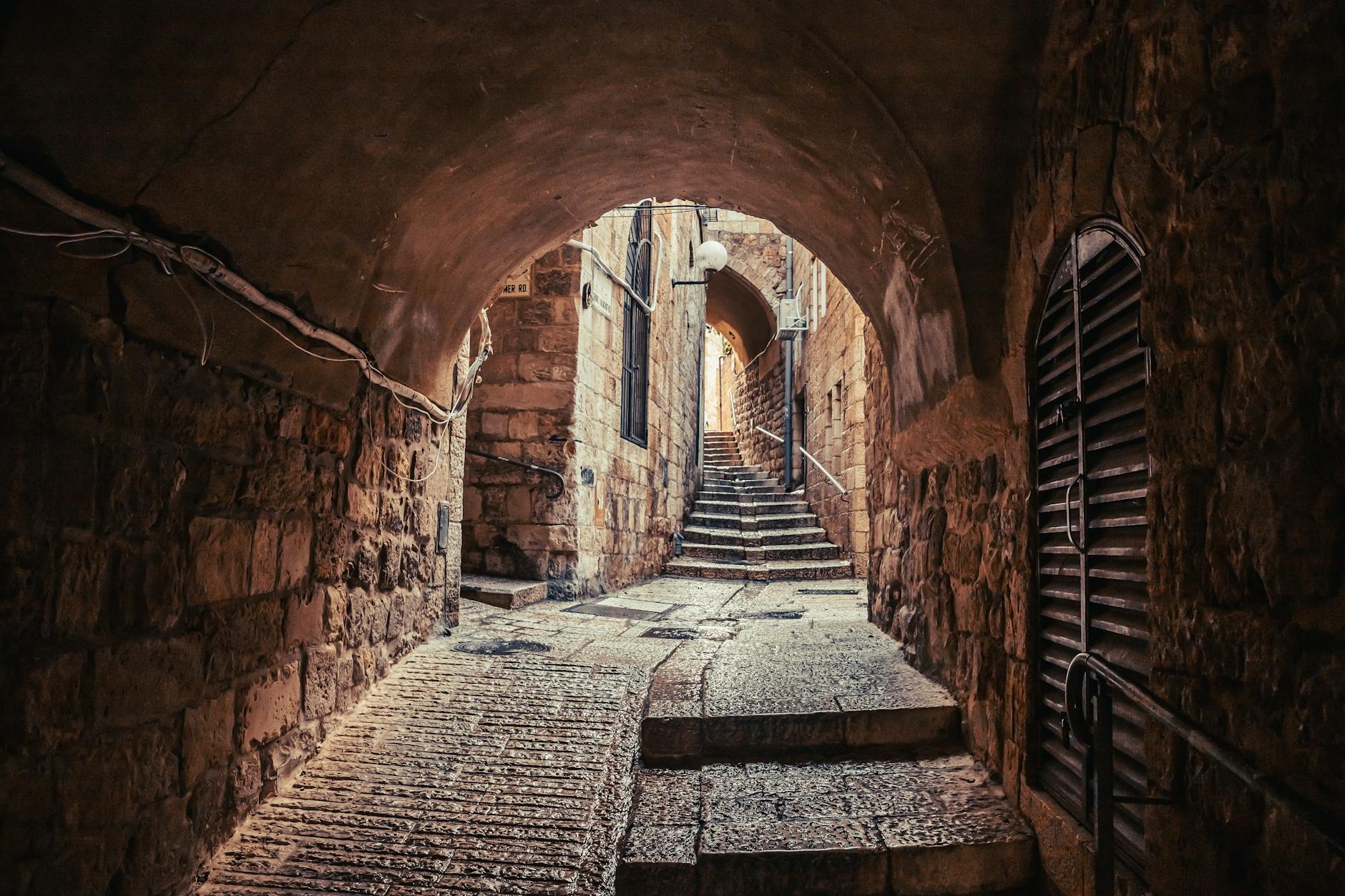
Jerusalem packs roughly 5,000 years of overlapping civilizations into one square kilometer of walled Old City and several adjoining neighborhoods. That density means the unusual is almost always within a few minutes’ walk of the famous. Step into a corridor next to the Western Wall and you’ll find the entrance to the Western Wall Tunnels. Walk past the Church of the Holy Sepulchre and you’ll spot a doorway leading to Ethiopian monks living on the church’s roof. Most visitors never look for these doors. This guide is your map to them.
Use this list alongside our broader Things to Do in Jerusalem pillar guide and the free things to do guide for context. Many of these unique experiences pair perfectly with the classics for a layered itinerary.
1. Walk Beneath the Old City in the Western Wall Tunnels
The visible Western Wall above ground is only about 10% of the actual Herodian retaining wall. The rest extends hundreds of meters underground, hidden beneath later Islamic, Crusader, and Ottoman construction. The Western Wall Tunnels Tour takes you the full length of the original 1st-century wall, past Herod’s largest single building stone (a 570-ton monolith), through Hasmonean-era cisterns, and to the spot directly across from the original location of the Holy of Holies in the Second Temple.
Reservations are essential — the tour books out weeks in advance, especially in spring and around Jewish holidays. The 75-minute guided walk is offered in English several times a day. Tickets cost approximately 40 NIS for adults and 20 NIS for children. This is one of the most powerful, atmospheric experiences in the city.
2. Take a Rooftop Tour of the Old City
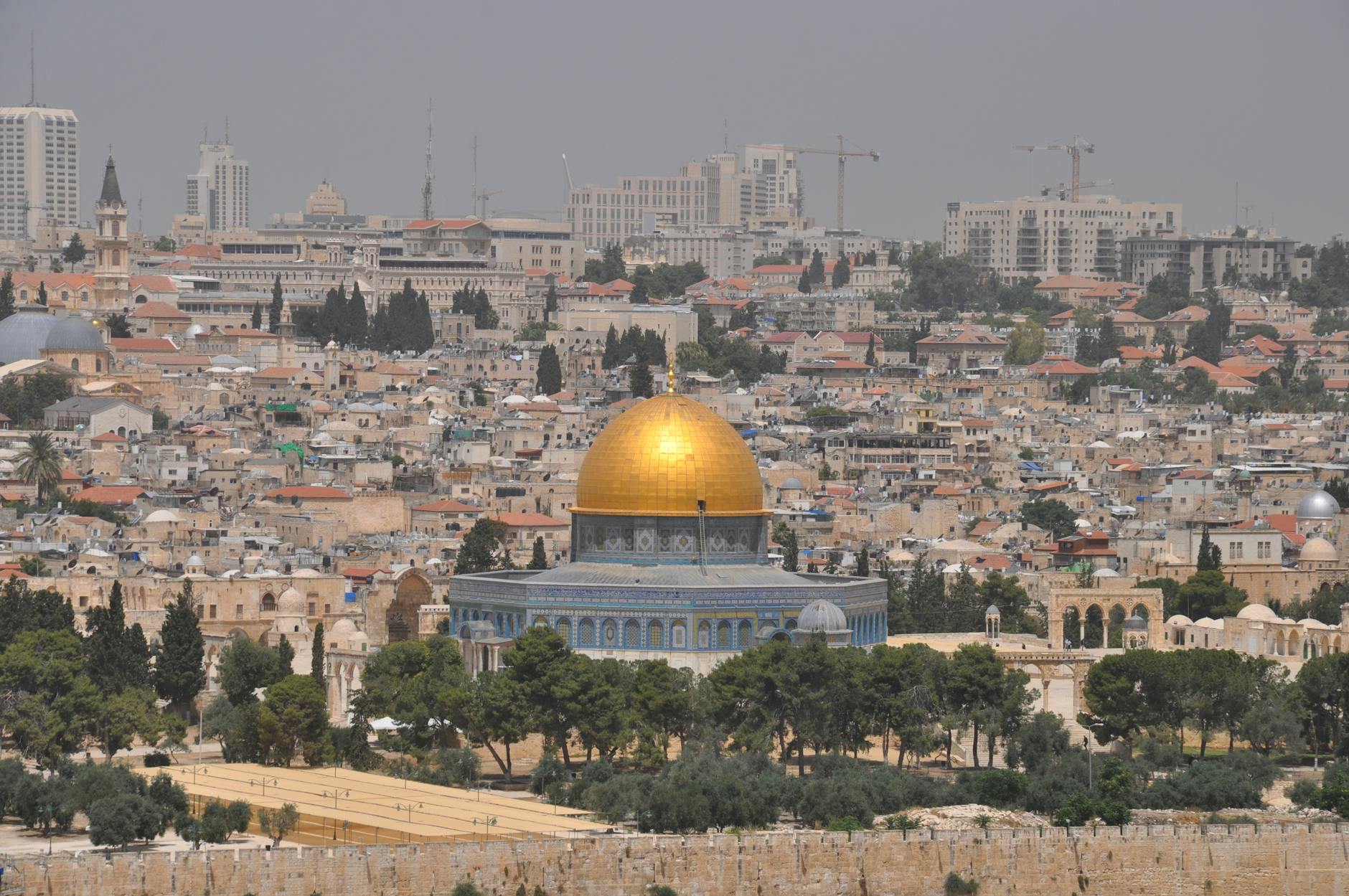
Above the souks and shrines of the Old City lies a parallel city of Crusader rooftops, Ottoman domes, and laundry lines connected by narrow paths used by residents and rooftop cafés. A handful of small tour operators (and some hotels like the Petra Hostel) offer rooftop access tours where you cross the Christian, Muslim, and Jewish quarters by way of the rooftops, with a 360-degree view of the Dome of the Rock, Holy Sepulchre, and Mount of Olives that ground-level tourists never see.
The most famous spot, the rooftop directly above the Cardo (entered from a small unmarked staircase near the Jewish Quarter), is free to visit and offers an unmatched panorama. For a guided experience with stories, expect to pay around 100–150 NIS for a small-group rooftop tour.
3. Wade Through Hezekiah’s Tunnel
One of the most unique experiences in the entire Middle East: walk through a 2,700-year-old water tunnel hewn through solid rock by King Hezekiah’s engineers around 701 BCE. The tunnel is 533 meters long and still carries water from the Gihon Spring to the Pool of Siloam. You wade up to your knees (occasionally higher) in cold spring water for about 30 to 40 minutes, with only your phone flashlight or a head-torch. There is a parallel dry “Canaanite tunnel” if wading is not for you.
This is part of the City of David archaeological park; tickets are around 35–40 NIS. Bring a flashlight, water shoes or sandals you don’t mind getting wet, and a dry change of clothes. Combine with the rest of the City of David for a full half-day of biblical-archaeology immersion.
4. Share Shabbat Dinner with a Local Family
Shabbat of a Lifetime and similar non-profit organizations match travelers with Jewish Jerusalem families for a Friday-night Shabbat dinner. You’ll experience the candle-lighting blessings, the Kiddush over wine, the singing of Shabbat Shalom, and a multi-course home-cooked meal with hosts from a wide range of Jewish backgrounds — secular Israeli, modern Orthodox, Mizrahi, Ashkenazi, or Yemenite, depending on availability.
This is, in our experience, the single most memorable evening many travelers have in Jerusalem. The cost is around $80–$100 per adult as a donation to the program. Dietary restrictions including kosher, vegan, and gluten-free can be accommodated with notice.
5. Cook with Local Chefs at the Shuk
Several culinary tour operators run market-to-table cooking classes that begin at Mahane Yehuda Market and end at a kitchen where you prepare a multi-course Israeli or Sephardic meal. Highlights include preparing your own hummus from chickpeas, baking fresh pita over a saj griddle, and learning the spice math of Jerusalem mixed grill.
Look for classes by Jerusalem Cooking Workshops, Atelier Foody, or boutique guides who run private lessons of 4 to 8 students. Expect to pay $80–$150 per person for a 3-hour experience. Vegetarian, vegan, and kosher classes are widely available.
6. Visit the Ethiopian Monks on the Holy Sepulchre Roof
This is one of Jerusalem’s most extraordinary, hidden corners. A small Ethiopian Orthodox monastic community known as Deir es-Sultan lives in tiny mud-walled rooftop cells directly atop the Church of the Holy Sepulchre. They have lived there continuously since at least the 4th century. You enter via a stairway in the courtyard outside the church, walk through a low passage, and emerge onto a sun-bleached rooftop courtyard where monks chant in Ge’ez, paint icons, and tend small gardens.
The site is free, but be quiet and respectful. Photography is generally permitted of the architecture, not of the monks themselves. Best visited mid-morning when light catches the rooftop and the monks are most active.
7. Find the Hidden Cardo Rooftop Lookout
In the Jewish Quarter, climb the unmarked metal staircase next to St. Mark’s Road to find a publicly accessible rooftop lookout that locals call simply “the rooftop.” From here you can see the Dome of the Rock, the Holy Sepulchre’s tower, the bell of the Lutheran Redeemer, and the entire jumble of Old City roof gardens. There are no signs, no fees, and almost no tourists. Bring a camera at golden hour.
8. Watch Armenian Ceramics Being Painted
Jerusalem’s Armenian Quarter is home to a centuries-old tradition of hand-painted ceramics. Workshops like Sandrouni Brothers, Balian, and Karakashian still hand-paint tiles, plates, and street signs in deep cobalt, turquoise, and pomegranate-red glazes. Most welcome visitors to step inside, observe the painters at work, and ask questions, with no obligation to buy.
If you do buy, the work is genuinely museum-grade and significantly cheaper than equivalent pieces in Europe. Look for the artist’s signature on the bottom — many shops also sell mass-produced imports as souvenirs at a much lower quality.
9. Spend a Night with Bedouins in the Judean Desert
Just 30 minutes from Jerusalem, the Judean Desert drops 1,200 meters toward the Dead Sea in a series of dramatic chalk-and-limestone canyons. Several Bedouin family-run camps near Kfar Adumim and Mar Saba offer overnight stays in traditional goat-hair tents with mattresses on the floor, communal vegetarian meals, sweet sage tea over open fires, and stargazing without urban light pollution. Khan al-Ahmar and Kfar HaNokdim are two well-known options.
Costs are reasonable, typically $60–$120 per person including dinner and breakfast. This is an extraordinary contrast to a day spent in the Old City and a chance to see a slower side of life. Camel rides, sunrise hikes, and trips to Mar Saba Monastery are common add-ons.
10. Tour the Davidson Center Archaeological Park
Right beside the Western Wall plaza, the Davidson Center / Jerusalem Archaeological Park reveals layers of Herodian street, ritual baths (mikvaot), and the toppled stones cast down from the Temple Mount in 70 CE. Walk along the original first-century street where Jewish pilgrims once climbed to the Temple, see the trumpeting stone where priests announced Shabbat, and visit the underground film theater that reconstructs the Second Temple in 3D.
This is a much quieter, more contemplative experience than the crowded Western Wall plaza, and it’s where amateur archaeologists fall in love with Jerusalem. Tickets are around 30 NIS; combined tickets with the Western Wall Tunnels save money.
11. Pay Respects at Oskar Schindler’s Grave
On the Catholic side of the cemetery on Mount Zion, you can find the simple stone grave of Oskar Schindler, the German industrialist who saved over 1,200 Jews during the Holocaust. The grave is covered in small stones left by visitors — a Jewish tradition of respect. Schindler asked to be buried in Jerusalem, and the people he saved keep his memory alive here. Free, moving, and only a short walk from the Tomb of King David and the Last Supper Room.
12. Walk the Ramparts Walk on Top of the Old City Walls
Most visitors walk through the Old City; the Ramparts Walk lets you walk on top of it, on the Ottoman-era walls built by Suleiman the Magnificent in the 1530s. There are two routes — the northern ramparts from Jaffa Gate to Lions’ Gate (about 1.5 hours, more dramatic views), and the southern ramparts from Jaffa Gate to Dung Gate (about 45 minutes). Each ticket is roughly 20 NIS and is valid for two days.
The view directly down into Mahane Yehuda’s neighbor, the Christian Quarter rooftops, and the Mount of Olives is unforgettable. Wear sturdy shoes; the walkway is uneven Ottoman stone.
13. Take a Kabbalah Class
Jerusalem has been a Kabbalistic center for centuries. Bnei Baruch Kabbalah, The Kabbalah Center, and various small yeshivas in the Jewish Quarter offer introductory classes in English for non-Jews and Jews alike. Topics range from the practical psychology of the Tree of Life to deeper textual study. A drop-in class is usually free or by donation; multi-day workshops involve fees.
14. Float in the Dead Sea (90 Minutes Away)
Less than 90 minutes from Jerusalem by car or bus, the Dead Sea is one of the most surreal natural wonders on the planet. Float effortlessly in water 10 times saltier than the ocean, slather yourself in mineral-rich black mud, and visit Masada or Ein Gedi on the way back. While the Dead Sea is not technically in Jerusalem, it absolutely belongs on a unique-experiences list because the contrast with the city is so stark.
See our day trips from Jerusalem guide for the full plan.
15. Try Glass-Blowing in a Jerusalem Studio
The Hutzot HaYotzer Artists Colony just below Jaffa Gate hosts several studios where you can take a 30-minute glass-blowing introductory class and walk away with a small piece you have shaped yourself. Ceramic, mosaic, and silversmithing workshops also operate here. This is a wonderful rainy-day or hot-afternoon activity, especially with kids 10 and up. Cost is typically $30–$60 per person depending on the piece.
16. Watch the Time Elevator
The Time Elevator in the city center is a slightly campy but genuinely fun motion-simulator film that takes you through 3,000 years of Jerusalem history in 30 minutes. Excellent rainy-day option, especially with children 8 and up, and a good way to give context to everything you’ve been seeing in the Old City. Tickets around 50 NIS.
17. Take a Night Tour with Sandeman’s or Equivalent
The Old City after dark is almost unrecognizable: empty alleys, lantern light on the stone, the Holy Sepulchre lit and silent, and the scent of jasmine drifting from courtyards. Several operators run nightly walking tours after sunset, ranging from free tip-based 90-minute walks to ghost-and-legends storytelling tours. We recommend the Sandeman’s Old City Night Tour or any tour with Yair Tour Guides.
18. Climb the Lutheran Church of the Redeemer Bell Tower
For under 15 NIS, climb 178 spiral steps inside the bell tower of the Lutheran Church of the Redeemer in the Christian Quarter. The reward at the top is one of the very best 360-degree panoramas of the Old City available — and you’ll usually have it largely to yourself. The church itself is also worth visiting, with archaeological excavations in the lower levels showing a wall from the late Roman period.
19. Experience Mahane Yehuda After Dark
By day, Mahane Yehuda is a packed shouting market. After about 8 PM, the steel shutters roll down, and the market transforms into Jerusalem’s hippest bar district. Look for Beer Bazaar, Casino de Paris, and Talbiye — small bars in former produce stalls. Over 150 stencil portraits by street artist Solomon Souza are revealed only when the shutters close. Live music, craft beer, and a totally different demographic make this one of the most surprising things to do in Jerusalem.
20. Pray or Meditate in the Garden of Gethsemane
The Garden of Gethsemane at the foot of the Mount of Olives contains olive trees that have been radiocarbon-dated to over 900 years old. The adjoining Church of All Nations is built over the rock where, by Christian tradition, Jesus prayed the night before his crucifixion. Inside, the church is darkened with violet stained glass to evoke night, and the atmosphere is one of profound stillness even when crowded. Free entry, donations welcomed.
21. Have Coffee at the Austrian Hospice Rooftop
The Austrian Hospice of the Holy Family, on the Via Dolorosa, is one of the great underrated stops in the Old City. Built in 1857 as a guesthouse for Austrian pilgrims, the hospice has a Viennese-style café serving authentic apple strudel and coffee with whipped cream, plus a small but lovely garden, and a rooftop accessible to all visitors with sweeping views over the Muslim and Christian quarters. Order a strudel and admire the view: it’s a small ritual that feels like a quiet luxury.
22. Visit the Biblical Zoo
The Tisch Family Biblical Zoo, in the Malha neighborhood, is built around a unique concept: housing every animal mentioned in the Bible, from lions to bears to the rare Persian fallow deer. The 25-hectare grounds include a small aquarium and a children’s petting zoo. Tickets around 60 NIS for adults, and it’s an excellent half-day option for families. See our Jerusalem with kids guide for more family-focused experiences.
23. Catch the Hallelujah Night Show at the City of David
Hallelujah is a state-of-the-art outdoor sound-and-light spectacular projected onto the actual archaeological ruins of the City of David. The 45-minute show tells the story of King David, the building of the First Temple, exile, and return through 3D projections, music, and lasers. It runs on summer evenings and select nights through the year. Tickets typically 80 NIS per adult. Reserve well in advance — it sells out in summer.
24. Gallery-Hop in Nachalat Shiv’a
Jerusalem’s contemporary art scene quietly thrives in Nachalat Shiv’a, a small 19th-century neighborhood downtown. Boutique galleries, jewelry studios, and Judaica artists fill restored stone houses. The pedestrian streets are atmospheric in the evening, and several small wine bars and cafés make it perfect for a slow, cultured night out. Most galleries are free to browse.
25. See the Mini Israel Model
Mini Israel, located 30 minutes from Jerusalem in Latrun, is a meticulously detailed 1:25 scale model of the entire country, with over 350 buildings, working trains, and animated figures. Excellent for kids and adults who like miniatures. A great pair with the Israel Museum’s 1:50 scale model of Second Temple Jerusalem, which is also one of the most unique attractions in the city.
Planning Tips: How to Add Unique Experiences to Your Itinerary
- Book ahead. Western Wall Tunnels, City of David, and Hallelujah all sell out — secure tickets at least a week in advance.
- Mix layers. Combine an above-ground famous site with a below-ground or rooftop alternative on the same day for maximum contrast.
- Hire a guide for half a day. A skilled local guide can connect dots that no app can; even a 4-hour booking unlocks dozens of details you’d miss.
- Friday afternoon is ideal for Mahane Yehuda’s pre-Shabbat frenzy, but avoid Saturday for most paid attractions in Jewish neighborhoods.
- Check festival calendars. The Jerusalem Light Festival, Jerusalem Wine Festival, and Open House Jerusalem reveal hundreds of normally-private buildings.
- Look up. Many of the unique experiences in this list are physically above eye level — the rooftops, bell towers, and ramparts.
Frequently Asked Questions
What is the most unique thing to do in Jerusalem?
Opinions vary, but the combination most travelers cite as unforgettable is the Western Wall Tunnels Tour followed by Hezekiah’s Tunnel in the City of David — two underground experiences that connect you directly to biblical Jerusalem. Add a Friday-night Shabbat dinner with a local family to make it a perfect three.
Are the Western Wall Tunnels safe and accessible?
Yes. The tunnels are well-lit, paved, and continuously monitored. They are not fully wheelchair-accessible due to stairs, but the Heritage Foundation offers a partially accessible alternative route on request. Children must be accompanied. The tour is suitable for ages 5 and up, though small children may find the enclosed sections intimidating.
Where can I find unique souvenirs in Jerusalem?
The Armenian Quarter ceramics studios, the Hutzot HaYotzer Artists Colony, and the small Judaica galleries in Nachalat Shiv’a sell genuinely original work. Avoid the mass-produced “I ❤ Jerusalem” stalls in the souks for anything you actually want to keep.
Is it appropriate for non-Jewish or non-Christian travelers to attend a Shabbat dinner?
Absolutely. The hosting families specifically welcome visitors of all backgrounds. The experience is designed as a cultural exchange, not a religious conversion attempt. Bring an appetite, an open mind, and modest dress.
Can I do these unique experiences on Shabbat?
Most paid attractions (Western Wall Tunnels, City of David, Davidson Center) are closed Friday afternoon and Saturday until evening. The Old City rooftops, Garden of Gethsemane, Christian Quarter, and Mount of Olives remain accessible. Shabbat dinner is itself the unique Friday-night experience, and the Saturday evening havdalah ceremony at synagogues is moving and welcoming.
Are unique experiences appropriate for children?
Many are. Hezekiah’s Tunnel, the Time Elevator, the Biblical Zoo, glass-blowing workshops, and the Davidson Center all work well for children 6 and up. The Shabbat dinner experience is excellent for older children. Bedouin overnights are surprisingly kid-friendly. Avoid Yad Vashem with under-10s.
Final Word: Choose Depth Over Checklist
Jerusalem is one of those rare destinations where the longer you stay and the slower you go, the better it gets. The 25 unique experiences above are a starting toolkit — an invitation to leave the well-trodden path and find the city’s quieter, weirder, deeper corners. Build a few of them into your trip and your story of Jerusalem will be richer than every guidebook on the shelf.
Pair this with the main Things to Do in Jerusalem guide for the classics, the Jerusalem itinerary planner for structuring your days, and our Old City quarters guide for understanding what you’re walking through.
Leave a Reply