Jerusalem is the only city on earth that is sacred to three of the world’s major religions — Judaism, Christianity, and Islam. Within its ancient walls and surrounding hills, you will find sites that have shaped the beliefs and practices of billions of people across thousands of years. The Western Wall, where Jews have prayed for centuries. The Church of the Holy Sepulchre, where Christians believe Jesus was crucified and rose from the dead. The Dome of the Rock, from which Muslims believe Prophet Muhammad ascended to heaven. These holy sites in Jerusalem are not dusty relics of the past but living, breathing places of worship where the faithful gather every day.
This comprehensive guide covers every major holy site in Jerusalem, organized by religious tradition. For each site, you will find historical background, visiting information, dress code requirements, and practical tips to make your visit respectful and meaningful. Whether you are a pilgrim, a history enthusiast, or simply a curious traveler, understanding the significance of these sacred places will transform your experience of Jerusalem. To plan your visit around these sites, see our Jerusalem itinerary guide.
Jewish Holy Sites in Jerusalem
The Western Wall (Kotel)
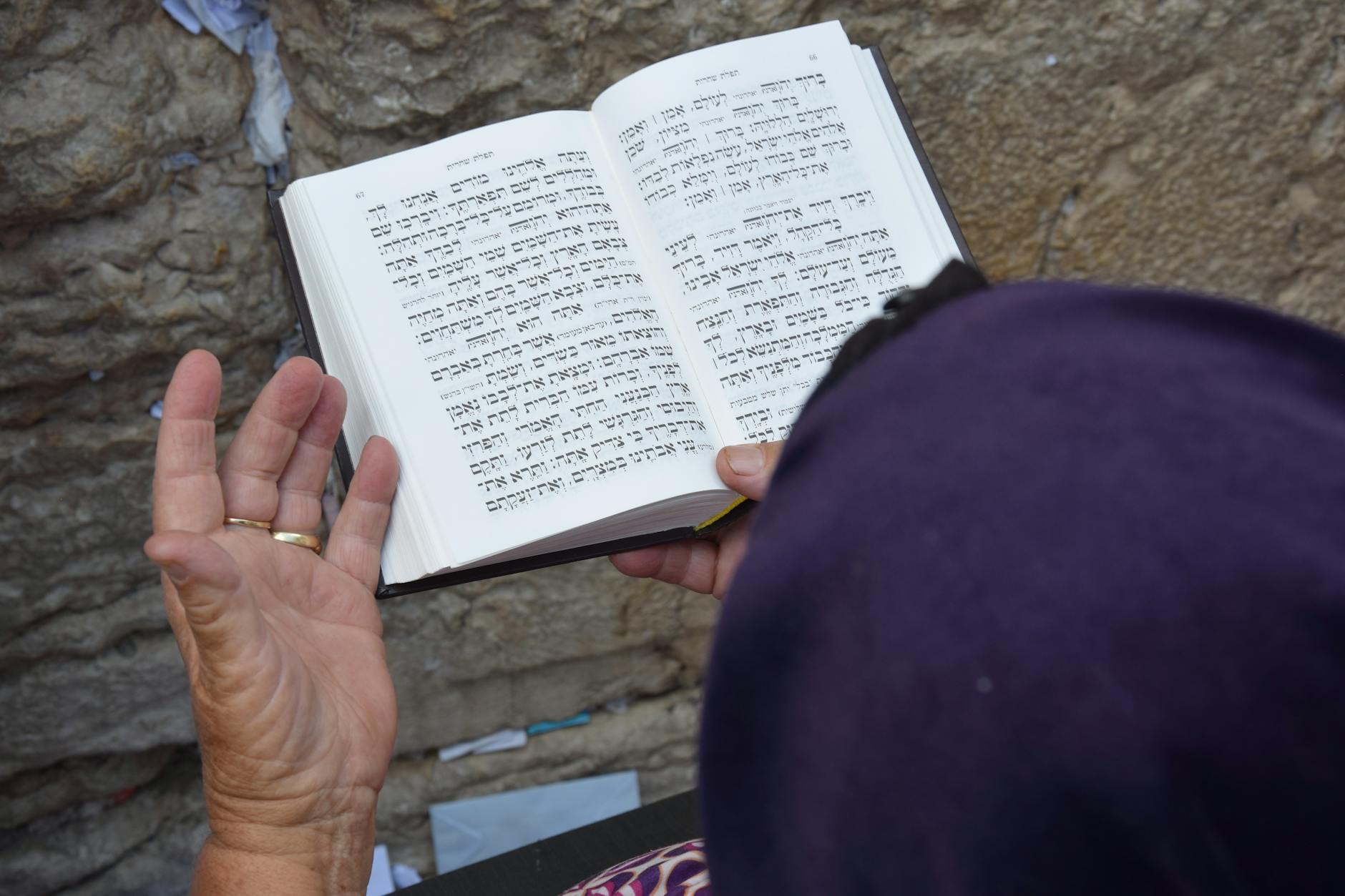
The Western Wall is the holiest site where Jews are permitted to pray, and it draws millions of visitors and worshippers each year. This massive limestone wall is the last remaining retaining wall of the Second Temple compound, which was destroyed by the Romans in 70 CE. For nearly two millennia, Jews have come to this wall to mourn the destruction of their Temple and to pray for its restoration, which is why it was historically known as the Wailing Wall — though this term is now considered outdated and somewhat disrespectful.
The exposed section of the wall stands about 19 meters high and stretches 57 meters across the Western Wall Plaza, but the full wall extends much further underground and to the sides. The Western Wall Tunnels tour takes you along an additional 485 meters of the wall, including a point directly opposite where the Holy of Holies once stood — the most sacred spot in Judaism. This tour must be booked in advance and is one of the most remarkable archaeological experiences in Jerusalem.
Visiting information: The Western Wall is open 24 hours a day, 365 days a year, and admission is free. Men and women pray in separate sections — men on the left (larger section), women on the right. Men must wear a head covering (paper kippot are available at the entrance for free). Modest dress is required — shoulders and knees covered. The plaza is busiest on Friday evening at the start of Shabbat and on Jewish holidays. Photography is permitted except on Shabbat and holidays. It is customary to place a written prayer or wish in the cracks between the stones, and many visitors find this deeply moving regardless of their faith.
The Temple Mount (Har HaBayit)
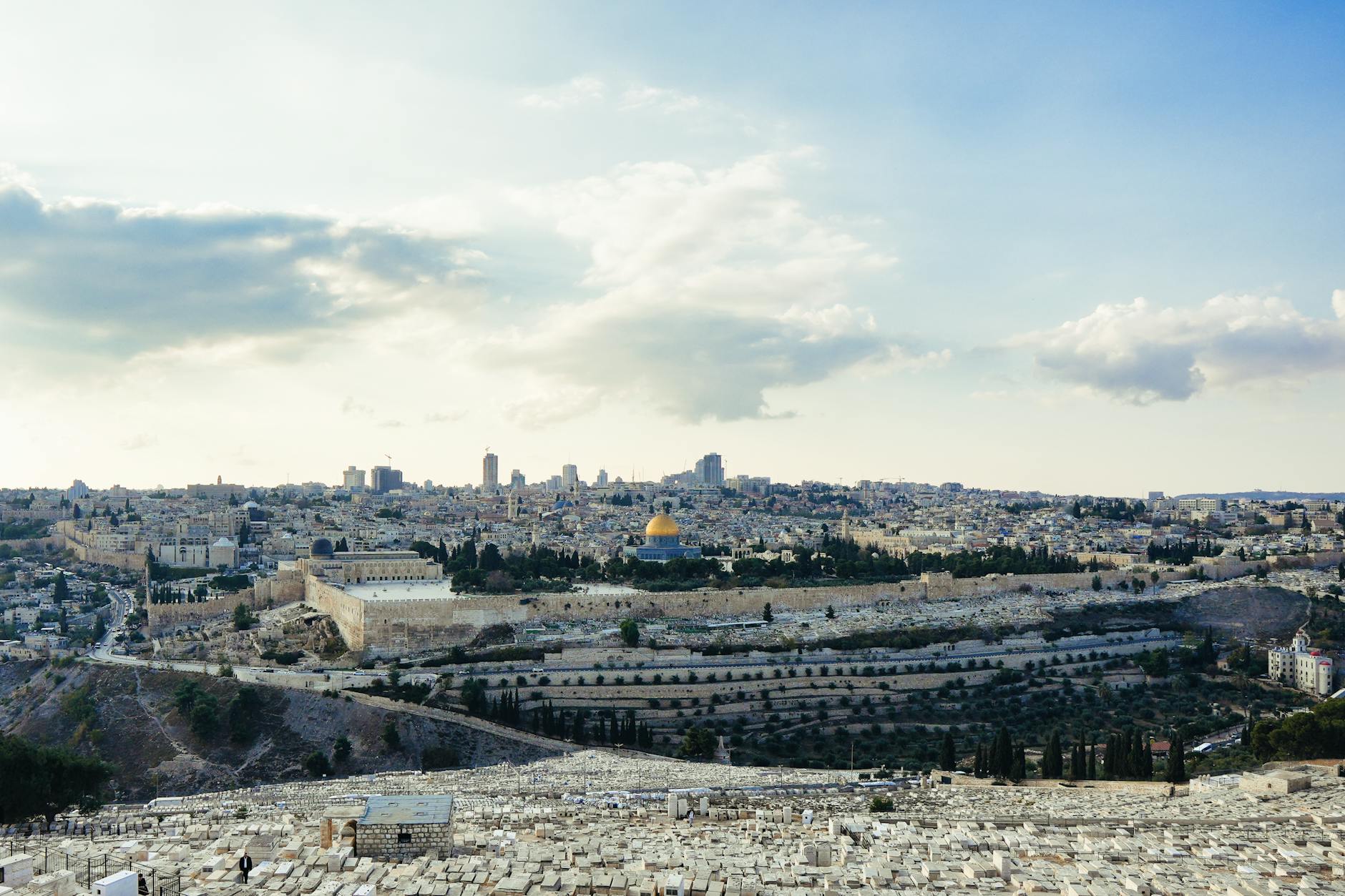
The Temple Mount is the holiest site in Judaism — the place where Jewish tradition holds that God created the world, where Abraham prepared to sacrifice Isaac, and where both the First and Second Temples stood. The First Temple, built by King Solomon around 957 BCE, housed the Ark of the Covenant and was the center of Jewish religious life until its destruction by the Babylonians in 586 BCE. The Second Temple was rebuilt in 516 BCE and expanded grandly by King Herod, before the Romans destroyed it in 70 CE. The Western Wall is the remaining retaining wall of Herod’s Temple Mount platform.
Today, the Temple Mount platform is administered by the Jordanian Islamic Waqf and is home to the Dome of the Rock and Al-Aqsa Mosque. Most Orthodox Jewish authorities prohibit Jews from ascending the Temple Mount due to the risk of inadvertently walking on the site of the Holy of Holies, though some Jewish groups do visit under rabbinical guidance. For visitors, the Temple Mount represents the extraordinary layering of sacred history that makes Jerusalem unique.
The City of David
The City of David is the archaeological site believed to be the original settlement of Jerusalem, established by King David approximately 3,000 years ago. Located just south of the Temple Mount, this site is not only historically significant but also holds religious importance as the place where David brought the Ark of the Covenant and established Jerusalem as the capital of the united Kingdom of Israel. Key features include Warren’s Shaft (an ancient water system), Hezekiah’s Tunnel (a 533-meter tunnel carved through bedrock to protect Jerusalem’s water supply during an Assyrian siege), and the Siloam Pool, where the Gospel of John records Jesus healing a blind man.
Visiting information: Open Sunday to Thursday 8:00 AM to 5:00 PM, Friday 8:00 AM to 2:00 PM. Admission is 30 shekels for adults (combined tickets with the tunnel are 46 shekels). If walking through Hezekiah’s Tunnel, wear water shoes and bring a flashlight — you will wade through knee-deep water for about 20 minutes in a narrow, dark passage. The experience is exhilarating and atmospheric.
Mount of Olives Jewish Cemetery
The Mount of Olives contains the world’s oldest and most important Jewish cemetery, with an estimated 150,000 graves dating back 3,000 years. Jewish tradition holds that the resurrection of the dead will begin here when the Messiah arrives, entering Jerusalem through the Golden Gate directly across the Kidron Valley. Many of Judaism’s most revered figures are buried here. The cemetery continues to be used today, and walking among the ancient and modern graves on the hillside overlooking the Old City is a profoundly moving experience.
Christian Holy Sites in Jerusalem
Church of the Holy Sepulchre
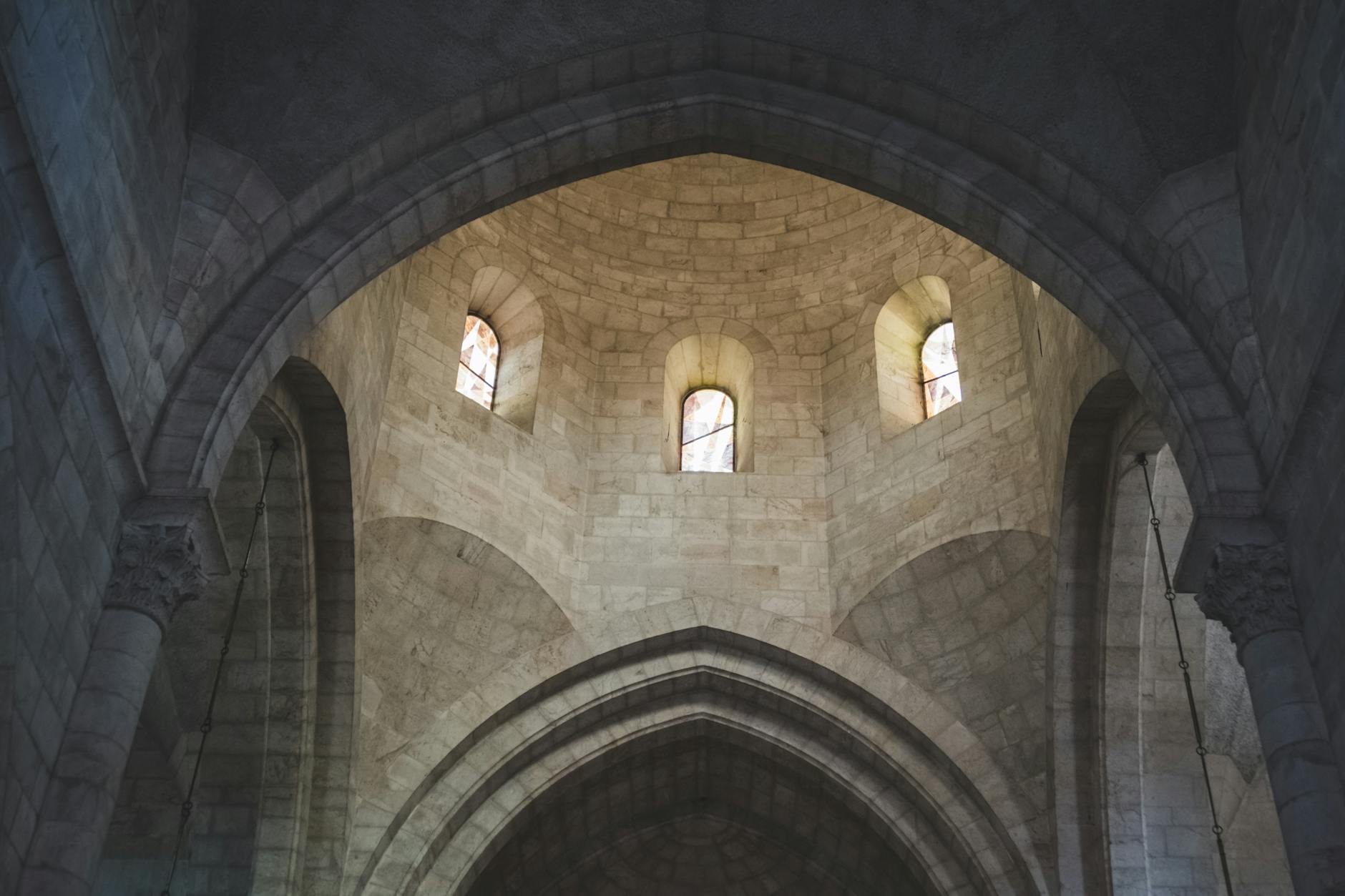
The Church of the Holy Sepulchre is the holiest site in Christianity, encompassing both the hill of Calvary (Golgotha) where Jesus was crucified and the tomb where he was buried and rose from the dead. The original church was built by Emperor Constantine in 326 CE after his mother Helena identified the site, and it has been destroyed, rebuilt, and renovated multiple times over the centuries. The current structure dates primarily to the Crusader period (12th century) with later additions and restorations.
Inside the church, several key areas draw pilgrims. The Stone of Anointing (Stone of Unction) just inside the entrance is where tradition holds Jesus’s body was prepared for burial. The Chapel of Golgotha, reached by steep stairs to the right of the entrance, marks the site of the crucifixion — you can reach under the altar and touch the rock of Calvary through a hole in the floor. The Edicule, the small structure in the center of the Rotunda, contains the Holy Tomb itself. The church is shared among six Christian denominations (Greek Orthodox, Roman Catholic, Armenian Apostolic, Coptic, Ethiopian, and Syriac) under a complex arrangement known as the Status Quo, established in 1757.
Visiting information: Open daily from 5:00 AM to 9:00 PM (October to March) or 5:00 AM to 8:00 PM (April to September). Admission is free. Expect long lines at the Edicule (tomb), especially from mid-morning. The best time to visit is at opening time (5:00 AM) or early morning. Dress modestly — shoulders and knees covered. Photography is permitted in most areas but be respectful of worshippers. As the Tourist Israel holy sites guide notes, this church is one of Jerusalem’s most emotionally powerful experiences.
Via Dolorosa (Way of the Cross)
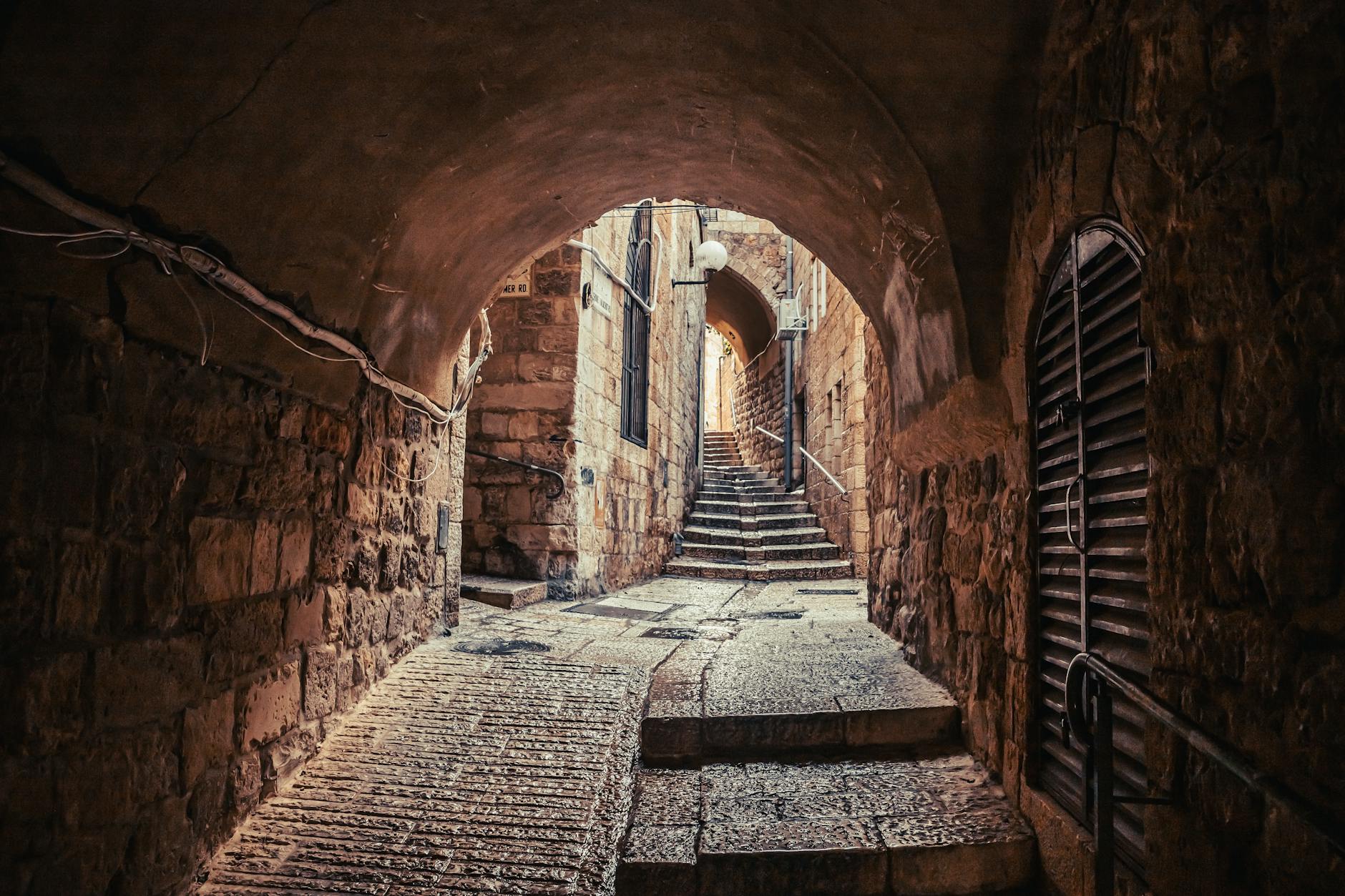
The Via Dolorosa is the route that Jesus is believed to have walked from his condemnation by Pontius Pilate to his crucifixion at Golgotha. The path winds through the narrow streets of the Old City’s Muslim Quarter, marked by 14 Stations of the Cross, each commemorating a specific event from Jesus’s final journey. The first station is near the Lions’ Gate, where the Antonia Fortress once stood and where Jesus was condemned. The route passes through crowded bazaar streets, past ancient churches and chapels, with the final five stations located inside the Church of the Holy Sepulchre.
Every Friday at 3:00 PM (the hour traditionally associated with Jesus’s death), the Franciscan Order leads a public procession along the Via Dolorosa, carrying a wooden cross and stopping to pray at each station. This is one of the most powerful experiences available in Jerusalem and is open to anyone who wishes to join. Walking the Via Dolorosa independently is also meaningful — small plaques and churches mark each station. The route takes about 30 to 45 minutes without stopping. Note that the historical accuracy of the route is debated by scholars, but its spiritual significance for millions of Christians is profound and undeniable.
Garden of Gethsemane and Church of All Nations
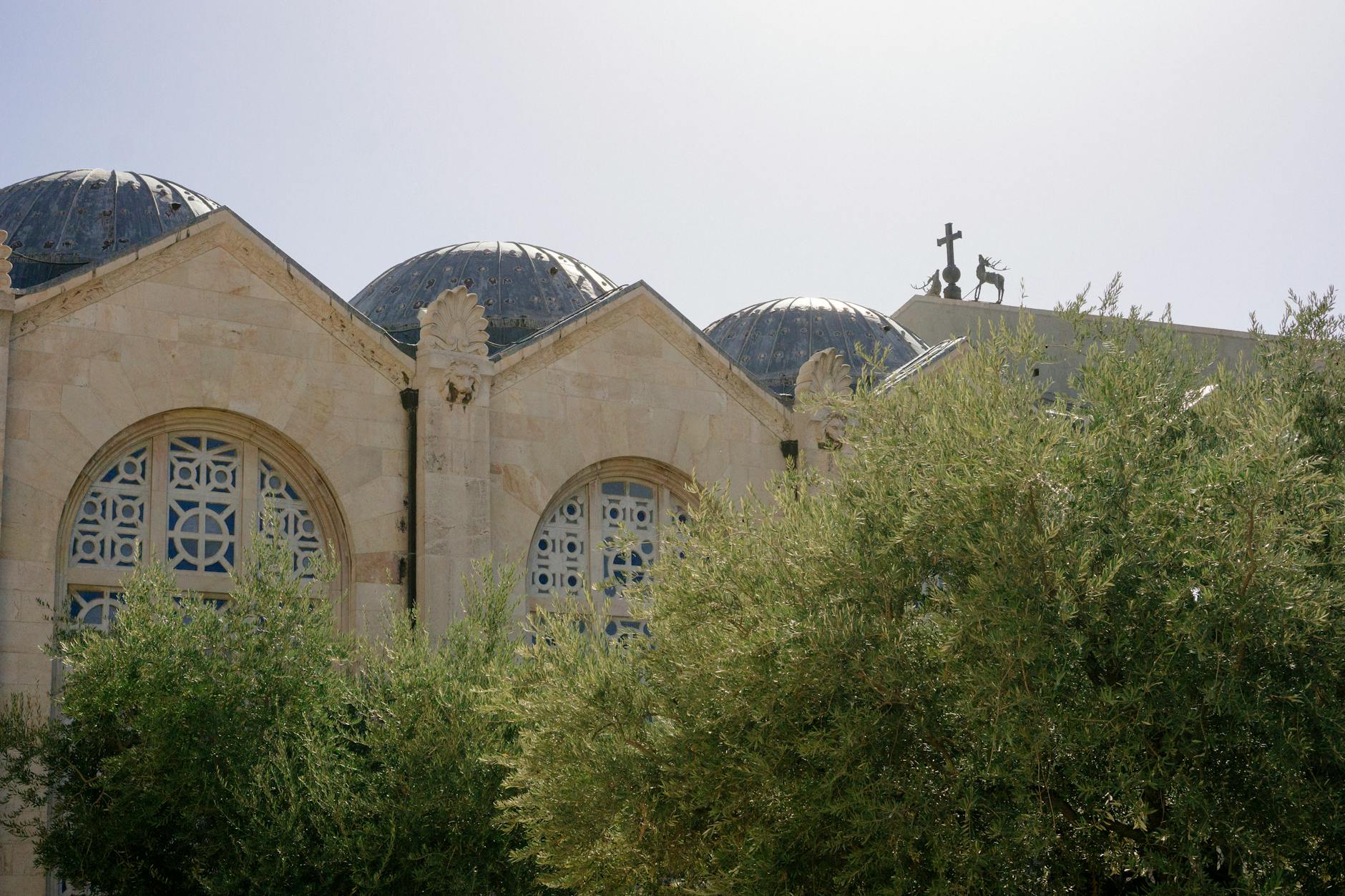
The Garden of Gethsemane, at the foot of the Mount of Olives, is where the Gospel accounts say Jesus prayed in anguish on the night before his crucifixion and was subsequently betrayed and arrested. The garden contains eight olive trees that scientific testing has dated to approximately 900 years old, though tradition holds that their roots may extend back to the time of Jesus. The Church of All Nations (Basilica of the Agony), built in the 1920s with contributions from twelve countries, stands adjacent to the garden. Inside, the church is kept intentionally dark to evoke the night of Jesus’s agony, and a section of bare rock before the altar is believed to be where Jesus prayed.
Visiting information: The garden and church are open daily from 8:00 AM to 12:00 PM and 2:00 PM to 5:00 PM (hours may vary seasonally). Admission is free. Visit early in the morning for a quieter, more contemplative experience. The garden is small and can feel crowded with tour groups by mid-morning.
Mount Zion: Room of the Last Supper and Dormition Abbey
Mount Zion, just outside the Old City’s Zion Gate, is home to several important sacred sites. The Cenacle (Upper Room) is traditionally identified as the site of Jesus’s Last Supper with his disciples, and also where the Holy Spirit descended on the apostles at Pentecost. The current Gothic-style room dates to the Crusader period and features beautiful arched windows and a Crusader capital depicting a pelican feeding her young — a medieval symbol of Christ’s sacrifice. The same building also houses the Tomb of King David one floor below, revered by Jewish tradition as the burial place of the biblical king.
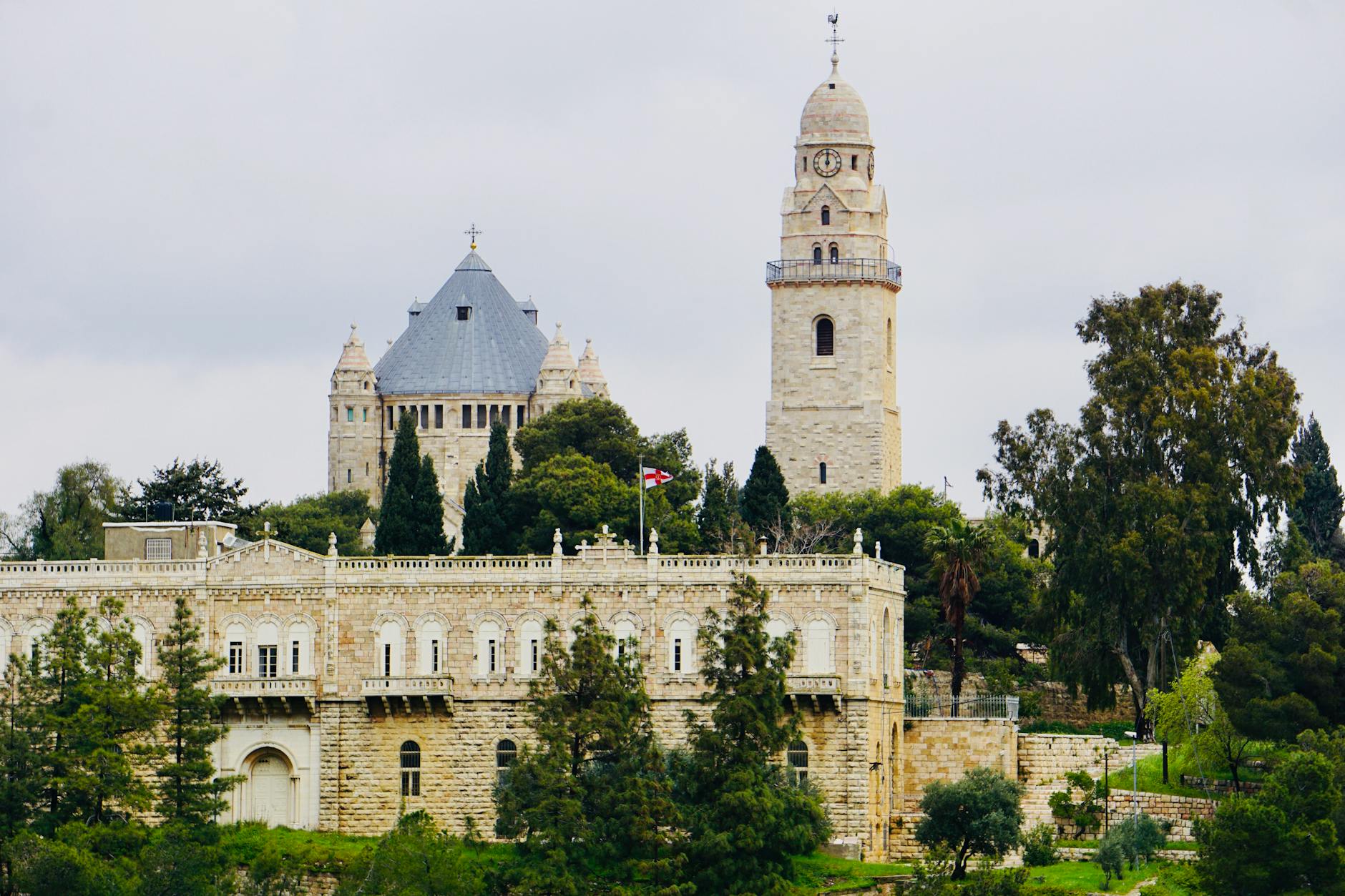
The Dormition Abbey, a striking Benedictine church with a distinctive conical roof and tall bell tower, marks the spot where tradition holds the Virgin Mary fell into eternal sleep (the Dormition). The church’s interior features beautiful mosaics and a moving crypt with a wooden effigy of the sleeping Mary. The church offers exceptional acoustics and occasionally hosts concerts. All Mount Zion sites are free to enter and are usually less crowded than Old City attractions.
Garden Tomb
The Garden Tomb is an alternative site proposed in the 19th century as the location of Jesus’s burial and resurrection, favored by many Protestant denominations. Located near the Damascus Gate, the site features a rock-cut tomb in a beautiful garden setting adjacent to a rocky escarpment that some believe resembles a skull (corresponding to “Golgotha,” meaning “place of the skull”). Whether or not this is the historical site, the Garden Tomb offers a peaceful, contemplative atmosphere that many visitors find more spiritually accessible than the often crowded and contested Church of the Holy Sepulchre. Guided tours are offered free of charge by volunteers, and the garden is a lovely oasis of calm amid the bustle of East Jerusalem.
Islamic Holy Sites in Jerusalem
Al-Aqsa Mosque
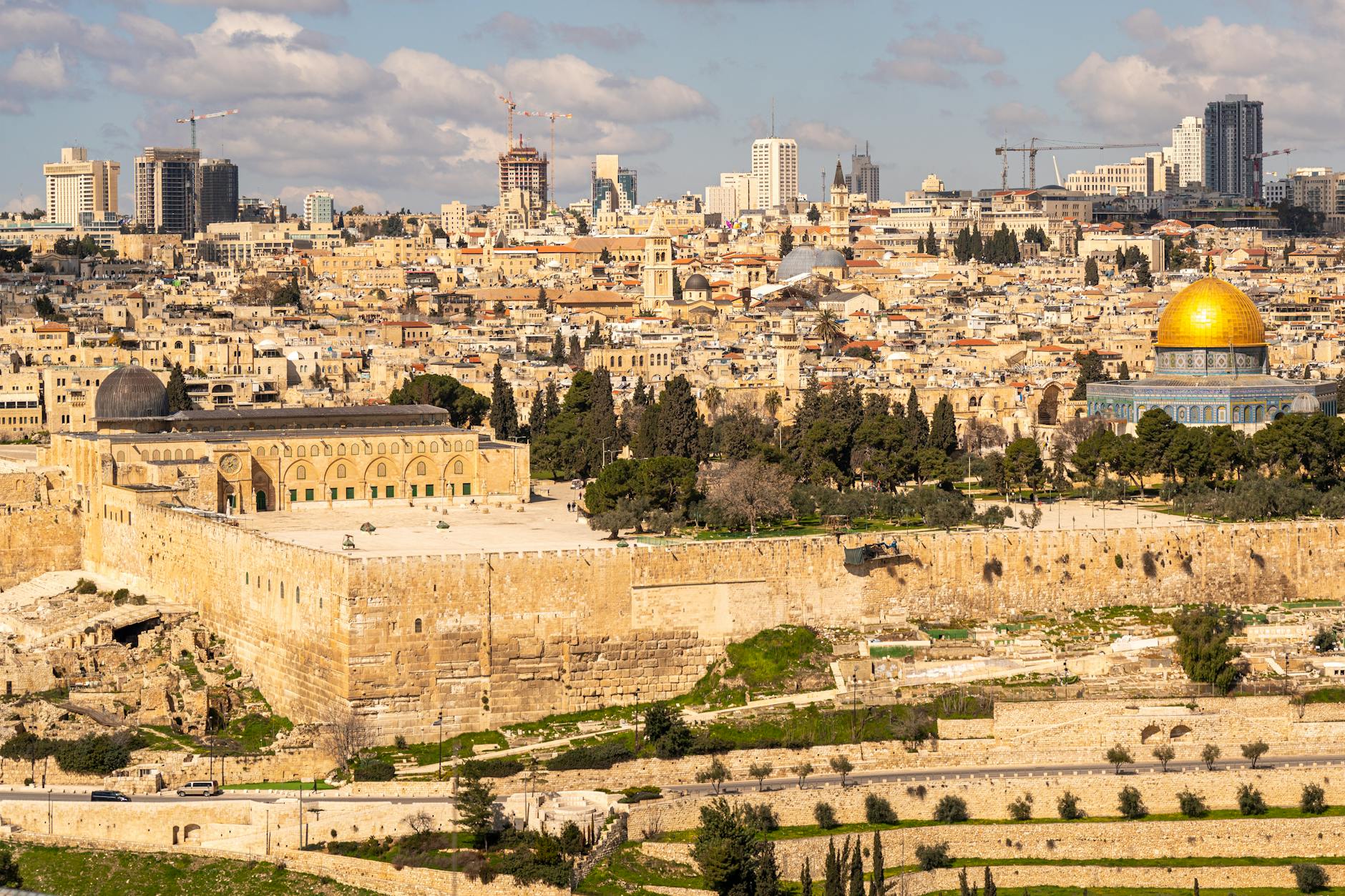
Al-Aqsa Mosque is Islam’s third holiest site after the Masjid al-Haram in Mecca and the Prophet’s Mosque in Medina. The name Al-Aqsa means “The Farthest Mosque,” referring to the Quranic passage describing Prophet Muhammad’s Night Journey (Isra) from Mecca to “the farthest mosque,” from which he ascended to heaven (Mi’raj). The current mosque structure dates primarily to the Umayyad period (8th century), though it has been rebuilt and renovated multiple times following earthquakes. The mosque can accommodate up to 5,000 worshippers and is the central place of prayer for Jerusalem’s Muslim community.
Visiting information: Non-Muslims cannot enter the Al-Aqsa Mosque building itself. However, the wider Temple Mount compound (known as Haram al-Sharif in Arabic) is accessible to non-Muslim visitors during limited hours, typically 7:30 to 10:30 AM and 12:30 to 1:30 PM, Sunday through Thursday. Access is through a wooden bridge near the Western Wall. Expect security screening and dress modestly — shoulders and knees must be covered. Visiting hours are subject to change, especially during Ramadan and periods of heightened security. There is no admission fee.
Dome of the Rock
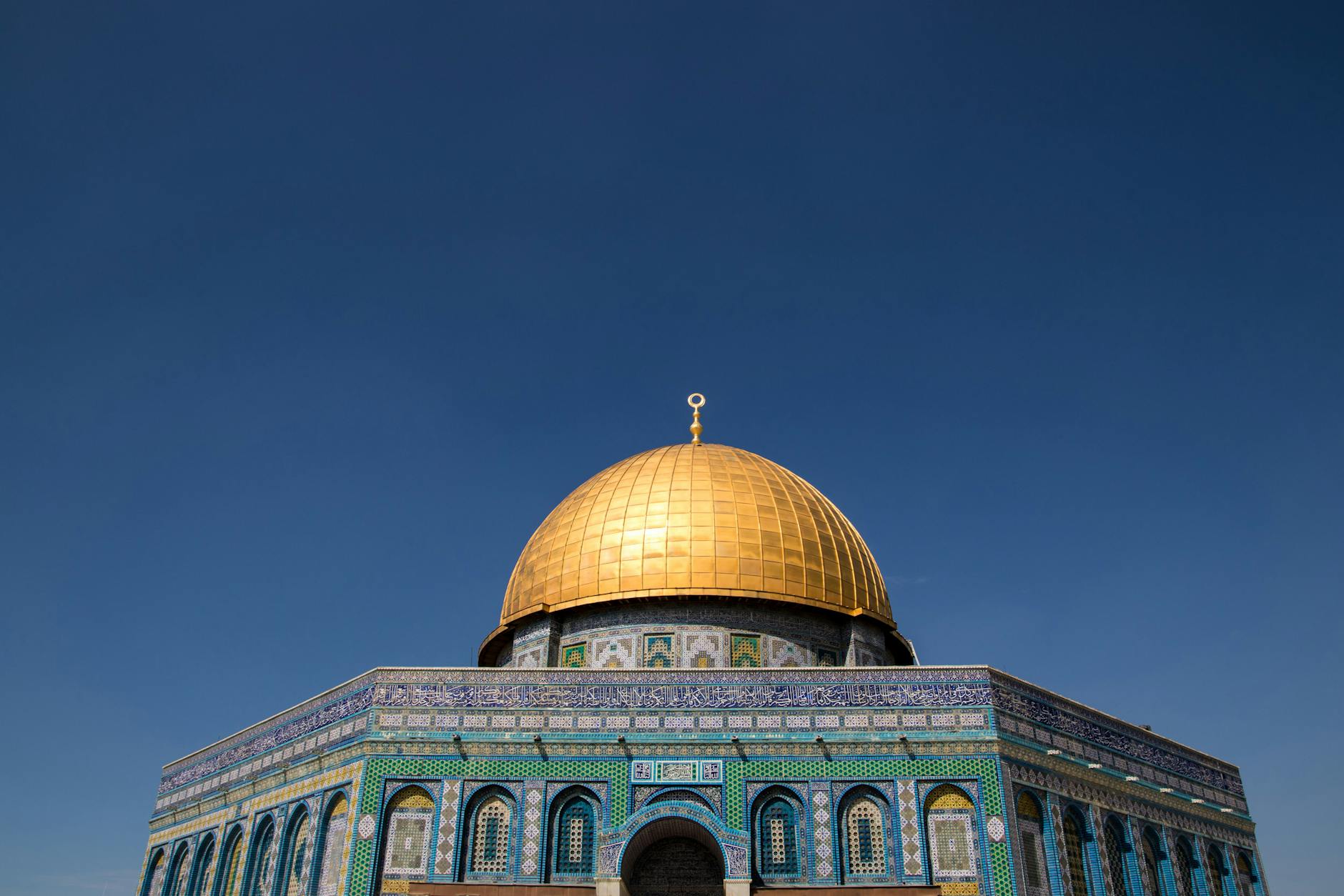
The Dome of the Rock is arguably the most visually stunning building in Jerusalem and one of the most recognizable structures in the world. Built between 688 and 691 CE by Umayyad Caliph Abd al-Malik, it is not a mosque but a shrine built over the Foundation Stone — the rock from which Muslims believe Prophet Muhammad ascended to heaven during the Night Journey. Jewish tradition identifies this same rock as the site where Abraham prepared to sacrifice Isaac and where the Holy of Holies of the Temple stood. The building’s golden dome (actually gold-plated aluminum, restored in 1994 by Jordan’s King Hussein at a personal cost of 8.2 million dollars) and octagonal form covered in blue and green Ottoman-era tiles make it a masterpiece of Islamic architecture.
The interior is breathtaking, with elaborate mosaics, marble columns, and the massive exposed rock at the center. However, non-Muslims are currently not permitted to enter the Dome of the Rock. You can admire it from the Temple Mount platform during visiting hours, and the exterior views alone are worth the visit. The relationship between this site and the earlier Jewish temples creates a layering of sacred history that is unique in the world.
Shared and Multi-Faith Sacred Sites
Mount of Olives
The Mount of Olives holds significance for all three Abrahamic faiths. In Judaism, it is the site of the world’s oldest Jewish cemetery and the prophesied location of the resurrection. In Christianity, it is associated with Jesus’s final week — his triumphal entry into Jerusalem, his teaching, his agony in the Garden of Gethsemane, and his ascension to heaven. In Islam, the Mount of Olives is associated with the Day of Judgment. The mountain offers the most iconic panoramic view of the Old City and is dotted with churches, gardens, and archaeological sites. The Chapel of the Ascension, a small octagonal structure at the summit, is venerated by Christians as the site of Jesus’s ascension and is now maintained as a mosque, symbolizing the intertwined nature of Jerusalem’s faiths.
Tomb of the Patriarchs (Cave of Machpelah) — Hebron Day Trip
While not in Jerusalem itself, the Tomb of the Patriarchs in Hebron (about 45 minutes south) is one of the holiest sites in Judaism and Islam. It is venerated as the burial place of Abraham, Isaac, Jacob, Sarah, Rebecca, and Leah — patriarchs and matriarchs revered by both faiths. The massive Herodian-era structure above the cave dates to the 1st century BCE and later became a mosque, a Crusader church, and a mosque again. Today, the building is divided between a mosque and a synagogue. Visiting requires awareness of the complex political situation — organized tours from Jerusalem handle the logistics and provide important historical context.
Practical Guide to Visiting Holy Sites in Jerusalem
Dress Code Requirements
Modest dress is essential when visiting holy sites in Jerusalem. As a general rule, both men and women should cover shoulders and knees. At the Western Wall, men must cover their heads (free kippot are provided). Women visiting mosques may need to cover their hair. Many churches ask for covered shoulders — carrying a lightweight scarf or shawl is the easiest solution. Some sites provide coverings for visitors who arrive inappropriately dressed, but it is more respectful and practical to dress appropriately from the start. Comfortable walking shoes are essential, as many sites involve stairs, uneven surfaces, and significant walking.
Best Time to Visit
The holy sites of Jerusalem are best visited early in the morning when crowds are thinnest and the light is most beautiful. The Church of the Holy Sepulchre opens at 5:00 AM, and visiting at dawn is an almost mystical experience. The Western Wall at sunrise is equally special. Temple Mount visiting hours for non-Muslims are limited and can change with little notice, so check current times on the day of your visit. Friday afternoons and Saturdays bring large crowds of worshippers to the Western Wall — beautiful to observe but limiting for quiet contemplation. Major religious holidays (Easter, Passover, Ramadan, Christmas) bring massive crowds to associated sites but also offer unique cultural experiences. For more things to do in Jerusalem between holy site visits, see our detailed guide.
Guided Tours vs. Independent Visits
Many holy sites can be visited independently, but a knowledgeable guide adds enormous depth to the experience. Sites like the Western Wall Tunnels and the City of David require or strongly benefit from guided tours. For the Church of the Holy Sepulchre, a guide helps you understand the complex layout, the significance of each chapel, and the fascinating (and sometimes contentious) arrangement between the six Christian denominations that share the space. The Bein Harim holy sites guide offers organized tours covering multiple sacred sites in a single day. Budget two to three hours for major sites and 30 to 60 minutes for smaller ones.
Respectful Behavior
These sites are active places of worship, not museums. Speak quietly, silence your phone, and ask permission before photographing worshippers. At the Western Wall, do not take photos on Shabbat or Jewish holidays. On the Temple Mount, follow all instructions from the Waqf guards — do not pray, make religious gestures, or display religious items. In churches, do not eat, drink, or sit on altars or religious furniture. In mosques, remove your shoes before entering. A respectful, humble attitude goes a long way. Remember that for many visitors around you, these are the most sacred places in their spiritual lives.
Frequently Asked Questions About Holy Sites in Jerusalem
Can non-religious people visit holy sites in Jerusalem?
Absolutely. Jerusalem’s holy sites are open to visitors of all faiths and none. You do not need to be religious to visit the Western Wall, the Church of the Holy Sepulchre, or the Temple Mount compound. These sites are also extraordinary architectural, historical, and archaeological treasures. Many non-religious visitors report being deeply moved by the atmosphere, the history, and the devotion of the worshippers they encounter. Respectful behavior and appropriate dress are the only requirements.
How much time do you need to visit Jerusalem’s holy sites?
A focused day can cover the Western Wall, Church of the Holy Sepulchre, Via Dolorosa, and Temple Mount (if open). However, two to three days allows a much richer experience, with time for the Mount of Olives sites, Garden of Gethsemane, Mount Zion, City of David, and Garden Tomb. Allow at least one hour for the Western Wall area, one to two hours for the Church of the Holy Sepulchre, and one hour for the Temple Mount. The Western Wall Tunnels tour takes about 75 minutes. Many visitors find that rushing between holy sites diminishes the experience — these are places meant for reflection, not checking off a list.
Are the holy sites accessible for people with disabilities?
Accessibility varies significantly between sites. The Western Wall Plaza is wheelchair accessible, with a dedicated accessible route. The Church of the Holy Sepulchre has limited accessibility due to its ancient construction — steep stairs are required to reach Golgotha and the tomb. The Temple Mount is accessible via the ramp near the Western Wall. The Old City’s narrow, stepped streets are challenging for wheelchair users. The City of David and Hezekiah’s Tunnel are not wheelchair accessible. Many tour operators offer adapted tours for visitors with mobility issues, and it is worth contacting sites in advance for the most current accessibility information.
Is it safe to visit holy sites in Jerusalem?
Jerusalem’s major holy sites are generally safe for visitors. Security is present at most sites, particularly the Western Wall and Temple Mount, where bag checks are standard. The Temple Mount can occasionally be closed on short notice due to security situations. Political tensions can affect access to certain areas during holidays or periods of unrest. Stay informed about current conditions through your hotel, local news, or your country’s travel advisory. Most visitors experience no issues, and millions of tourists and pilgrims visit these sites safely every year.
What holy sites can you visit for free in Jerusalem?
The majority of Jerusalem’s holy sites are free to visit. The Western Wall, Church of the Holy Sepulchre, Via Dolorosa, Temple Mount (during visiting hours), Garden of Gethsemane, Mount Zion sites, Garden Tomb, Mount of Olives viewpoint and churches, and the Dormition Abbey all have no admission fee. The City of David and Western Wall Tunnels charge admission. Some churches and monasteries accept donations. The fact that most of Jerusalem’s most sacred sites are freely accessible to all visitors is one of the city’s great gifts to the world.
Leave a Reply