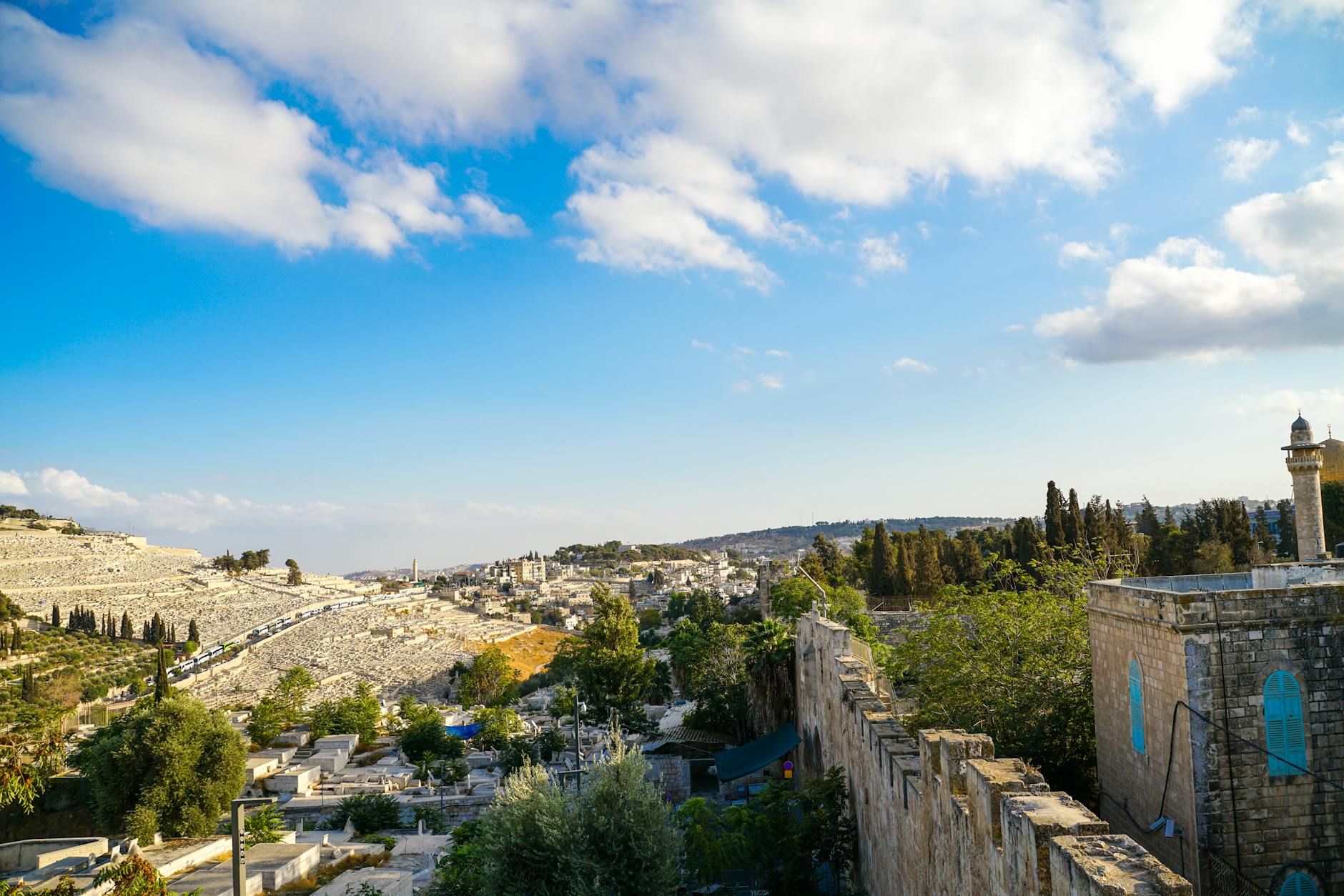
No city on Earth has been as continuously fought over, built upon, destroyed, and rebuilt as Jerusalem. Over more than 5,000 years, this small hilltop settlement beside a spring has been transformed into one of the most significant cities in human civilization — sacred to Judaism, Christianity, and Islam, conquered by empires from the Egyptians and Babylonians to the Romans, Crusaders, Ottomans, and British. Jerusalem has been besieged at least 23 times, attacked 52 times, captured and recaptured 44 times, and completely destroyed twice.
This comprehensive guide traces Jerusalem’s extraordinary history from its earliest prehistoric settlements to the modern era, weaving together the archaeological evidence with the written record. Whether you are preparing for a visit or simply fascinated by one of humanity’s greatest stories, understanding Jerusalem’s layered past transforms how you experience its present. For practical visiting information, see our Jerusalem travel tips guide.
Prehistoric and Canaanite Origins (4500-1000 BCE)
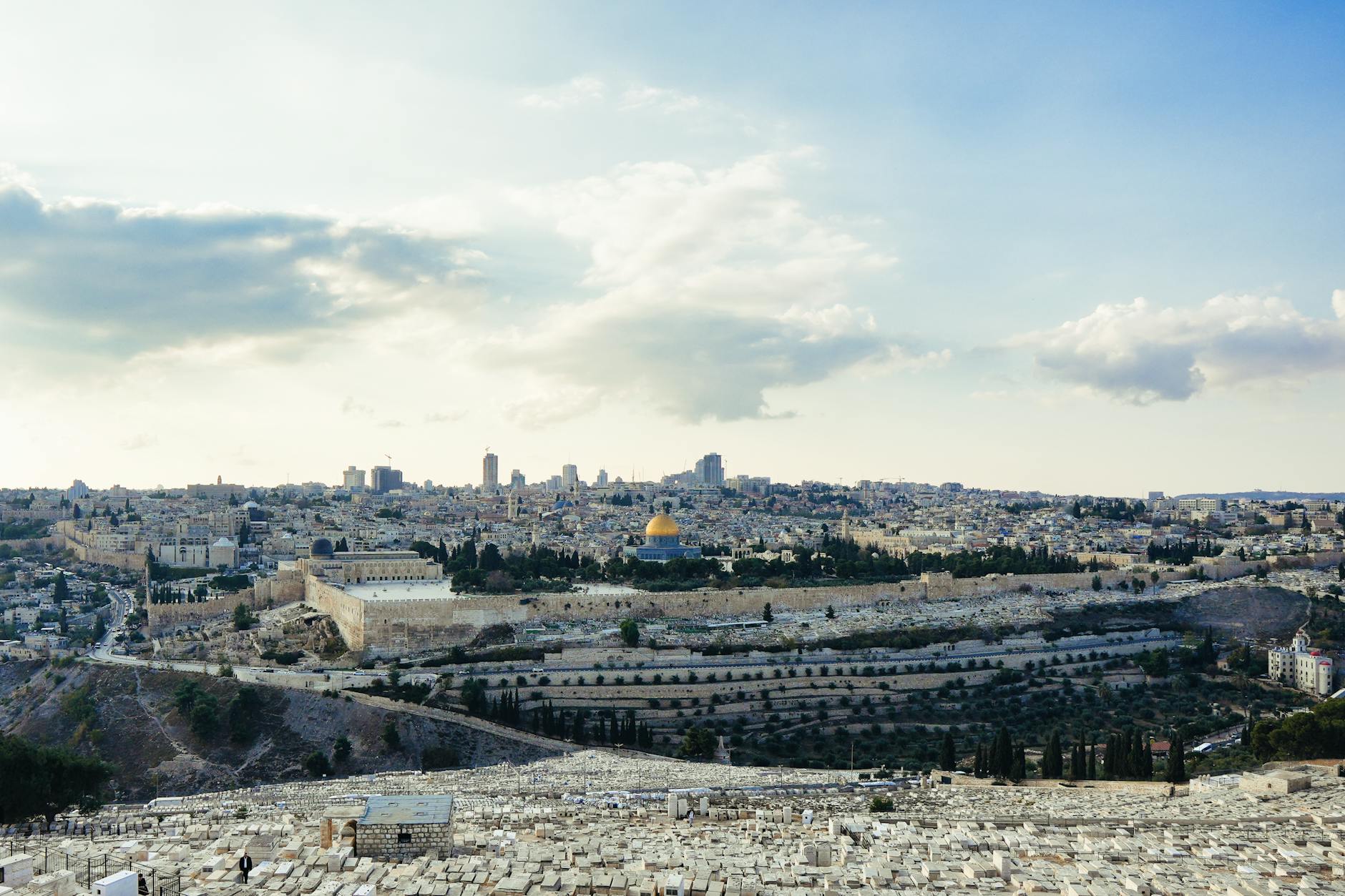
Archaeological evidence reveals human activity in the Jerusalem area dating to the Chalcolithic period, around 4500 BCE. The earliest permanent settlement emerged near the Gihon Spring — the only reliable water source in the area — on the narrow ridge now known as the City of David. This spring was the reason Jerusalem existed at all; without it, there would have been no city on this particular hilltop.
By the Middle Bronze Age (approximately 2000-1550 BCE), the Canaanite inhabitants had constructed massive fortification walls using boulders weighing 4-5 tons, reaching heights of nearly 8 meters. These walls, discovered during modern excavations, protected the vital Gihon Spring and the water shaft that allowed residents to draw water from within the city walls during siege.
Jerusalem appears in written records as early as the 19th century BCE in Egyptian Execration Texts, where it is called “Rusalimum.” The famous Amarna Letters (circa 1350 BCE) include correspondence from Abdi-Heba, king of Jerusalem, appealing to Pharaoh Akhenaten for military assistance against invaders. These clay tablets, discovered in Egypt, provide a vivid snapshot of Jerusalem as a small but strategically important Canaanite city-state under Egyptian suzerainty.
The Israelite Kingdom and First Temple Period (1000-586 BCE)
Around 1000 BCE, according to biblical accounts, King David conquered the Jebusite city by sending his warriors through the water shaft connected to the Gihon Spring. David made Jerusalem his capital, a politically astute choice — the city sat on the border between the northern and southern tribes, belonging to neither, making it a neutral capital for the united kingdom.
David’s son Solomon dramatically expanded the city northward, constructing the First Temple on Mount Moriah — the present-day Temple Mount. Solomon’s Temple became the center of Israelite worship and national identity. The archaeological evidence for this period remains hotly debated among scholars, though recent excavations have uncovered administrative buildings and fortifications that some archaeologists associate with the 10th century BCE monarchy.
After Solomon’s death around 930 BCE, the kingdom split into Israel (north) and Judah (south), with Jerusalem remaining the capital of Judah. King Hezekiah (circa 715-687 BCE) undertook one of ancient Jerusalem’s most impressive engineering projects: a 533-meter tunnel carved through solid rock to channel the Gihon Spring’s water to the Siloam Pool inside the city walls. Known as Hezekiah’s Tunnel, this remarkable feat of ancient engineering can be walked through by visitors today — one of the most extraordinary archaeological experiences in the world.
Babylonian Destruction and Persian Restoration (586-332 BCE)
In 586 BCE, Nebuchadnezzar II of Babylon besieged and conquered Jerusalem, destroying the First Temple and the city walls. The Babylonian conquest was catastrophic — the political, religious, and cultural elite were deported to Babylon in what became known as the Babylonian Exile. This traumatic event shaped Jewish identity and theology profoundly. The Psalm lamenting “By the rivers of Babylon, there we sat and wept” captures the anguish of this period.
When the Persian emperor Cyrus the Great conquered Babylon in 539 BCE, he issued a decree permitting the exiled Jews to return to Jerusalem and rebuild their temple. The Second Temple was completed around 515 BCE under the leadership of Zerubbabel, though it was initially a modest structure compared to Solomon’s original. Nehemiah later rebuilt the city walls around 445 BCE, an achievement recorded in detail in the biblical book bearing his name. Sections of Nehemiah’s wall have been identified by archaeologists in the City of David.
Hellenistic Period and the Maccabean Revolt (332-63 BCE)
Alexander the Great’s conquest in 332 BCE brought Jerusalem under Greek influence for the first time. The Hellenistic period was marked by increasing tension between traditional Jewish practice and Greek cultural influence. This tension erupted in 167 BCE when the Seleucid king Antiochus IV Epiphanes desecrated the Temple and attempted to suppress Jewish worship.
The resulting Maccabean Revolt (167-160 BCE), led by Judah Maccabee and his family, succeeded against extraordinary odds. The rededication of the Temple in 164 BCE is commemorated annually in the festival of Hanukkah. The Hasmonean dynasty that followed expanded Jerusalem significantly, and archaeological evidence of their construction projects — including portions of the city wall — can still be seen.
Roman Jerusalem and the Second Temple (63 BCE – 70 CE)
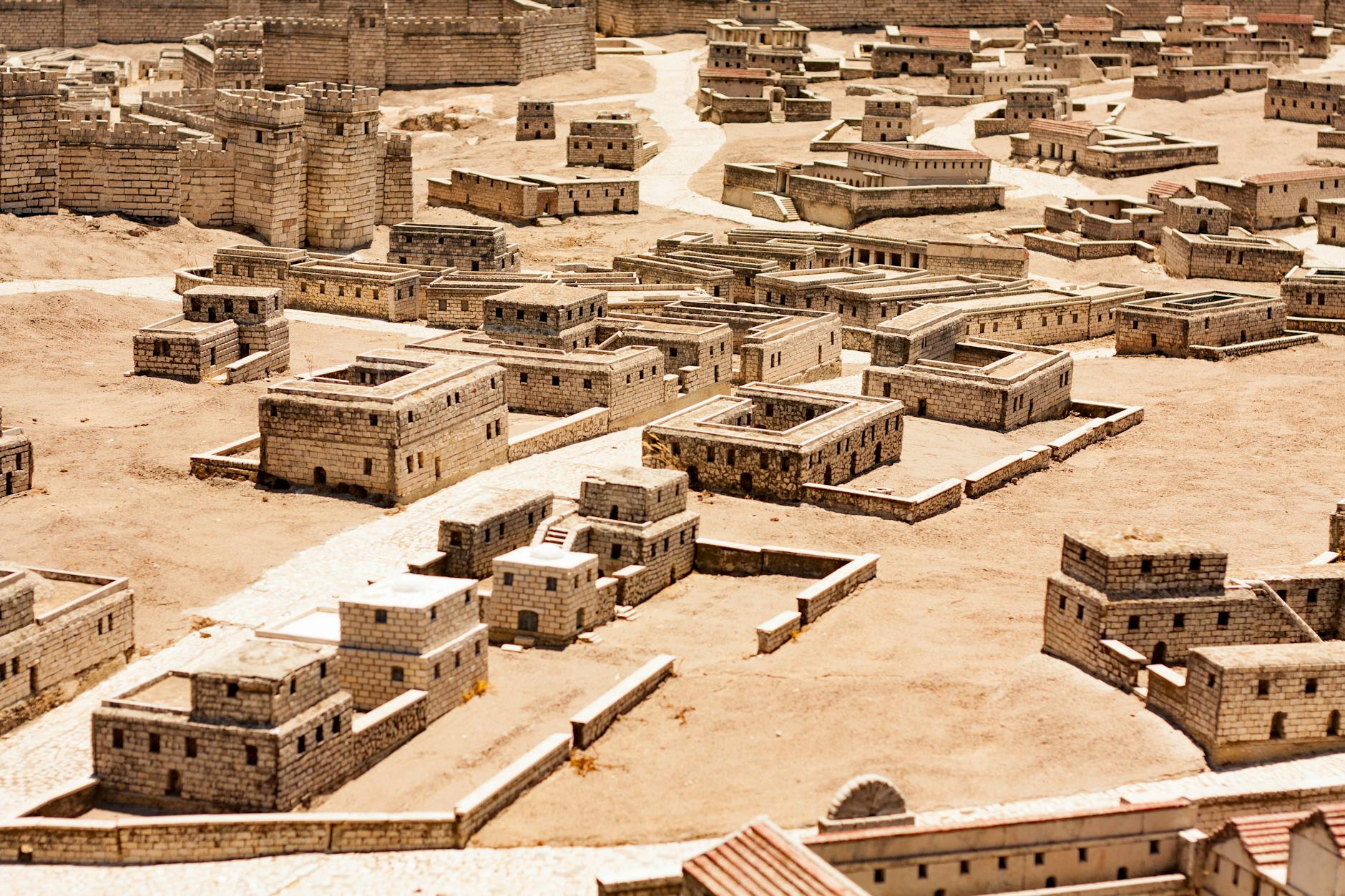
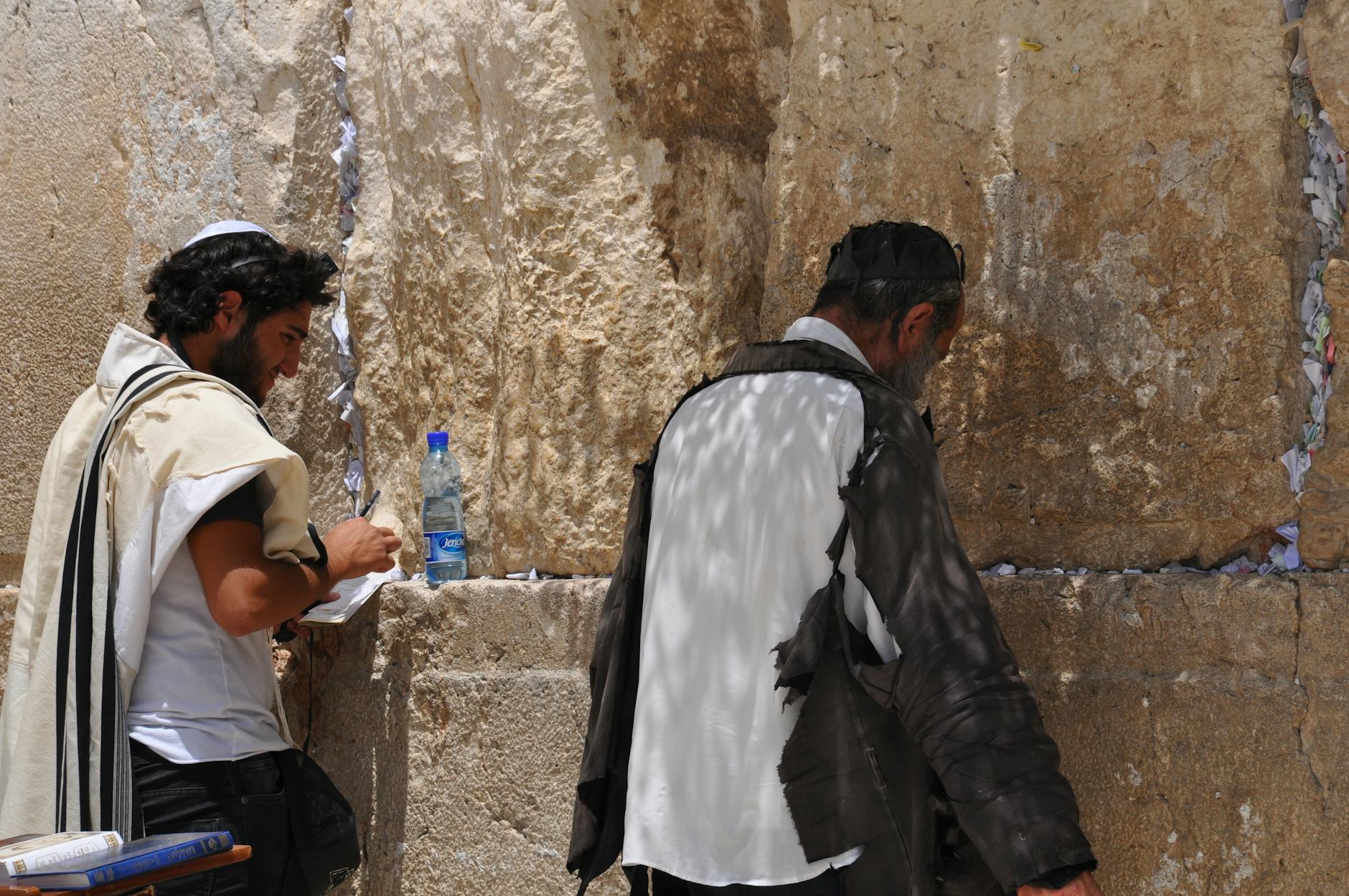
Rome’s general Pompey conquered Jerusalem in 63 BCE, beginning the Roman period that would shape the city’s physical and spiritual landscape permanently. The most transformative figure was Herod the Great (37-4 BCE), one of history’s most ambitious builders. Herod completely rebuilt and expanded the Second Temple into a complex of staggering grandeur, doubling the size of the Temple Mount platform by constructing massive retaining walls — the western section of which still stands today as the Western Wall, Judaism’s holiest prayer site.
Herod’s Jerusalem was a cosmopolitan metropolis with a population estimated at 80,000-100,000 people. His construction projects included the Antonia Fortress, a royal palace on the western hill, a theater, a hippodrome, and elaborate water systems. The Herodian stones visible at the base of the Western Wall — some weighing over 500 tons — testify to the scale of his engineering achievements. Visitors can walk along the Western Wall Tunnels to see these massive original stones up close.
The crucifixion of Jesus of Nazareth, traditionally dated to approximately 30-33 CE, occurred under Roman governor Pontius Pilate. This event transformed Jerusalem into the most sacred city in Christianity. The Via Dolorosa, tracing Jesus’s path to crucifixion, and the Church of the Holy Sepulchre, built over the traditional sites of crucifixion and resurrection, remain among the most visited pilgrimage destinations on Earth.
Growing Jewish resistance to Roman rule culminated in the Great Revolt of 66 CE. After a devastating four-year war, Roman legions under Titus breached Jerusalem’s walls and destroyed the Second Temple in 70 CE. The event was catastrophic for Judaism, ending the sacrificial cult that had been central to Jewish religious life for a millennium. The Arch of Titus in Rome still depicts Roman soldiers carrying the Temple’s sacred menorah in triumph.
Byzantine Jerusalem: The Christian Holy City (324-638 CE)
When Emperor Constantine legalized Christianity in 313 CE and his mother Helena made a pilgrimage to Jerusalem around 326 CE, the city was transformed. Helena identified sites associated with Jesus’s life, and Constantine ordered the construction of magnificent churches, most notably the Church of the Holy Sepulchre (dedicated in 335 CE), built over the traditional sites of Jesus’s crucifixion, burial, and resurrection.
The Byzantine period saw Jerusalem become a major Christian pilgrimage center. The Madaba Map, a 6th-century mosaic floor map discovered in Jordan, shows Byzantine Jerusalem with its colonnaded main street (the Cardo), churches, and city walls. Sections of the original Cardo have been excavated and are visible in the Jewish Quarter of the Old City today.
Early Islamic Period (638-1099 CE)
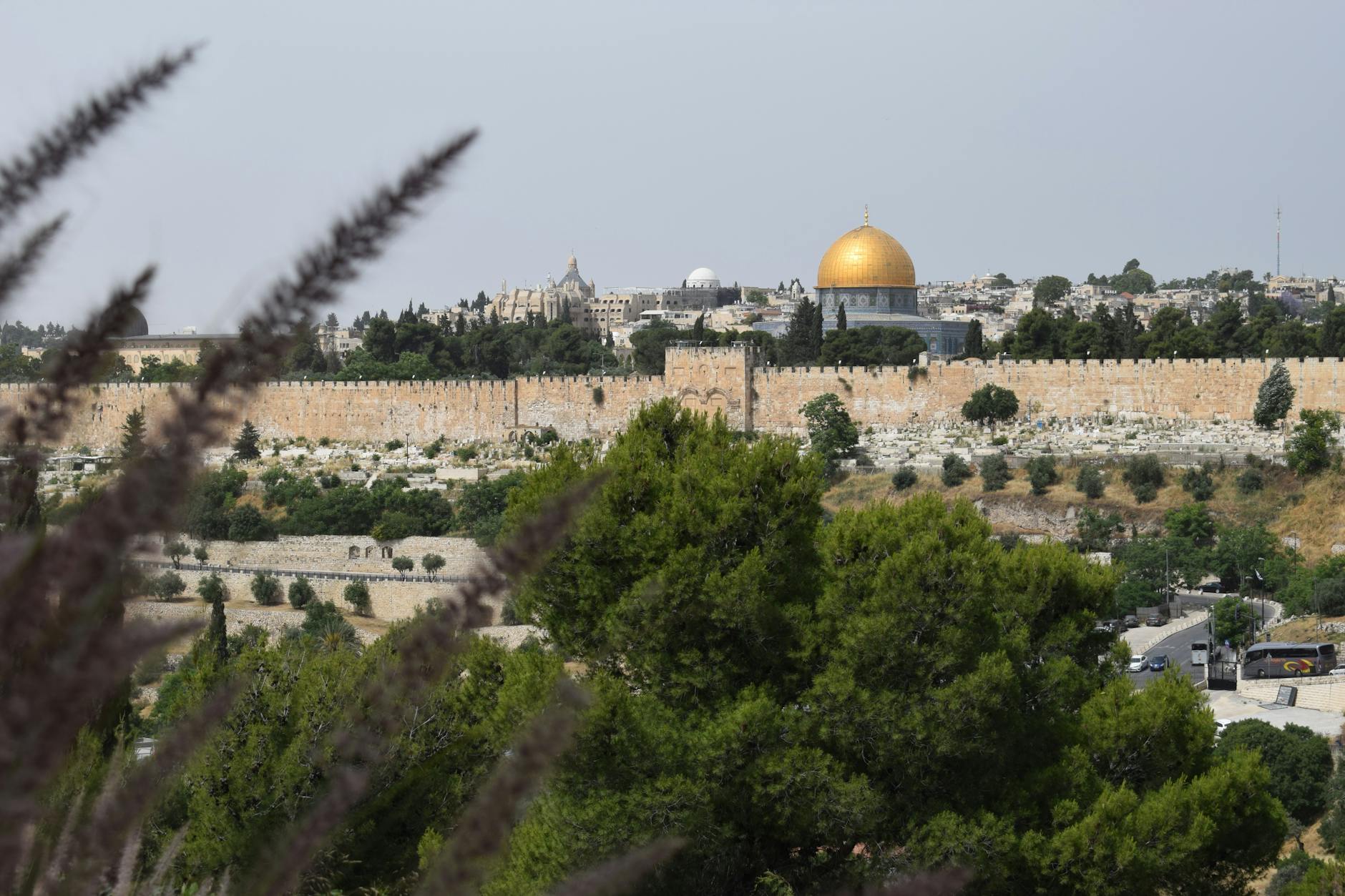
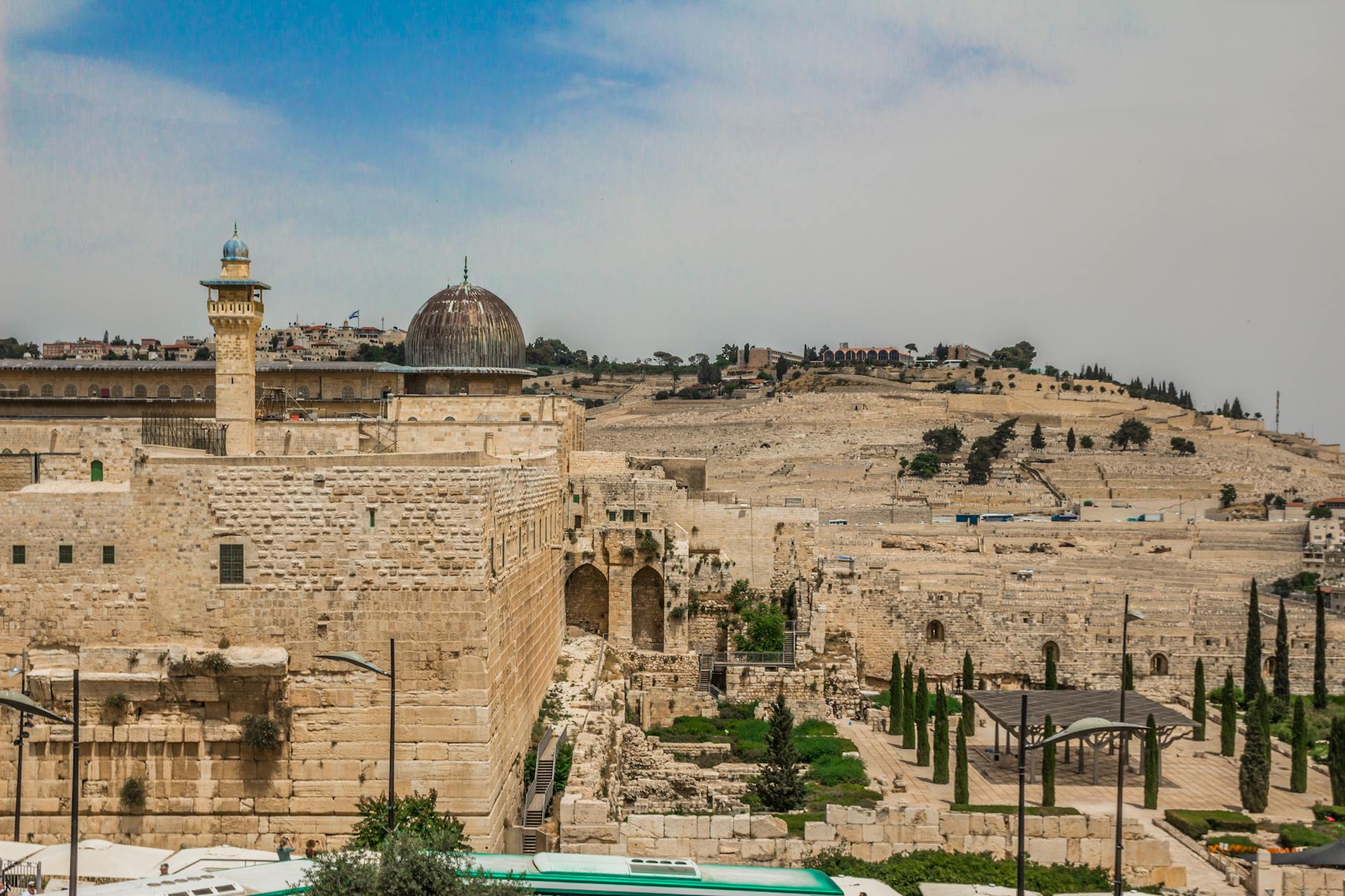
In 638 CE, Caliph Umar ibn al-Khattab accepted Jerusalem’s surrender from the Byzantine patriarch. Islamic tradition holds that Umar personally came to the Temple Mount, which had been left in ruins by the Romans and deliberately neglected by Byzantine Christians. The Dome of the Rock, completed in 691 CE by Caliph Abd al-Malik, is one of the oldest extant works of Islamic architecture and remains one of the most visually striking buildings on Earth.
The Al-Aqsa Mosque, built on the southern end of the Temple Mount, became the third holiest site in Islam, associated with Muhammad’s Night Journey (Isra and Mi’raj). During this period, Jerusalem was known in Arabic as al-Quds (“The Holy”), a name still used today. Jews were permitted to return to the city, and a Jewish community reestablished itself near the Western Wall.
Crusader Kingdom and Saladin (1099-1291)
The First Crusade reached Jerusalem on June 7, 1099. After a five-week siege, the Crusaders breached the walls on July 15, 1099, and their conquest was accompanied by a notorious massacre. The Crusaders established the Kingdom of Jerusalem and transformed the Dome of the Rock into a church (the Templum Domini) while using the Al-Aqsa Mosque as the headquarters for the Knights Templar.
Crusader Jerusalem was a period of intense architectural activity. The current form of the Church of the Holy Sepulchre, with its Romanesque facade and united structure bringing the major holy sites under one roof, dates largely to Crusader reconstruction completed in 1149. St. Anne’s Church, considered the finest Crusader church in Jerusalem, showcases the remarkable acoustics and architectural skill of the period.
In 1187, the Kurdish Muslim general Saladin (Salah ad-Din) defeated the Crusader army at the Battle of Hattin and recaptured Jerusalem. Unlike the Crusader conquest, Saladin’s entry was largely bloodless. He restored the Islamic character of the Temple Mount, allowed Jews to resettle in the city, and permitted Christian pilgrims to visit their holy sites — an act of tolerance remarkable for its era.
Mamluk and Ottoman Jerusalem (1260-1917)
The Mamluks, who ruled from 1260 to 1516, contributed some of Jerusalem’s most elegant architecture, particularly around the Temple Mount. Their madrasas (religious schools), fountains, and minarets represent some of the finest medieval Islamic architecture in the region. Many of these structures are visible along the streets approaching the Old City’s Haram al-Sharif.
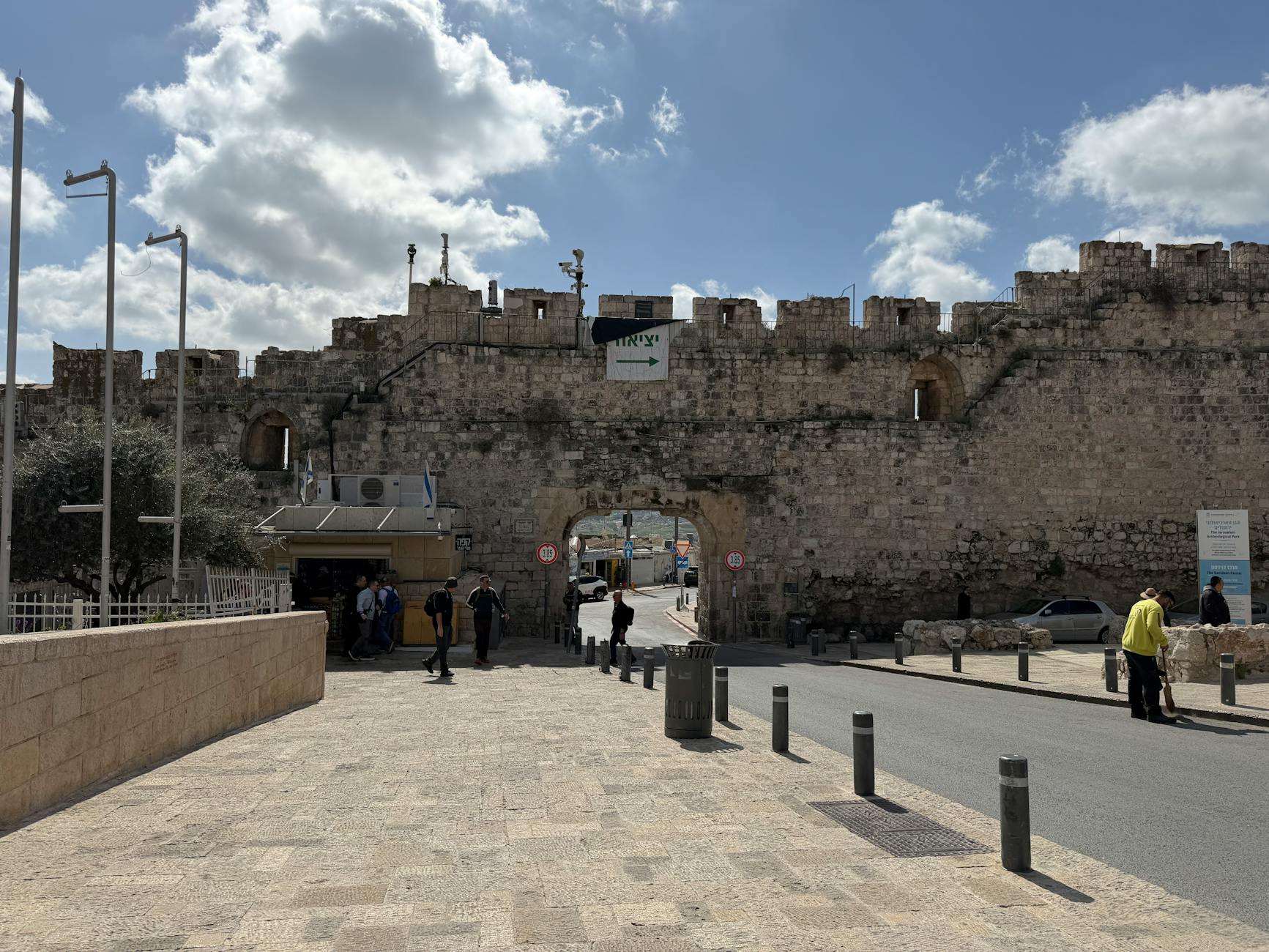
The Ottoman conquest in 1516 under Sultan Selim I brought Jerusalem into one of history’s great empires. Selim’s son, Suleiman the Magnificent (r. 1520-1566), undertook the most visible transformation of the city since Herod: he rebuilt Jerusalem’s city walls and gates between 1535 and 1541. These walls, with their distinctive crenellations, gates, and towers, still define the Old City today and are among the best-preserved Ottoman fortifications in the world.
By the 19th century, Jerusalem began to expand beyond its walls for the first time in centuries. European powers established consulates, churches, and charitable institutions. Russian, German, Italian, and French architectural influences appeared in new neighborhoods outside the walls. Archaeological exploration began in earnest — the Palestine Exploration Fund, founded in 1865, sponsored Charles Warren’s pioneering excavations around the Temple Mount.
British Mandate and Modern Jerusalem (1917-Present)
British General Edmund Allenby entered Jerusalem on foot through Jaffa Gate on December 11, 1917, ending 400 years of Ottoman rule. The British Mandate period (1917-1948) saw significant archaeological activity, urban development, and increasing tension between Jewish and Arab communities. The Hebrew University was established on Mount Scopus in 1925.
The 1947 UN Partition Plan designated Jerusalem as an international city (corpus separatum), but the 1948 Arab-Israeli War resulted in the city’s division. Jordan controlled the Old City and East Jerusalem, while Israel held the western part of the city, establishing it as its capital. For 19 years, the city was divided by walls, barbed wire, and minefields.
The Six-Day War of June 1967 resulted in Israel capturing the Old City and East Jerusalem. Israeli paratroopers reaching the Western Wall was one of the most iconic moments in modern Israeli history. The reunification of Jerusalem remains one of the most sensitive and contested aspects of the Israeli-Palestinian conflict, with profound implications for any future peace agreement.
Archaeological Jerusalem Today
Modern Jerusalem is one of the most actively excavated cities in the world. Major ongoing archaeological projects include the City of David excavations, which continue to reveal remarkable finds including the recent discovery of a monumental moat that split the ancient city in two. The Givati Parking Lot excavation has uncovered layers spanning from the Iron Age to the Ottoman period in a single location.
The Temple Mount Sifting Project, which systematically examines earth removed from the Temple Mount during construction work, has recovered thousands of artifacts spanning Jerusalem’s entire history — from First Temple period seal impressions to Crusader arrowheads and Ottoman coins. Visitors can participate in the sifting process at Emek Tzurim National Park on the Mount of Olives.
The Israel Antiquities Authority oversees dozens of excavations across the city at any given time, and new discoveries regularly make international headlines. The recently excavated Pilgrimage Road beneath the City of David — a monumental 600-meter stepped street from the Second Temple period — allows visitors to walk the same path that ancient pilgrims took to reach the Temple. For a guide to visiting Jerusalem’s top attractions including its major archaeological sites, see our comprehensive guide.
Visiting Jerusalem’s Historical Sites
City of David: Open Sunday-Thursday 8am-5pm (7pm summer), Friday 8am-2pm. Guided tours in multiple languages. Allow 2-3 hours. Hezekiah’s Tunnel requires walking through knee-deep water — bring water shoes and a flashlight.
Israel Museum: Open Sunday, Monday, Wednesday, Thursday 10am-5pm; Tuesday 4pm-9pm; Friday 10am-2pm; Saturday 10am-5pm. The Shrine of the Book (Dead Sea Scrolls) and archaeological wing are highlights.
Tower of David Museum: Open Sunday-Thursday and Saturday 9am-5pm (9pm in summer), Friday 9am-2pm. Night Spectacular show is seasonal — check schedules and book in advance.
Temple Mount Sifting Project: Open Sunday-Thursday. Reservation required. Located at Emek Tzurim, accessible from the Mount of Olives. A unique hands-on archaeological experience. For the most comprehensive experience of Jerusalem’s holy sites, combine historical knowledge with our visiting guide.
Leave a Reply